A storm surge split Usedom in two in 1872
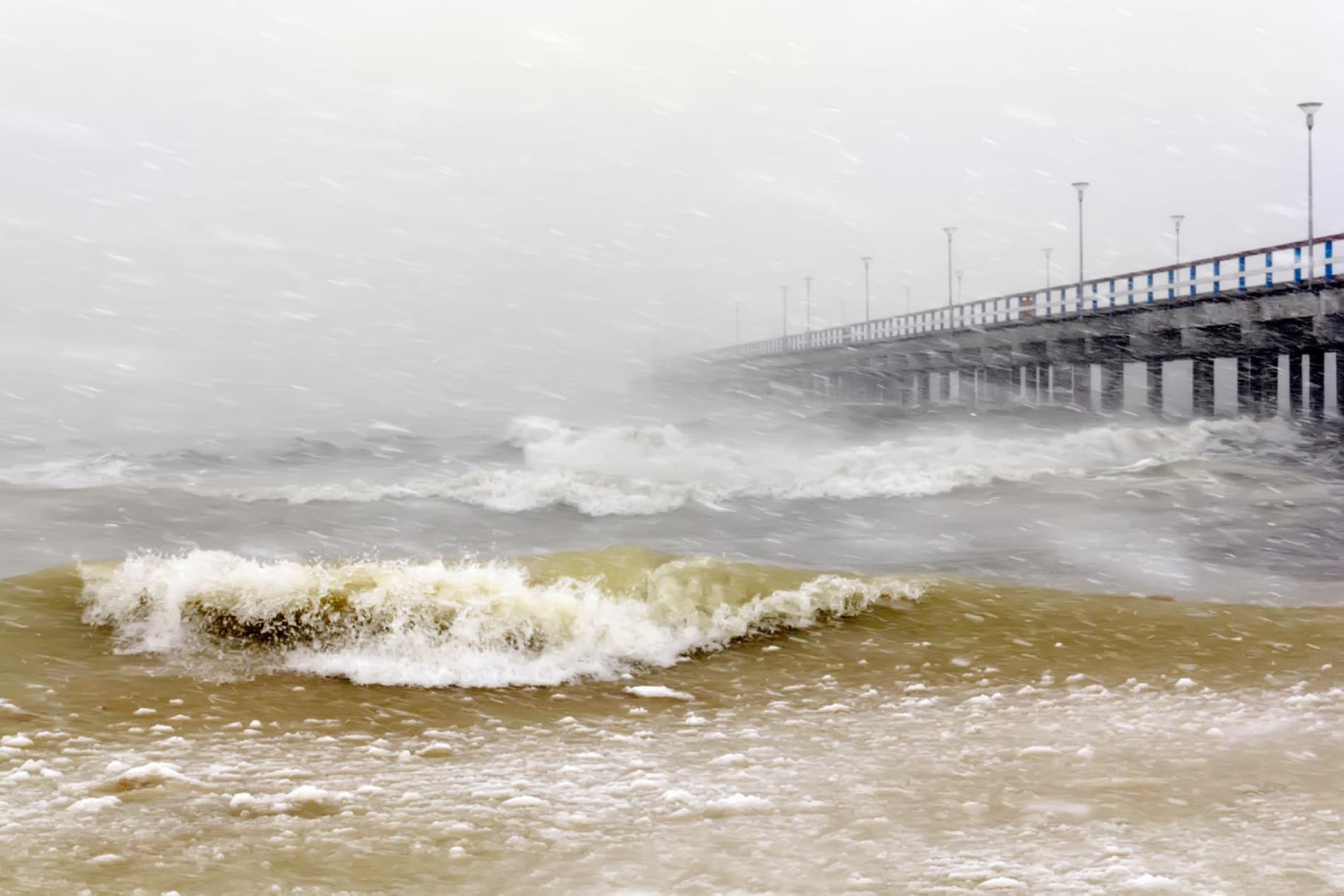
The residents of Usedom have often had to contend with the consequences of high water and storm surges from the Baltic Sea. The Baltic Sea flood of 1872 even led to the island being temporarily split in two.
Storm Surges: Usedom's History and Present
To this day, even other, less dramatic floods continue to cause damage time and again. The risk of flooding is particularly high during the winter months. However, thanks in part to recent protective measures, the especially devastating floods of the past are no longer a regular occurrence. Nevertheless, it is important to stay informed about water levels and to know what to do in the event of another Baltic Sea storm surge.
The Devastating Baltic Sea Flood of 1872
In November 1872, it wasn’t just Usedom’s Baltic Sea coast that was hit by the floodwaters. The high tide also caused massive damage from Denmark to Pomerania. At that time, water levels along the Baltic Sea coast reached up to 3.3 meters above sea level.
A storm initially drove the water in a completely different direction: toward Finland and the Baltic states. This initially resulted in low water levels along the German-Danish coast. As a result, however, large volumes of water were able to flow from the North Sea into the Baltic Sea. It was only when the floodwaters were driven back by the swirling hurricane and the North Sea water could not recede that the Baltic Sea coast was threatened by meter-high floodwaters.
The Consequences of the Baltic Sea Flooding
It took the coastal residents by surprise in the middle of the night. The storm surge claimed more than 270 lives. Several thousand homes were destroyed. For Usedom, the sudden flooding had yet another serious consequence: the island was temporarily split into two parts between Damerow and Koserow. There, the water carved a swath about 340 meters wide through the island and almost completely submerged Damerow. Few houses in the small fishing village remained standing, but they were torn down just two years later by yet another flood. Today, only a memorial stone remains to mark the village.
In winter, it gets stormy and water levels rise
The course of the 1872 Baltic Sea flood illustrates how quickly the danger of a storm surge can arise for coastal and island residents. The terms “flood” and “storm surge” are often used interchangeably. A storm surge in the Baltic Sea can be classified into four categories, depending on the water level. Anything higher than one meter above the mean water level is referred to as a storm surge. A water level of 1.25 meters or more constitutes a moderate storm surge, while a level of 1.50 meters or more constitutes a severe storm surge. A level of two meters above mean sea level is even classified as a very severe storm surge. Storm surges in the Baltic Sea are always caused by storms. Consequently, storm surges are more likely to occur during the winter months and frequently at night. Temperature differences, in particular, give rise to severe storm systems or hurricane-force gusts that sweep across the coasts and islands.
Measures to Protect Against Storm Surges in the Baltic Sea
Storm surges and flooding are still not uncommon along the Baltic Sea coast today. However, a storm surge of this magnitude is considered a once-in-a-millennium event. Climate change, however, is contributing to a steady rise in water levels. In the last 150 years alone, the water level of the Baltic Sea has risen significantly—by about 20 centimeters. The consequences today would be catastrophic: many coastal areas are now much more densely populated than they were in 1872.
However, the 1872 Baltic Sea storm surge, in particular, also raised awareness among residents along the coast and on the islands, prompting them to implement far-reaching coastal protection and flood control measures. These include, in particular, dike reinforcement, in which investments continue to this day. The regular renewal of breakwaters is also considered another effective protective measure against damage caused by Baltic Sea flooding.
Storm surges in the Baltic Sea are still causing damage
Protecting people remains the top priority, even during storm surges. Since then, the warning services of the German Maritime Meteorological Offices have ensured that people are warned early at the first signs of a storm surge. As a random and unpredictable phenomenon, however, such a storm surge often causes other types of damage. These include, in particular, sand loss as well as the washing away of boardwalks and paths. Tourism, which is considered a major economic factor on the island of Usedom, suffers particularly from these effects.
The storm surge triggered by Storm “Axel” in 2017 and Storm “Kyrill” in 2007 are prime examples of the damage that storms in the Baltic Sea, with their high water levels, can cause. Storm “Axel” triggered the second-highest flood alert level. Sections of beach promenades were swept away, stairways were destroyed, and cliffs collapsed between the towns of Koserow and Zempin.
What should you keep in mind during a storm surge?
Winter storms are no reason to stay away from the Baltic Sea coast during this season—quite the opposite. The cold, fresh air and the foaming spray hold a special appeal for visitors. It’s well worth experiencing Usedom in winter. The silence makes the sounds of nature—such as the cries of seagulls, the whistling wind, or the sound of the sea—seem louder. At the same time, the churning sea washes some treasures—otherwise hidden beneath the waves—ashore. The calm after a storm is the ideal time to search for finds such as amber, flotsam, or seashells.
Despite the beauty of winter’s stormy landscape, the danger of storm surges on the Baltic Sea should not be overlooked. It’s advisable to check for current storm surge warnings regularly. These days, this is easily done online or via a mobile app. The Federal Maritime and Hydrographic Agency issues these warnings and also broadcasts them via traditional radio. In an emergency, take the following precautions:
- Avoid coastal areas or the specified danger zones
- Keep the radio on
- A flashlight is helpful in the event of a power outage
- Any evacuation orders must be followed immediately.
- If it is no longer possible to leave the danger zone, seek higher ground, such as the attic of the house.
- Pack a carry-on bag with a cell phone, radio, drinking water, and a flashlight.
- In an emergency, dial one of the emergency numbers.
Baltic Sea Storm Surge: Protect Yourself and Enjoy the Power of Nature
During the summer months, the Baltic Sea usually shows its calm and tranquil side. High waves are almost unimaginable at this time of year. However, anyone who visits Usedom in the winter will be amazed at the enormous forces unleashed by the water when combined with the wind. The residents of Usedom are well aware of the dangers posed by the Baltic Sea, having experienced storm surges in the past. They know what to do in an emergency and recognize the warning signs. Vacationers, too, should pay attention to official warnings and follow the safety guidelines. That way, they can enjoy the sea and its power even in winter.
Share this discovery
By clicking the icons, you leave this website.