Mr. Koprek conducted this interview on behalf of SEMSEO GmbH for usedom.de on June 24, 2019.
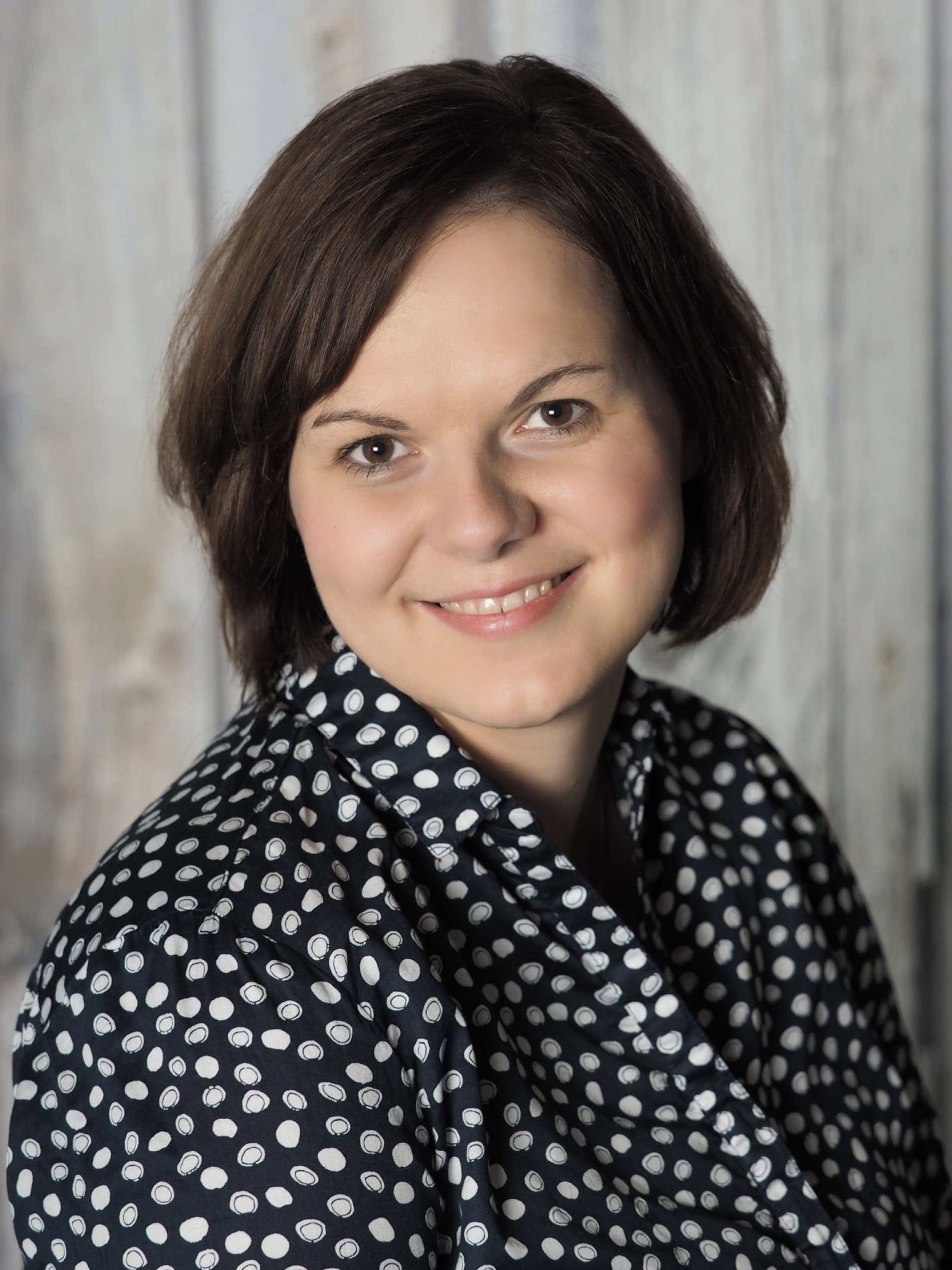
Face of the Island: Koserow Resort Director Nadine Riethdorf
Magazine
26.06.2019, Usedom Tourismus GmbH
After graduating from college, Nadine Riethdorf became the resort director of Koserow at the age of 24, a position she still holds today. In this interview, she talks about the Baltic Sea resort, the new pier, and the challenges she faces as chairwoman of the Usedom Island Tourism Association.
Koserow in the Heart
Ms. Riethdorf, you were once the youngest resort director in Germany. How did that come about? Was that always your dream job?
Sometimes things just happen by chance. And then everything falls into place and is perfect just the way it is. I studied tourism management and applied for a wide variety of jobs after I graduated. My mother is from the neighboring island of Rügen, so being close to the Baltic Sea has always been very important to me. When I saw the job posting for the position of tourism director, I applied right away and was fortunate to have a rather bold town council and a bold mayor who hired me at the age of 24. That was ten years ago. At first, I was curious about the range of responsibilities that awaited me, but now I can say that being a resort director is my dream job.
Koserow is located in the heart of the German part of Usedom. Please give us a brief introduction to your resort town. What is there to see and do here? What kind of guests does this Baltic Sea resort attract?
Koserow is a place for nature lovers who enjoy spending their free time outdoors. Thanks to its central location, you can, for example, go on extensive bike rides in all directions. We have a great activity hotel where you can also go paddleboarding. We also offer Nordic walking classes. Plus, we’re situated at the foot of the Streckelsberg, the highest point along the coast. From up here, you have a fantastic view. Our fine-sand beach is perfect for swimming, relaxing, and taking walks.
Also worth mentioning is the memorial to the painter Niemeyer-Holstein, who lived on the property until the mid-1980s before passing away in Koserow. Here, you can still visit his former home and, of course, view his paintings. Right next to his former studio lies the narrowest point on the island, where the Achterwasser and the Baltic Sea are only a few hundred meters apart.
Koserow is closely linked to the Vineta legend. Can you tell us what the legend is all about and what influence it still has today on the people and life in Koserow?
The legend says that Vineta was home to nobles and wealthy people, but at some point their wealth went to their heads. As a result of the inhabitants’ arrogance and extravagance, a huge wave flooded the city and caused it to sink. It is said to now lie at the bottom of the Baltic Sea off the coast of Koserow. According to the legend, every hundred years, the “Sunday Children” have the opportunity to witness Vineta rise again on Easter Sunday. For this reason, the bells of Vineta ring here in Koserow every Easter Sunday. This is a small spectacle on the eve of Easter for both visitors and locals alike.
In fact, the area where the city is said to have sunk is still referred to on nautical charts today as the “Vinetariff” or “Vinetabank.” Additionally, fishermen discovered the “Vinetakreuz,” which now hangs in the church in Koserow.
The Pier in Koserow – Turning Old into New
The Koserow pier was closed in August 2013 after serious construction defects were discovered, and it remains closed to this day. Why is it taking so long to build a new pier, which has since been approved?
After the closure, it took us some time to determine the extent of the damage and whether it could be repaired or if a new structure would be necessary. In 2015, we began the restoration work and completed it up to the eighth pillar. However, during the work, we realized that the repairs would be very labor-intensive and expensive—especially since the same problems would have arisen again ten or fifteen years later. To build the new pier, the residents of Koserow joined forces and even drafted a new tourism concept on their own. The residents wanted a pier that blends in with nature and therefore does not include shops or restaurants. Applying for funding took a lot of time. The bureaucratic process is now largely complete. Tomorrow, the Ministry of Economic Affairs of the State of Mecklenburg-Western Pomerania will visit us and present us with the grant approval notice.
What will the new pier look like? How long will it be? When can we expect it to open?
The pier will be about the same length as it is now—roughly 260 to 280 meters. What will make it special is that it will have a subtle wave-like design. The platform at the head of the pier will be significantly larger. The highlight there will be the “sunset cinema.” A series of fairly high steps, facing east and west, will accommodate up to 150 people who can watch the sunrise or sunset. There will also be a small stage for concerts and similar events. The regional feature—which brings us back to the Vineta legend—will be a ten-meter-high bell tower symbolizing the bells of Vineta.
More Classical Music by the Sea
Koserow also has a lot to offer culturally, not least because of “Klassik am Meer.” Why is the theater in Koserow’s Protestant fieldstone church—the oldest House of Faith on Usedom’s Baltic Sea coast—so successful? What’s on the program for this year’s season?
“Klassik am Meer” is a theater group that was founded here in Koserow 20 years ago, and whose members were looking for a unique venue. That’s how they ended up, after some twists and turns, at the church in Koserow. There isn’t much room for sets in a church, which makes the actors’ performances all the more important. We feature top-notch, trained theater actors who know their craft. Most of the actors come here from Berlin for the production and have since become ambassadors for the island themselves. This year, we’re presenting “Juno and the Peacock.” The premiere is in a week and a half.
Is Tourism Changing?
You’ve also been chair of the Usedom Island Tourism Association (TVIU) for a few months now. What are the biggest challenges Usedom faces in the tourism sector? What do you hope to accomplish and change in the coming years?
The most exciting main task will be to get the locals on board with tourism, just as we’ve already done with the plan for the new pier in Koserow. We all make our living from tourism here, but despite that, things need to remain manageable for both locals and vacationers. Perhaps we also need to acknowledge that we now have enough vacation homes and hotels. It’s a fine line we’ll have to walk in the coming years. And, of course, the shortage of skilled workers here on the island is also a major problem—not just in the hotel and restaurant industries.
What’s your personal favorite spot on Usedom?
For me, it’s definitely Stolpe Castle in the town of the same name. Not just because I got married there, but above all because it’s a wonderful place. A private association is restoring everything here piece by piece, true to the original. From the observation tower, you have a fantastic view of the Szczecin Lagoon. At the on-site restaurant, Remise, you’re truly treated to a culinary delight. And this combination of culture and cuisine is always worth a visit. Especially since here in the back part of the island, even in high season, there are always one or two fewer vacationers than elsewhere.
Thank you very much for the interview!
Share this discovery
By clicking the icons, you leave this website.