Discover the City of Wolgast
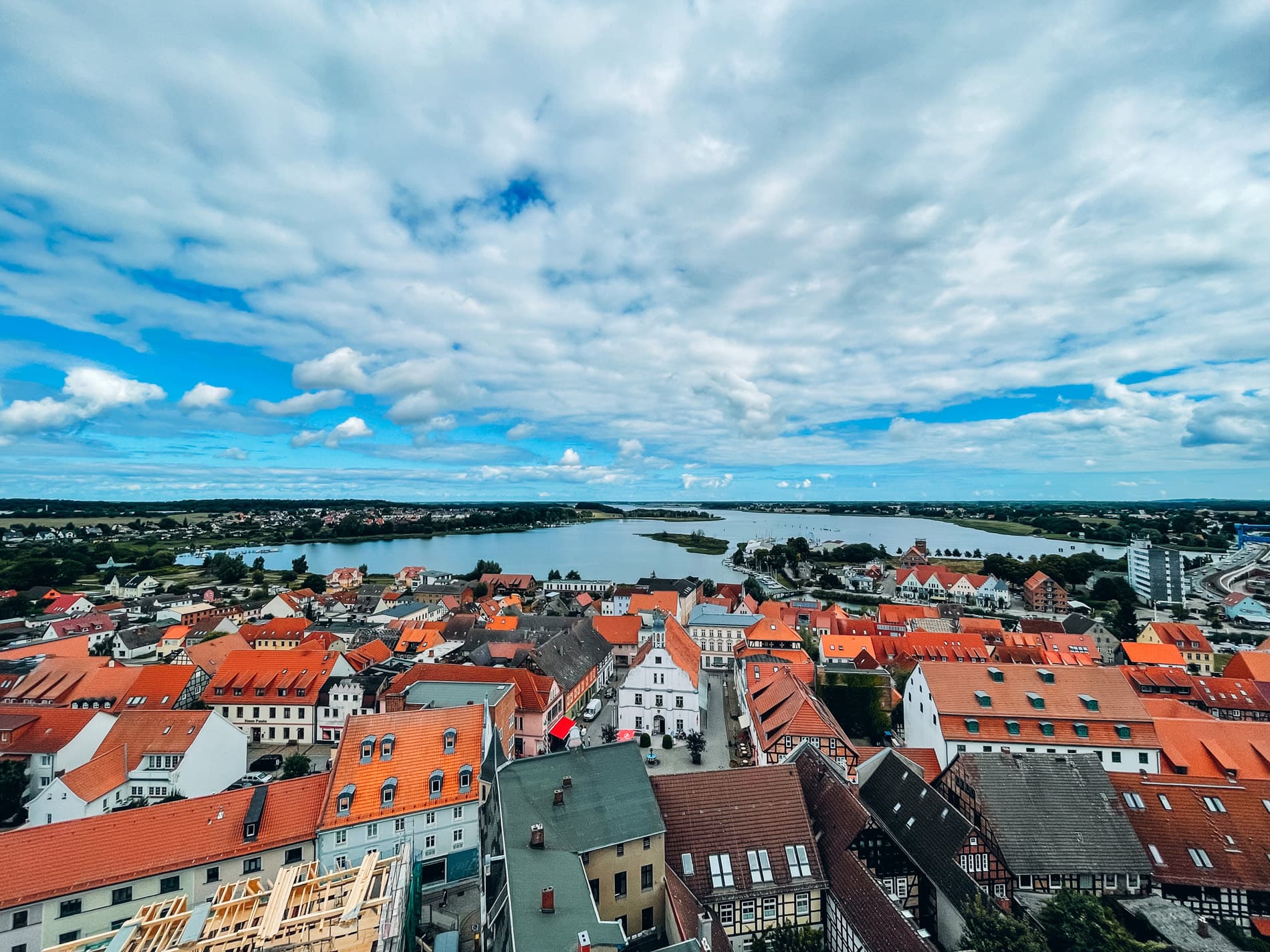
Island blogger Marika explored the town of Wolgast during Culture Night and discovered numerous hidden gems along the way.
Historic, maritime, idyllic
To be honest, I’d completely forgotten just how beautiful Wolgast really is. For years, I’ve only driven through here when I leave the island. Yet Wolgast is so multifaceted, and that’s exactly what I got to experience—or rather, rediscover—during the Wolgast Culture Night.
Just walking down the narrow streets toward the old town, I remembered how I used to stroll along here with my parents to go shopping. Unfortunately, many of the shops are now closed—it feels a bit deserted. Fortunately, things look different on the market square. Here, a few small shops and cafés have managed to thrive alongside the City Hall.
And Wolgast also has a lot to offer culturally. During the Culture Night, I learned many interesting facts about the 18th century at various historic sites. In a romantic and cozy atmosphere, I listened to stories from days gone by and let the music inspire me. The Wolgast Culture Night kicked off with the tower brass ensemble at St. Petri Church.
And this is exactly where I’ll start. Because even without the Culture Night, you can experience all the attractions and sights in Wolgast.
St. Peter's Church in Wolgast
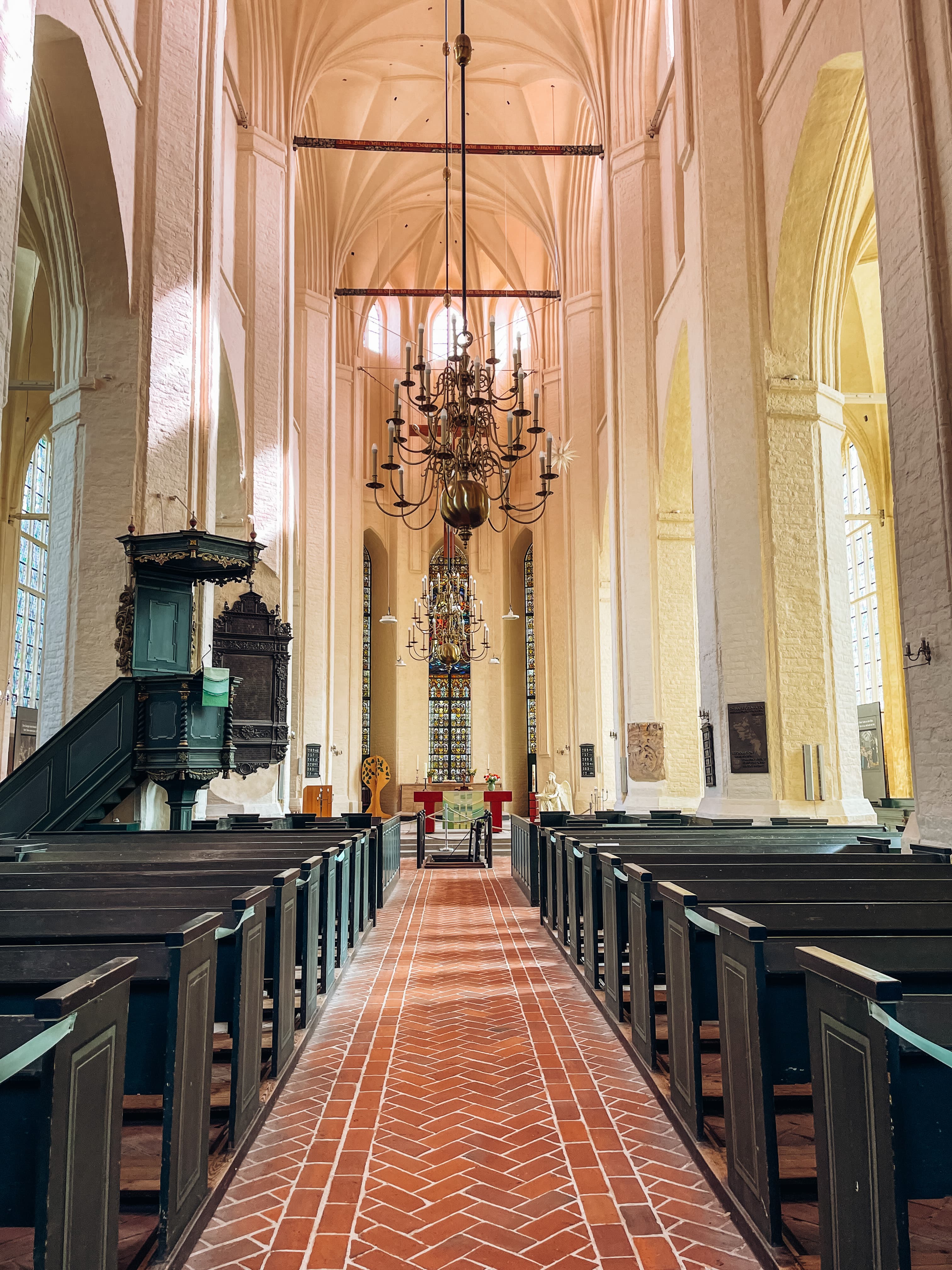
St. Peter’s Church in Wolgast is a Protestant church dedicated to the Apostle Peter. As soon as I walked in, I experienced a slight sense of déjà vu, since I used to visit the church in Lassan very often with my grandmother when I was a child. I still love the atmosphere in churches today. The walls and the wonderful ceiling paintings of St. Peter’s Church in Wolgast have so much history to tell. The Dance of Death paintings are impressive and really make you think. I highly recommend climbing the church tower—the view over the entire city and the harbor, all the way to the nearby towns, is simply breathtaking. The climb is an experience in itself! It’s narrow, steep, and the ceilings are very low, but it’s definitely worth the effort. Once you’re at the very top, you should also make your way all the way down to the bottom. The crypt of the Dukes of Pomerania-Wolgast houses their sarcophagi—quite fascinating and spooky. A gem worth seeing is the Synod Library in St. Petri Church. Here you’ll find numerous old books that provide information about Wolgast and its church.
St. Gertrude's Chapel
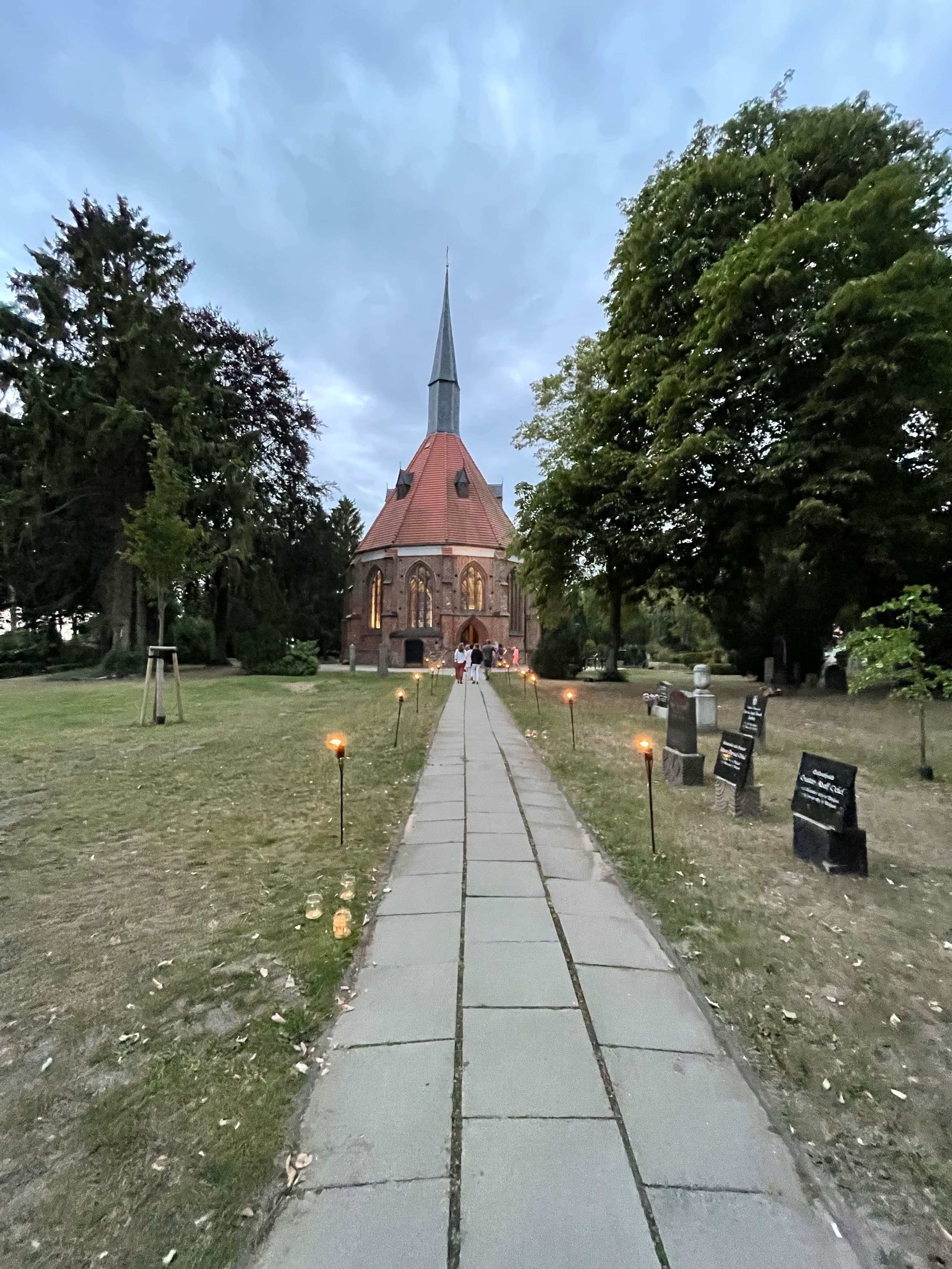
A little further toward Chausseestraße, you’ll find St. Gertrude’s Chapel in Wolgast. From an architectural standpoint, it’s a unique structure that really captivated me. The chapel is a twelve-sided central-plan structure with a central column and a beautiful star-vaulted ceiling. Members of the St. Gertrud Friends Association will share interesting facts about the chapel’s history with you. In the cemetery, you’ll also find the graves of several historical figures who were particularly dedicated to the town’s development.
The Runge House
For me, Philipp Otto Runge—the painter and representative of German Romanticism—is a truly remarkable figure in our region. The house where Runge was born in 1777 is now a modern museum and cultural center dedicated to his life and world. Inspired by holistic ideas, Runge also devoted himself to the study of color, designed playing cards, and wrote down Pomeranian fairy tales, including “The Fisherman and His Wife.” So be sure to take the time to explore the exhibition and the birthplace in Wolgast and interactively discover the art of Romanticism and Philipp Otto Runge. In the courtyard of the house, you can sit down and reflect on Runge’s life and work.
The Postel
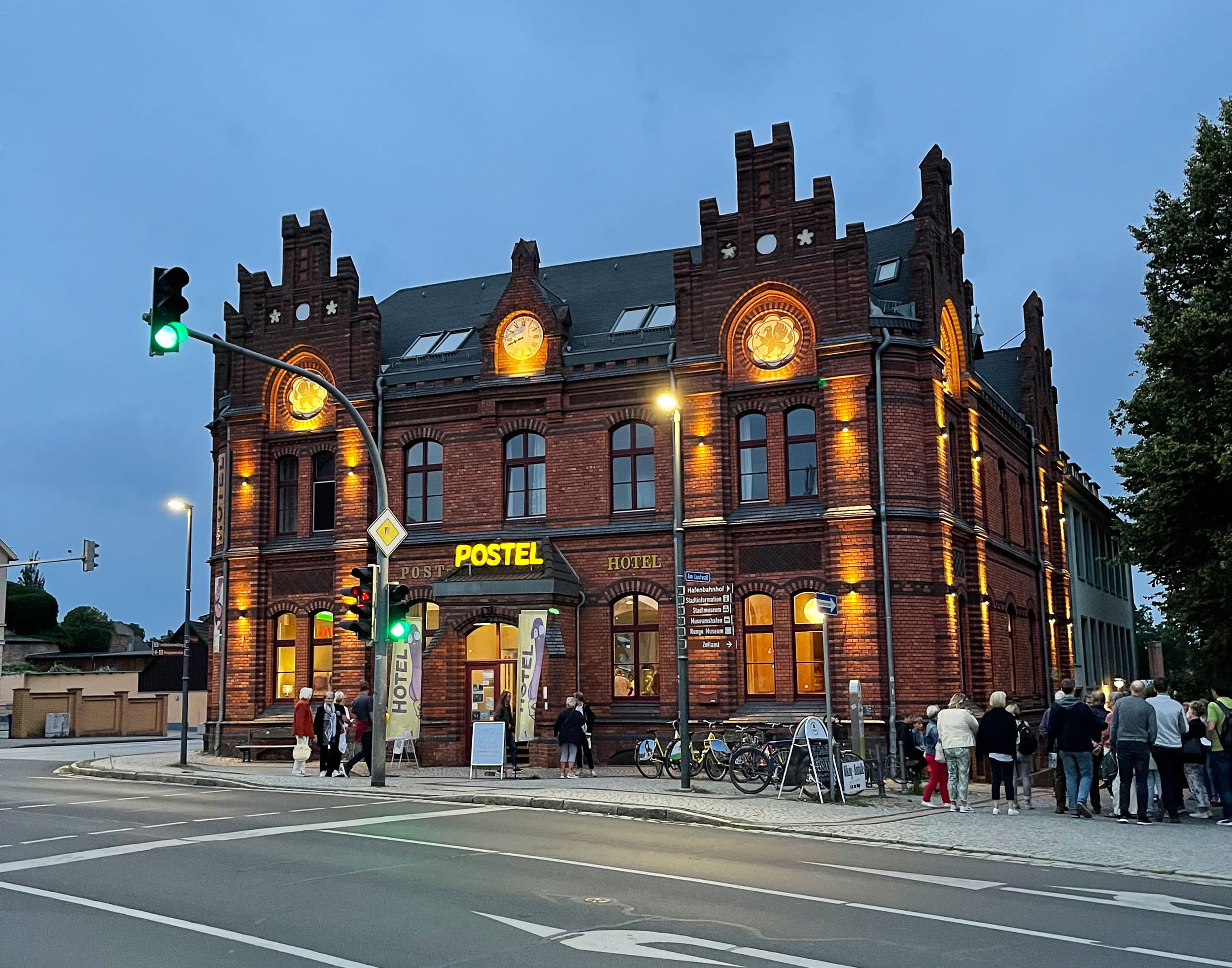
A little further up the street toward the intersection, you’ll find the Postel, also known as the Alte Post. You’ve surely already spotted this 130-year-old post office building on your drive through Wolgast. It’s one of the buildings from the Gründerzeit era, which also includes the district court on Homeystraße and the school building on Unterwall. Today, this former post office houses a lovingly furnished hostel whose atmosphere evokes the days of the old post office. A great project and concept, in my opinion. You can stay in a carrier pigeon’s nest, shower in a pneumatic tube, play soccer in a telephone station, have breakfast under the rafters, and relax with a beer in the evening among old boilers. Anyone who checks into the Postel will find a place full of surprises. So? Maybe your next vacation won’t take place on the island after all, but just a short trip away in the town of Wolgast?
The Coffee Grinder
On my way back to Rathausplatz, I come across the “Kaffeemühle” on the corner in Wolgast. This 300-year-old half-timbered warehouse owes its name to its distinctive shape. Spanning four floors, the city museum traces the development of Wolgast from a Pomeranian royal seat to a modern shipbuilding center. The history of industry, trade, and crafts is brought to life here through numerous exhibits. Once again, it’s absolutely fascinating for me to see and experience how times change and how a city has developed to this point.
The Historic City Hall
Back to the market square and City Hall. Incidentally, this is also where you’ll find the Wolgast Tourist Information Center, where you can get information on other attractions, excursion tips, and events. And there’s also the Kaminzimmer. Where Wolgast’s mayors once resided and governed, there is now a small, elegant event space. Town Hall Square—also known as Market Square—has become a gathering place for all sorts of occasions, such as market days, weddings, concerts, and city festivals. All around the square and in the narrow alleys, you’ll also find small shops, such as the Wolgast Bookstore, the Eine-Welt-Laden, the Musikcafé, and the restaurant “Onkel Ben’s.”
"Uncle Ben's"
If you’re looking for a really great place to have breakfast or lunch, I definitely recommend “Onkel Ben’s,” a small and very cozy restaurant on the market square in Wolgast. As soon as I walked in, I was given the warmest welcome and immediately taken care of with such warmth. I love this authentic, genuine warmth—it’s not fake or forced—you can immediately feel the passion behind it. And it’s so cozy! Whether you’re on the patio right next to City Hall, inside, or out back in the courtyard. You’ll see and appreciate the attention to detail right away! And the food is fantastic! But you should really see for yourself!
Wolgast City Harbor
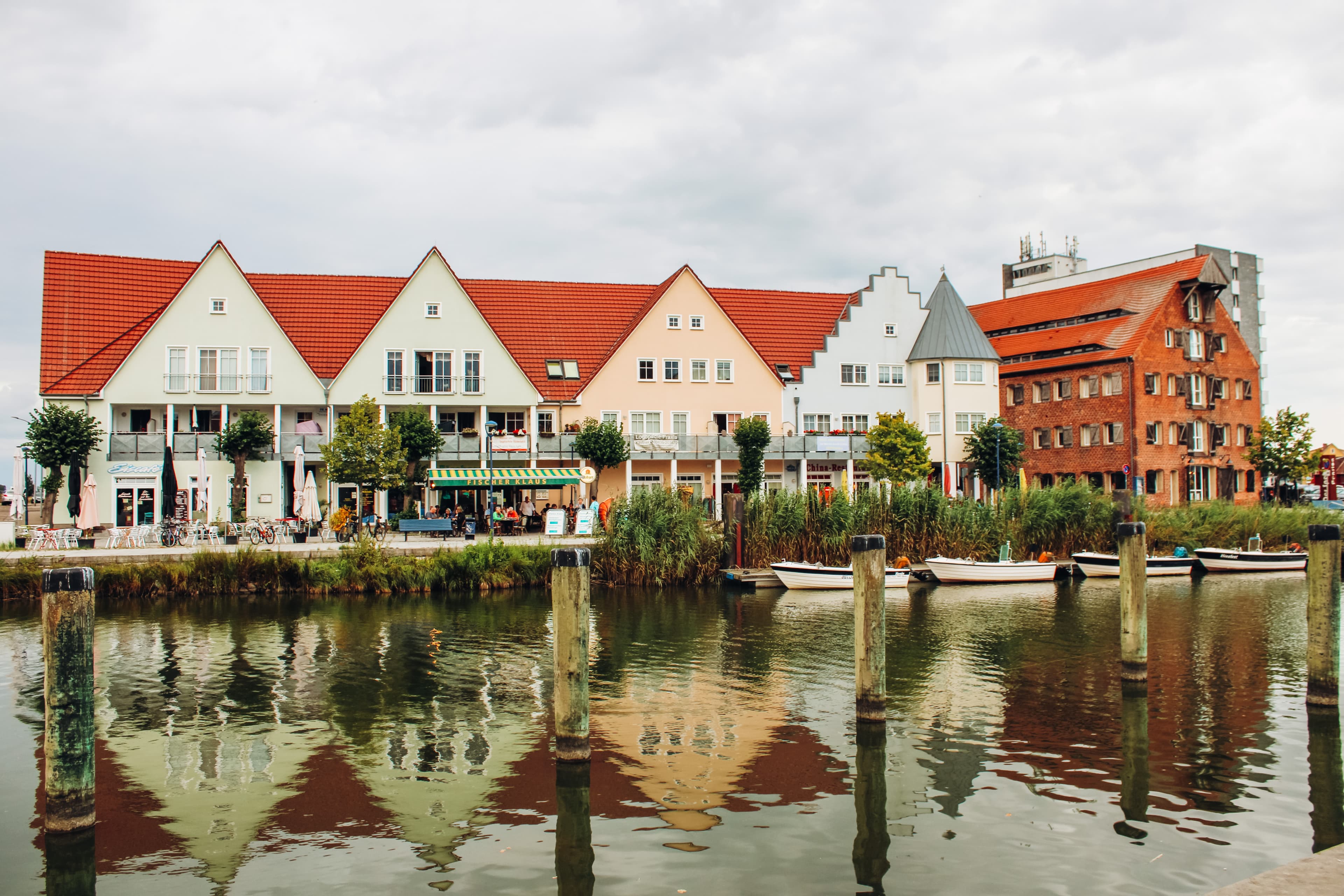
From the market square, I make my way to the small city harbor of Wolgast. It immediately exudes an impressive maritime charm—idyllic, well-maintained, and simply beautiful to look at. Incidentally, Wolgast’s town harbor is also the departure point for classic harbor tours and boat trips on the Achterwasser or the Peene River. This is also where recreational boaters moor their houseboats and sailing yachts. All around, you’ll find a few restaurants—such as the Speicher—as well as small cafés and seafood restaurants. It’s time for me to get out and about in Wolgast again, to explore, and above all, to enjoy all the delicious treats. So? Have I managed to inspire you to discover Wolgast in all its splendor? I think so. And there’s one attraction you absolutely mustn’t miss:
The Wolgast Family Zoo
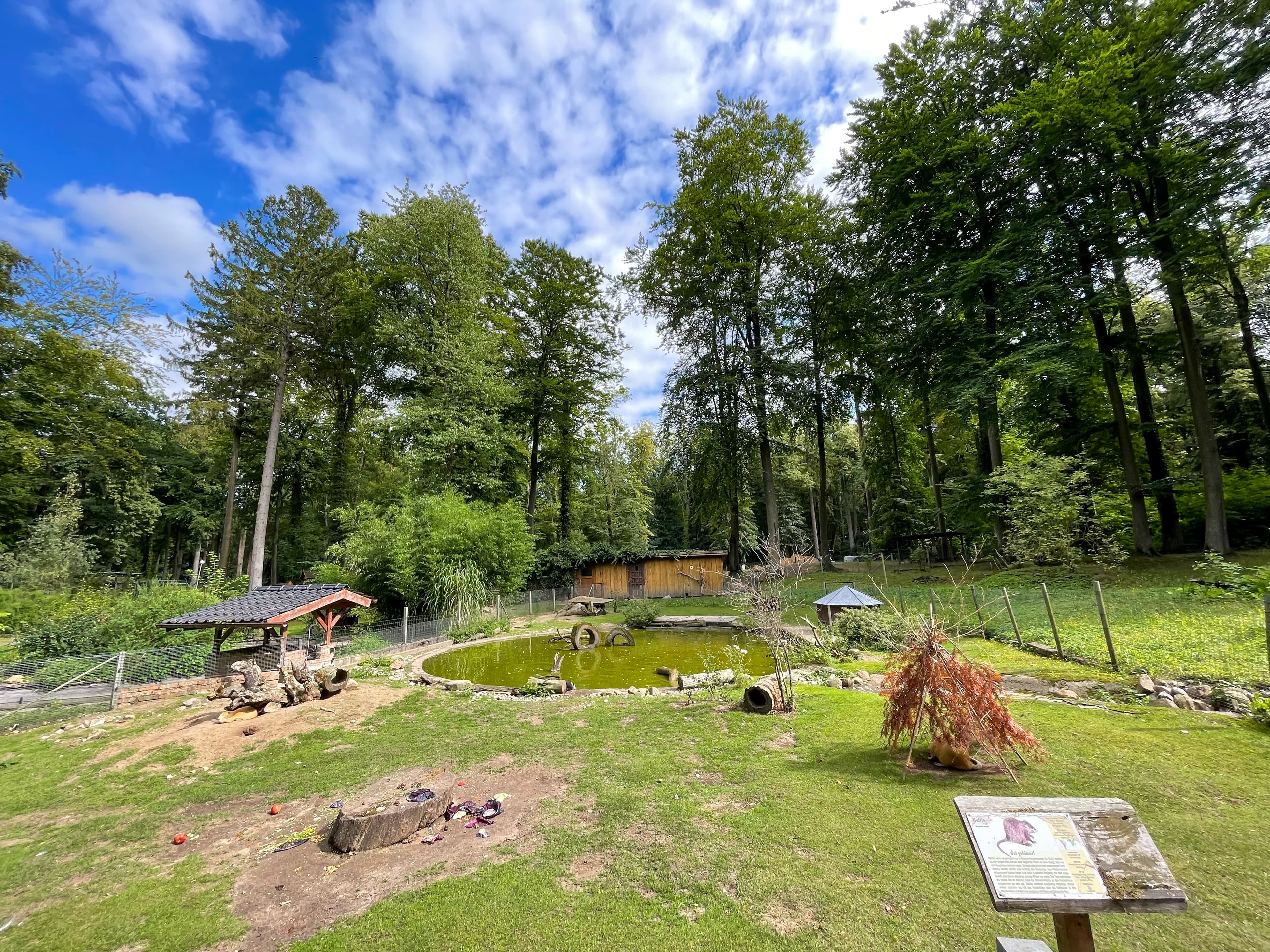
I can’t even remember the last time I visited this zoo. Probably when I was a child. It wasn’t until 1960 that the Wolgast Zoo was created from a natural wooded area thanks to the tireless efforts of the citizens of Wolgast. The zoo definitely has a park-like atmosphere. It’s surrounded by trees, and you can admire the animals and all the plants in a uniquely peaceful setting. The animals are kept in conditions that closely mimic their natural habitats, giving you, the visitor, the chance to observe them behaving naturally. It’s an absolutely relaxing stroll through nature, partly through walk-through enclosures. I have to say, I’m thrilled. A real treat for the whole family.
This is me: Usedom's island blogger
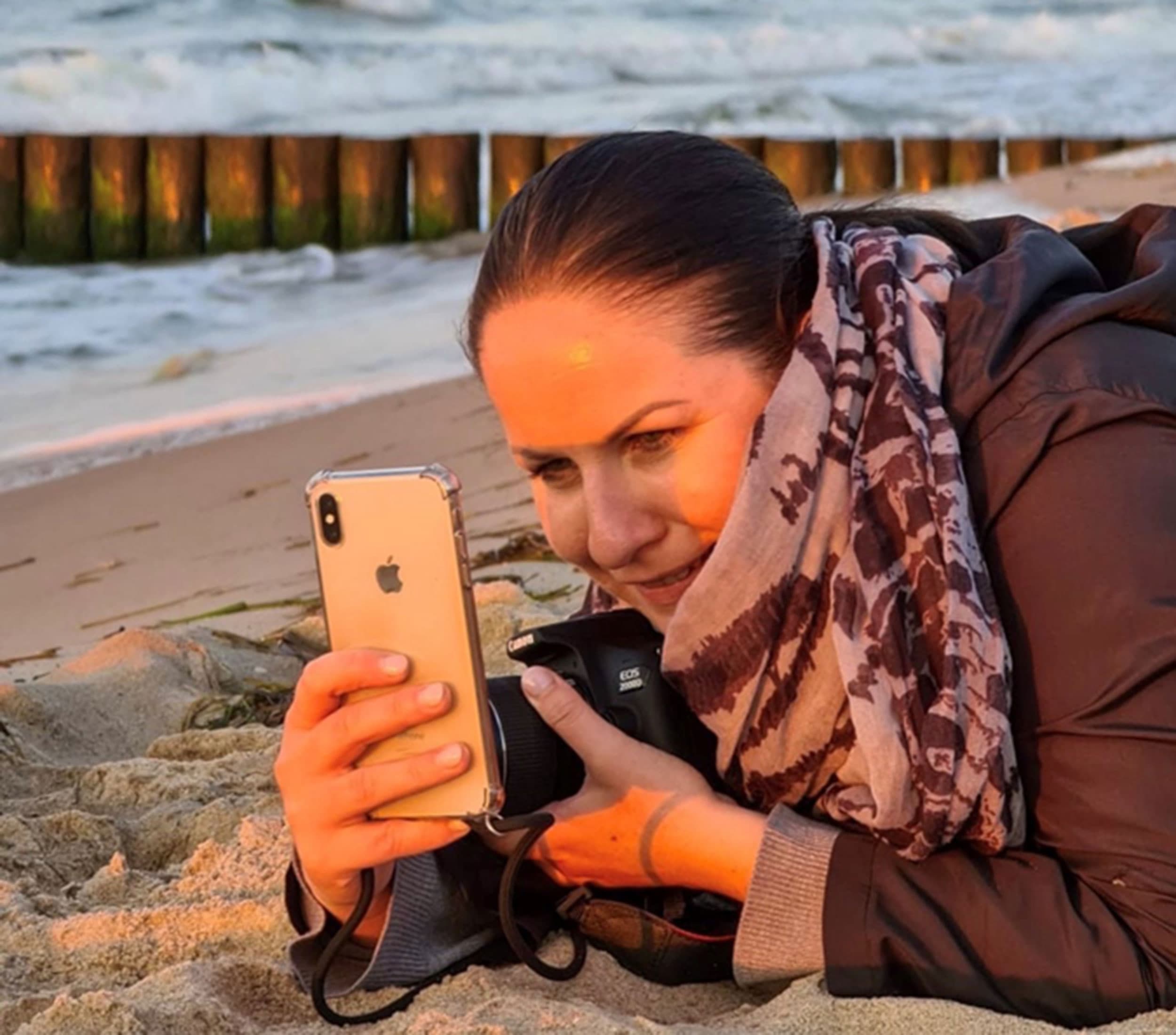
My full name is Marika Borowski; I’m 37 years young and was born on the mainland in the Lassaner Winkel region. From the port of Lassan, I’ve always had an unobstructed view of the Lieper Winkel and the Gnitz Peninsula, so I’ve always felt a strong connection to my adopted home of Usedom. I can still remember very well how my parents would take me to the beach in Trassenheide or camping on the Gnitz Peninsula, or how we’d visit our relatives in the town of Usedom. For me, it was always a big deal to tell my school friends that I had relatives who lived on an island. Now I’ve been living on Usedom myself for over 20 years and can already call myself a bit of an island kid. I first trained here to become a hotel specialist and then a hotel manager, and I’ve turned this into my calling.
To be able to tell our visitors to Usedom much more about the island, I set out on a journey of discovery myself and have been documenting all my experiences and discoveries on the island of Usedom in my blog for a good two years now.
Share this discovery
By clicking the icons, you leave this website.