The interview was conducted by Karina Schulz for usedom.de on February 25, 2022.
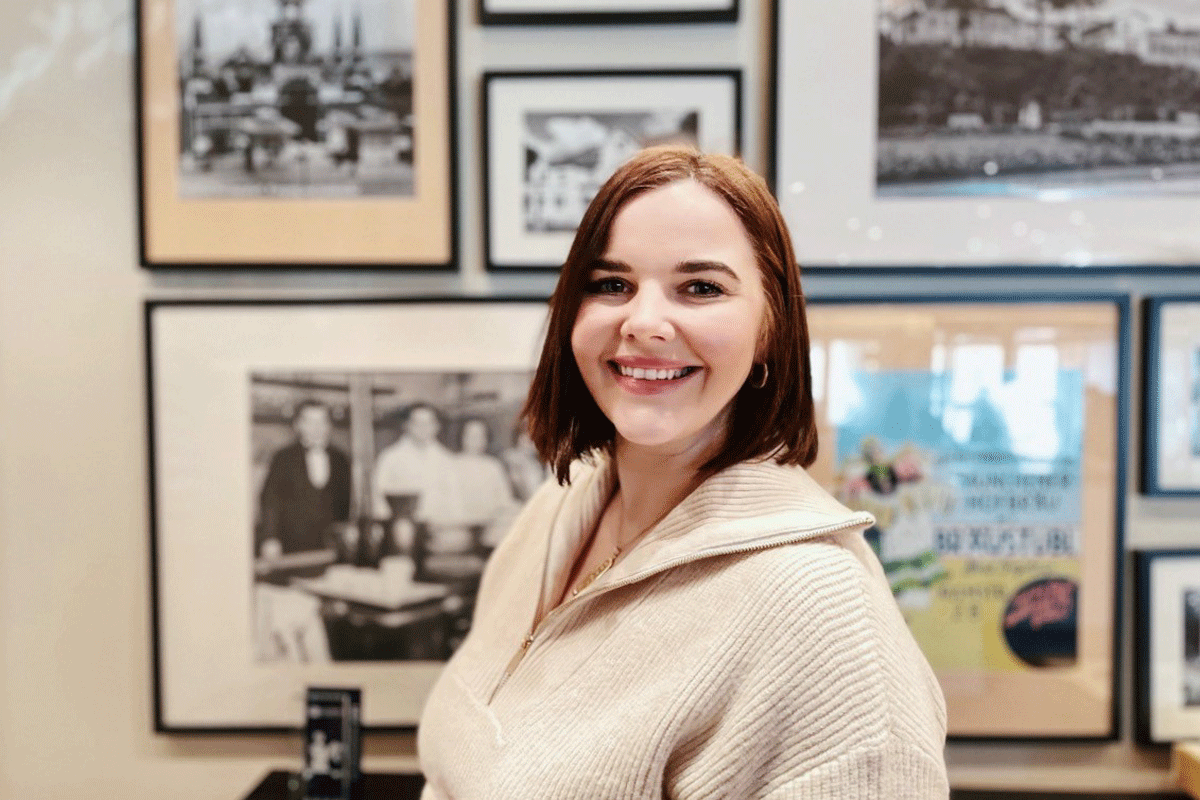
Face of the Island: Junior Hotel Manager Lisa Wehrmann
Magazine
07.03.2022, Usedom Tourismus GmbH
The Strandhotel Ostseeblick has been run by the Wehrmann family, except for a forced hiatus of nearly forty years during the GDR era. After spending several informative years in New Zealand, Rostock, and Berlin, Lisa Felicitas Wehrmann joined her parents’ hotel as junior manager.
Fresh Ideas for a Hotel Rich in Tradition
Ms. Wehrmann, you grew up on Usedom. What memories do you have of your childhood and youth, and how did the island shape you?
I was four years old when I moved from Siegen to Usedom with my parents and our cat in 1993. I still remember exactly how the villas with their ornate details and decorations caught my eye. I thought kings must live here. However, everything seemed pretty gloomy and run-down to me. It was a huge contrast to what I’d known up until then. In the beginning, my kindergarten teachers were important role models for me. They made me feel very warmly welcomed. Later on, Usedom was like a giant playground: the beach, swimming, and a great sense of freedom. To this day, I still feel that sense of freedom when I gaze out into the distance. I had a wonderful childhood here. Back then, there were also far more opportunities for teenagers to get together than there are today. Our group of friends was a cool crowd. Getting a driver’s license was a big deal. As a teenager, of course, I sometimes found Usedom boring. Then I missed city life, and the city became a place I longed for. But Usedom is my base, my home.
After graduating from high school, were you drawn out into the big wide world right away?
After graduating from high school, I couldn’t get out the door fast enough. On the island, everyone knows everyone. I wanted to go far, far away, where no one knew me. I spent seven months doing a work-and-travel program in New Zealand with a friend. Actually, it was more “travel” than “work,” because we spent all our time sightseeing. When I came back, I first had to figure out what I actually wanted to do. Not so easy when you have so many interests. At first, I studied communication design and photography in Berlin. After a year, I switched majors again because it just wasn’t my thing. Studying sociology and education in Rostock was a perfect fit. Even while I was in school, I started focusing on marketing and communication and did various internships in Berlin and at the 13° agency in Neubrandenburg. After that, I set my sights on working at KaDeWe. It had always been something very special to me. Every time we went to Berlin, we went to KaDeWe. Those were precious moments. The whole world under one roof, the food department—a veritable paradise. That fascinated me. After sending out several unsolicited applications, I finally got the job. It was a wonderful time and a great professional experience.
To what extent did your training and professional years prepare you for your role as a junior hotel manager?
I don’t have formal hotel training, but I grew up in a hotel. So I have a good understanding of how a hotel operates. My work at KaDeWe and later at the luxury watch brand Lange & Söhne prepared me for what would be expected of me. Both are large companies with high performance standards. I was lucky to have supervisors who encouraged me to work independently. However, your freedom to shape things on your own is ultimately limited in such large companies.
When did you first get the idea to join your parents’ hotel? Or was that always your plan?
Fifteen years ago, it hadn’t even crossed my mind. The hotel was simply too close—it was, in a sense, my childhood home. But during semester breaks, I always came to Usedom and worked part-time in the hotel’s front-of-house. A key moment came when a very good friend said to me during a walk: “If you’re not working with people, it’s a waste.” During the first lockdown in the spring of 2020, my boyfriend and I were actually just on Usedom for a short stopover when the island was completely shut down. It was eerie. I didn’t know when I’d be able to come back if I’d gone back to Berlin. So we stayed—for a total of eight weeks. The question of when we’d move to the island permanently was always in the back of my mind. I’m glad to have someone by my side who supported me in this important decision to return to Usedom.
Did your family’s dramatic history—the expropriation of your great-grandfather through “Aktion Rose”—influence your motivation to carry on the hotel into the next generation?
Our family history is very much a part of our lives. I deeply regret that my grandparents are no longer alive. I would love to ask them now how they experienced the time during my great-grandfather’s expropriation. My father can, of course, tell a lot about it, but he experienced the whole thing himself from a child’s perspective. We’ll never stop talking about it. My great-grandfather was a broken man. After he was denounced, he spent several years in prison for an alleged economic crime. That’s always in the background. For me, my grandparents are always there. After the fall of the Berlin Wall, they were finally able to buy the hotel back. Later, my parents took it over and turned it into what it is today. Such a long family tradition is something special.
It’s a unique situation to apply for a job with your own parents. Was it easy to convince them?
I was more nervous during that job interview than any other. I have great respect for everything my parents have built. I’m proud of their life’s work. We took it really seriously. I wrote an application describing how I see myself in the company and what skills and experience I bring to the table. During the interview, I also had to prove that I was serious about it.
You’re certainly bringing a breath of fresh air to the hotel, aren’t you? What ideas have you already been able to implement, and what are your plans for the future?
We implemented our latest idea—the new wellness area—during the lockdown. It was clear that it needed modernizing, so we seized the opportunity. Renovating it while the hotel was open would have been unthinkable. It was a true generational project. We all contributed our ideas and visions. I think the new spa area turned out beautifully. Otherwise, one innovation I’ve introduced, for example, is that we maintain a shared digital calendar that everyone can access. My mother was skeptical at first, but she’s come around to it now. I’m also able to draw on my experience when it comes to managing employees. I think I have a pretty good sense of what the employees want. I often encourage them to try something new, to be trendsetters. Ultimately, though, new ideas emerge through dialogue. We’ve become a well-coordinated team in that regard.
You started as junior manager in June 2020. A few months later came the long lockdown, which brought tourism to a near standstill until June 2021. You probably imagined your start would be different?
That was tough. No one had expected another lockdown that long. Of course, there’s always something to do, but a hotel without guests is like a fish out of water. So we got creative about how to stay connected with our employees and guests. The Strandhotel Ostseeblick remained open to employees throughout the entire closure. We held regular team meetings and talked about how everyone was coping with the situation. My mother dove headfirst into all the tedious regulations and applied for COVID-19 bonuses for our colleagues. In a WhatsApp group, we shared walking routes and sent greetings and postcards to our guests. Our goal was to show: “Hey, we’re still here!” Almost all of our staff stayed on board; as a family, we stuck together. We’ve surpassed ourselves in so many ways during this time. I think we can all be proud.
Do you have a favorite spot on the island?
Oh, I couldn’t possibly choose just one. I love my secret swimming spot. But of course, I’m not going to reveal it.
Thank you so much for the interview!
Share this discovery
By clicking the icons, you leave this website.