Winter Activities on Usedom
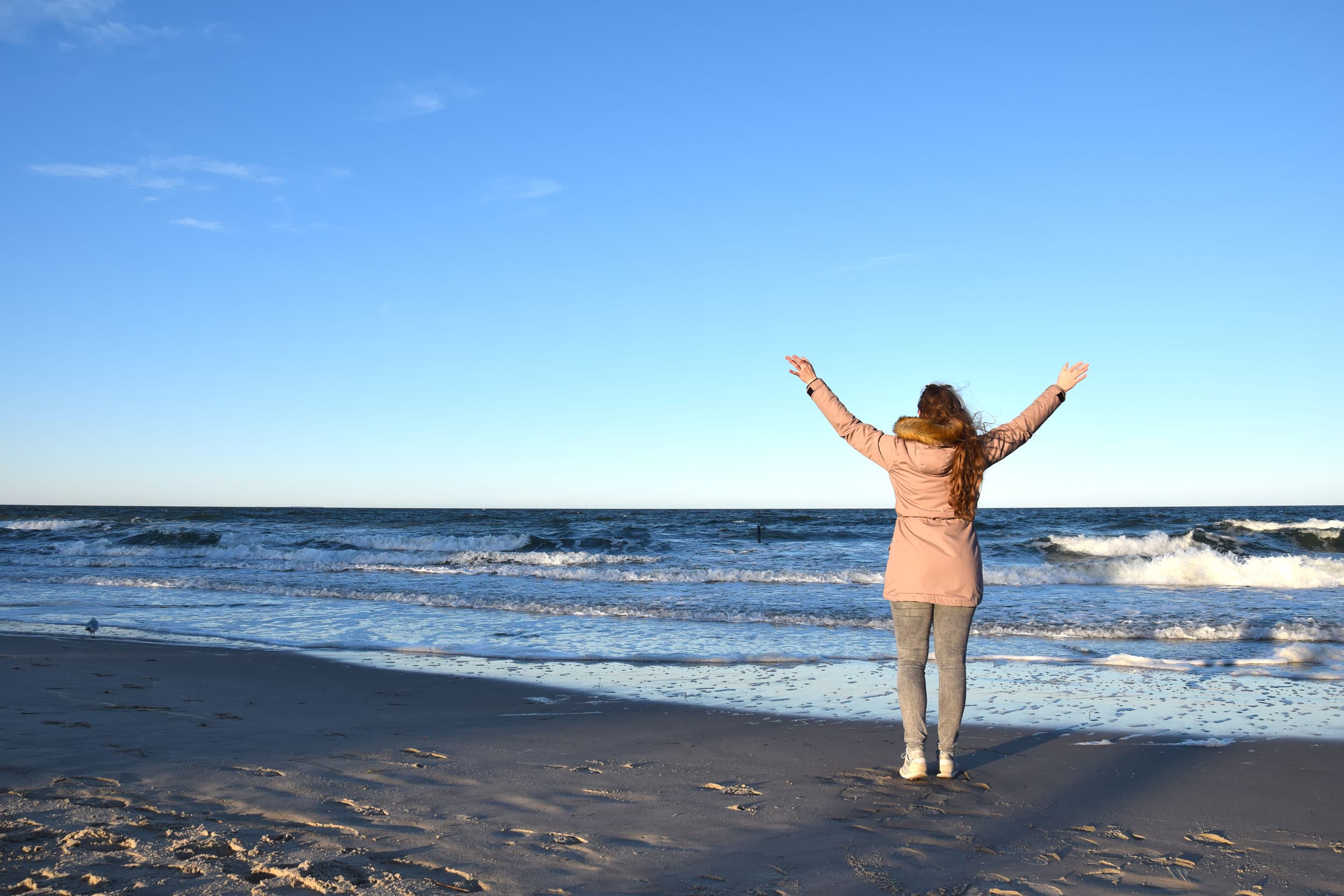
Usedom is worth a visit even during the cold season: from active hours on the ice to leisurely walks along deserted beaches to a warming wellness retreat at the thermal baths.
An Active Vacation with a Twist
Ice skating on the artificial ice rink at the Heringsdorf pier
If you’re looking to dust off your skates again, it’s worth visiting the artificial ice rink at the pier in Heringsdorf. Skaters are expected to be able to take to the ice there until March 6, 2022. If you don’t have your own skates, you can rent a pair on site. Skating aids for children are also available for rent, so even the little ones who aren’t yet confident on the ice can have a great time. Of course, refreshments are also available here to keep your energy up after a long day on the ice.
Warming Up at the Thermal Baths on Usedom
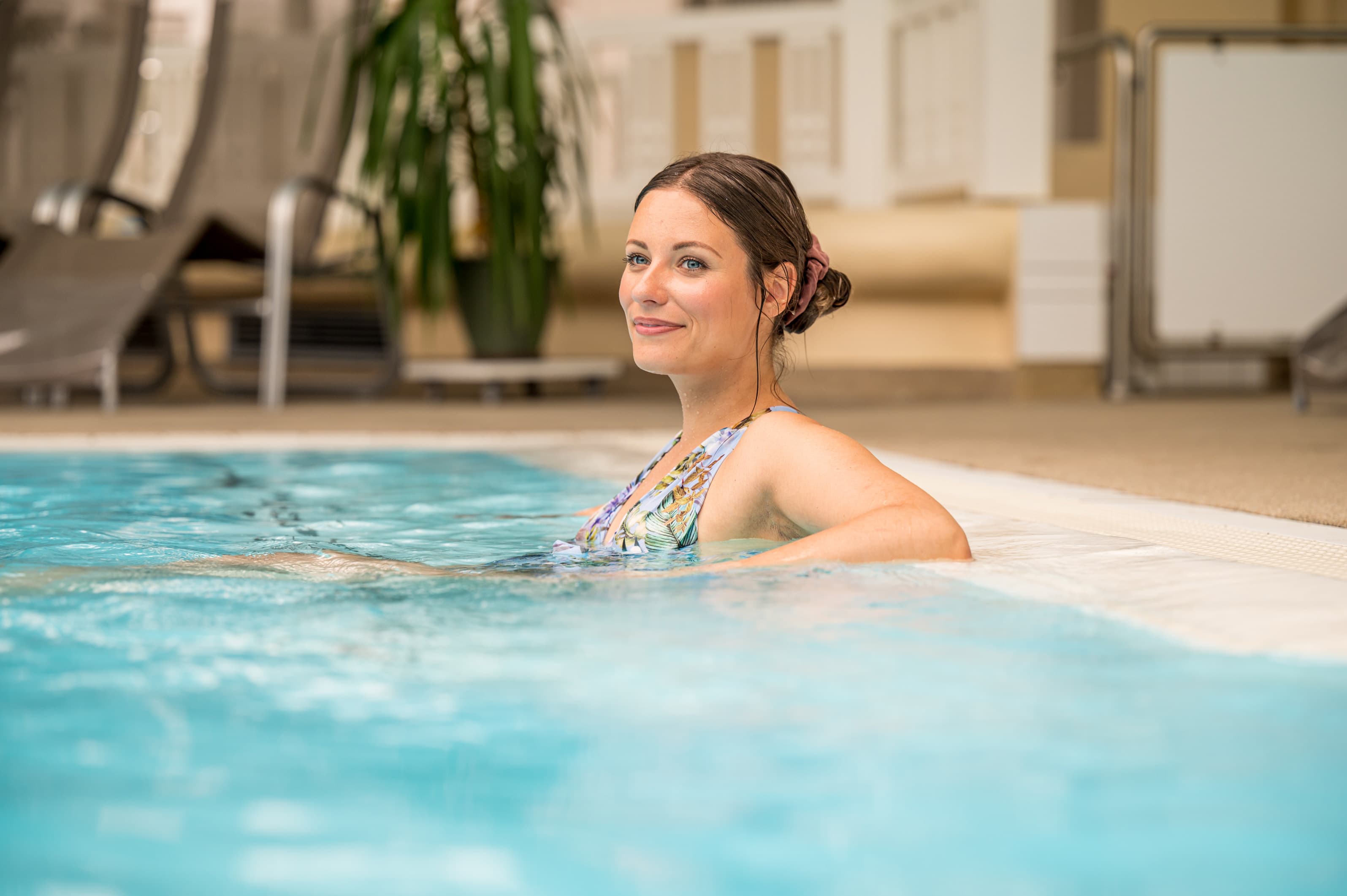
What could be better in winter than warming up in the warmth after a day outside in the cold? And what’s the best way to do that? Quite simply, at one of Usedom’s two thermal resorts. The Bernsteintherme in Zinnowitz invites you to a thermal spa where you can enjoy the indoor and outdoor pools—heated to 32° Celsius and enriched with brine—or unwind in the unique beach sauna. At the OstseeTherme in Ahlbeck, you can choose between seven pools in the bathing area and the sauna area, which features five different temperature settings. With a view like this, the winter cold is even easier to bear.
Enjoy empty beaches with your four-legged friend
Especially during the off-season, deserted beaches are perfect for a long walk along the shore. Whether you’re alone, with a partner, with the whole family, or even with a four-legged friend: Now is the perfect time to really let the sea breeze wash over you on the beach. Best of all: In winter, there’s no leash requirement on the beach. So you can let your dog run and play freely on the beach without any worries. Some dogs even love jumping into the Baltic Sea themselves.
Ice Bathing
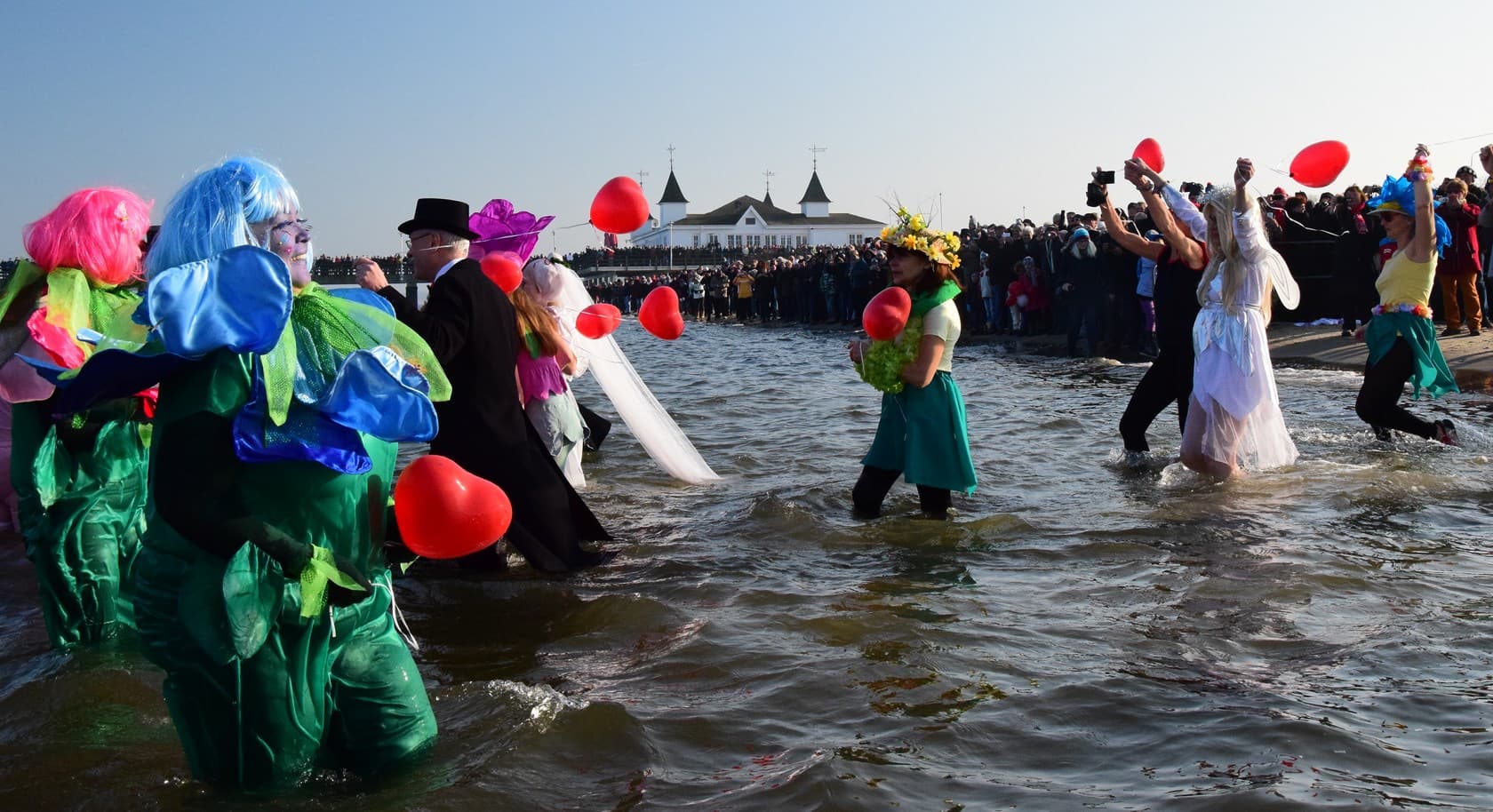
Ice swimming is as much a part of winter as snow. Many brave ice swimmers plunge into the Baltic Sea during the cold season to ring in the New Year, because regular ice swimming strengthens the immune system and invigorates the body and mind. Every year, many resort administrations host a full-fledged ice-bathing event where cheerfully costumed cold-resistant participants gather to splash around in the Baltic Sea together. Unfortunately, some of these events cannot take place this year due to the pandemic, but the Koserow resort administration is still planning to hold its event. But ice-bathing event or not, that shouldn’t stop the brave among you from taking a dip in the Baltic Sea yourselves this winter. Because no matter which beach you’re at, the Baltic Sea invites you to swim in every season—whether the cold water keeps you from swimming is entirely up to you. Anyone who takes the chance to jump into the Baltic Sea when it’s chilly outside deserves a lot of respect. After all, not everyone can say they’ve done that. But be sure not to go swimming alone—swim under supervision—and don’t stay in the cold water for more than three to five minutes.
In the Curative and Healing Forest with the Whole Family
The curative & healing forest is no longer just an insider’s tip. The quiet off-season is the perfect time to explore the forest. Visitors can warm up by doing the exercises at the various therapeutic forest stations. Since last year, a section has been specially designed for children, so that the whole family can enjoy an active day in the curative & healing forest. At the same time, the unique forest climate has valuable health-promoting effects and benefits the lungs, the musculoskeletal system, and mental well-being.
Experience Animals Up Close at the Wolgast Zoo
Last summer, the Wolgast Zoo celebrated its 60th anniversary. It’s definitely worth a visit in the winter, too. Apart from shorter opening hours, there’s no difference from the summer, and you can move freely throughout the park. 45 species, comprising about 400 animals, welcome visitors to the zoo. Among others, you’ll find kangaroos, monkeys, otters, raccoons, meerkats, porcupines, and wolves. Some animals, such as the alpacas or the friendly rabbits, guinea pigs, and ponies, can even be petted by visitors. Feed bags are also available for a small fee so you can feed the goats, fallow deer, and mouflons, for example. If you’ve always wanted to sponsor an animal, you can do so here.
Admire the architecture of the imperial resorts along the promenade
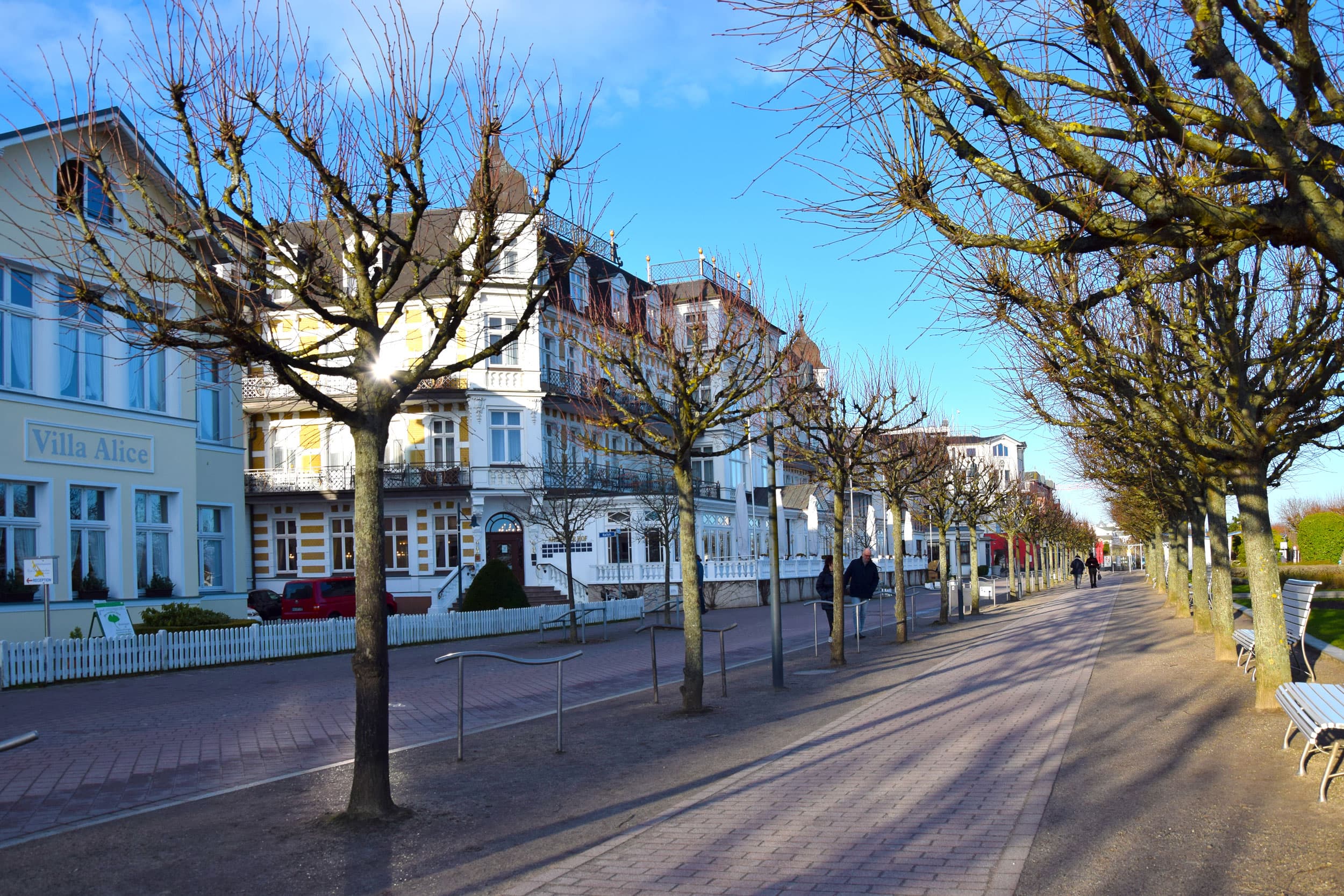
The beach promenade from Bansin to Ahlbeck is just under 6 kilometers long. Here you can admire the finest examples of seaside resort architecture, for which the imperial resorts on Usedom are famous. One villa more magnificent than the next lines the promenade everywhere. But even in the second, third, or fourth rows, you can discover villas in the opulent seaside resort architectural style. Unlike in the summer, the promenade isn’t very busy in the winter. You’ll only occasionally come across tourists or locals walking their dogs or out for their Sunday stroll. If the walk back along the promenade feels too long, you can take advantage of the Usedom Bäderbahn and return to your starting point by bus or train. No matter what you decide, the walk along the promenade is truly worthwhile, even in winter. The Baltic Sea usually remains in sight, so you can also walk back along the beach on your return trip.
Enjoy a fantastic view from the highest point
To reach the island’s highest point, it’s worth taking a hike up the Golm. The Golm rises just beyond the German-Polish border to a height of about 69 meters and is located very close to the village of Kamminke. From the top, there is an excellent view across the Usedom hinterland, the imperial resorts, and all the way to Swinemünde. There is also a memorial on the Golm commemorating the victims of the devastating bombing raid on the city of Swinemünde in March 1945.
Explore the legendary Streckelsberg
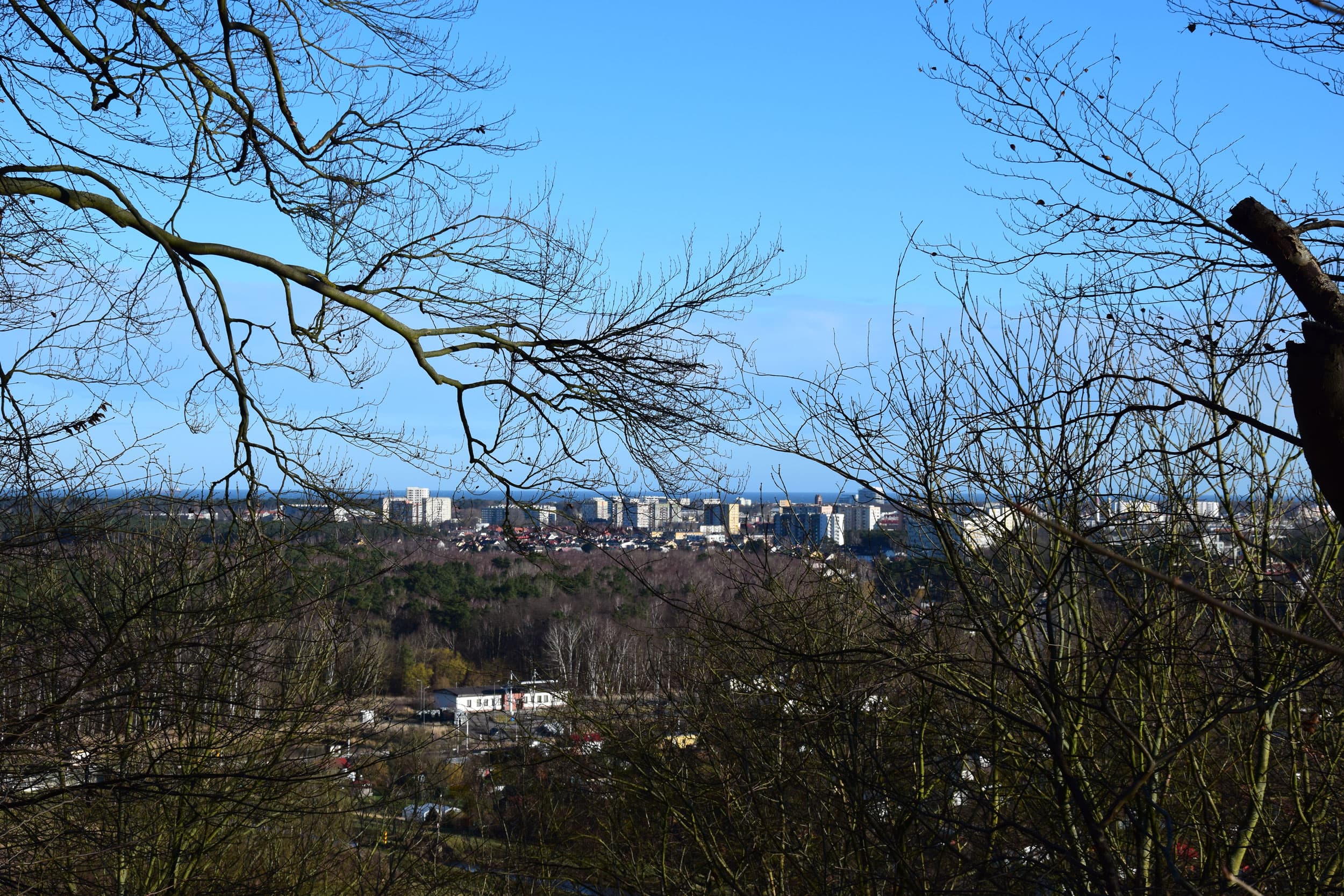
At 58 meters high, the Streckelsberg is the third-highest peak on the island of Usedom. It is located in the Baltic Sea resort town of Koserow and ranks behind the Golm and the Kückelsberg. There are several legends and myths surrounding the Streckelsberg, which is why a walk up this so-called “Legend Mountain” is well worth it. For example, according to legend, the infamous pirate Klaus Störtebeker is said to have hidden his captured treasures in the mountain’s forests. The Streckelsberg is also the setting for the tale of the “Amber Witch,” which the Koserow pastor Wilhelm Meinhold wrote down in 1843.
But it’s not just those fascinated by legends and myths who should climb the Streckelsberg; history enthusiasts will also find here the site of the former Army Research Institute and the Wehrmacht. Wehrmacht rocket researchers built an observation tower atop the Streckelsberg, which served as a measuring station for monitoring rocket tests. This allowed the scientists to precisely track and document the flight paths. In addition, the highest point on the outer coast was ideally situated for monitoring the airspace around the important port cities of Szczecin and Świnoujście. However, this tower was dismantled in 1997. Today, only informational signs with pictures on the mountain serve as a reminder of the events of that time. Of course, a leisurely walk through the forest—which stretches across the Streckelsberg with its red beech and Scots pine trees—is also highly recommended.
Drink a stiff grog
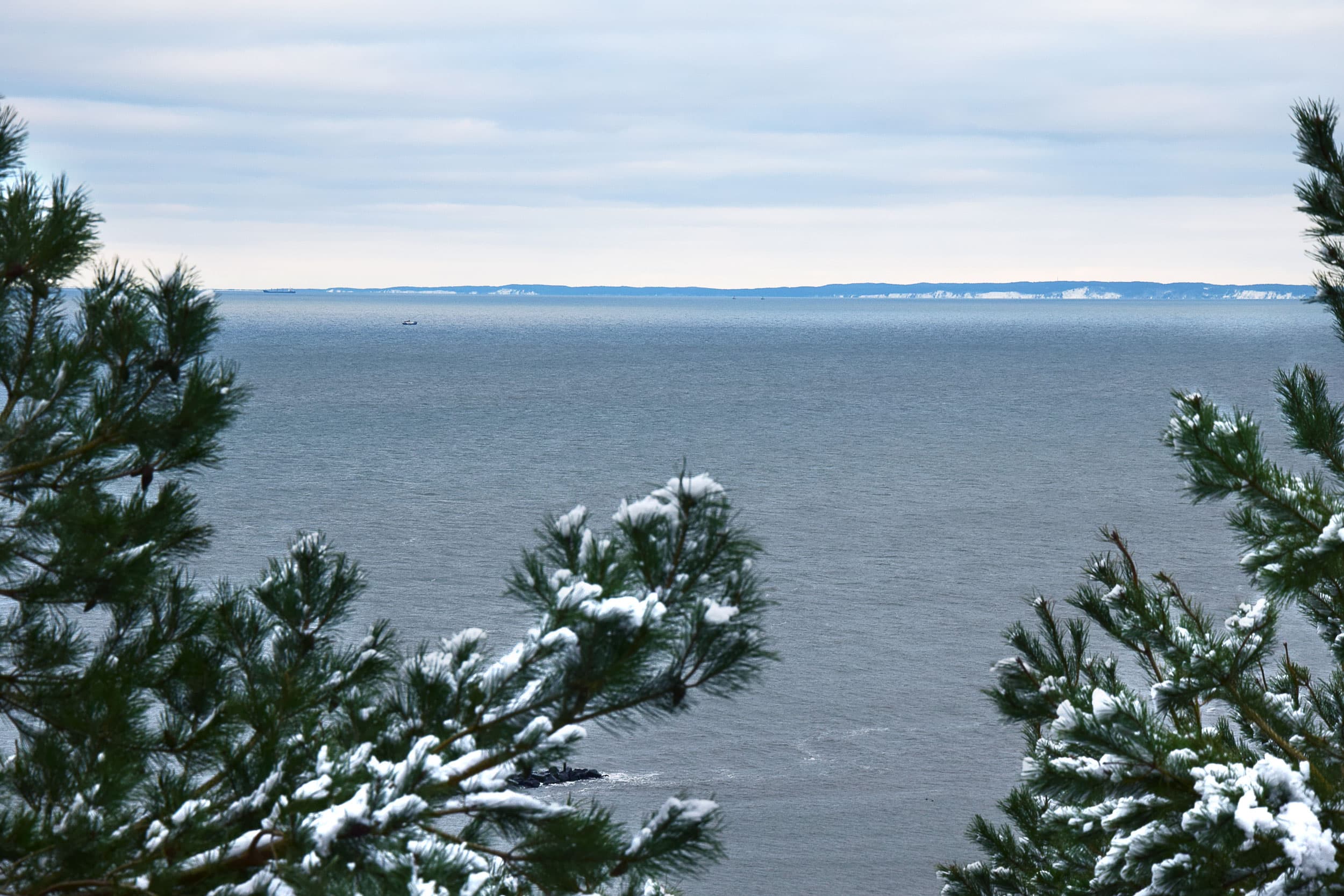
What drink is perfect for warming up, especially in winter? Without a doubt, a Steifer Grog. But what exactly is it? In short, it’s hot water with sugar and a good splash of rum (it’s best to warm the rum up a bit, too). So this drink is ideal for really warming up during the cold season. And who invented it? The story dates back to the 17th or early 18th century, when sailors in the British Navy were still guaranteed a daily ration of rum as part of their provisions. However, since the combination of alcohol and seafaring could endanger safety on board, the captain—known as “Old Grog”—decided to dilute the rum with water. The sailors also mixed in some sugar. To keep from getting cold so quickly, the water was heated beforehand during the cold season. If you’d like to be transported back to that era, you can easily make this drink at home. You can also enjoy a grog at a bar or a stand near the beach. On Usedom, some stands offer mulled wine and “Steifer Grog” in the winter, sometimes mixed with sea buckthorn or other flavors. If you don’t care for “Steifer Grog,” mulled wine or tea are, of course, also good options for achieving a similarly warming effect.
Baltic Lights – Germany's Northernmost Sled Dog Race
Germany’s northernmost sled dog race, which usually takes place on the first weekend in March, offers a unique experience. This year, Baltic Lights is scheduled for March 4–6, 2022. At this event, spectators can watch training sessions with the sled dogs and the races between the piers in Heringsdorf and Ahlbeck. In addition to international sled dog teams, many well-known faces will once again be on hand to raise funds for Welthungerhilfe at this charity race and to advocate for climate protection. In addition, along the route near the piers, visitors can marvel at the crackling Biike bonfires on the beach, which, thanks to their size, catch the eye even from a distance.
Share this discovery
By clicking the icons, you leave this website.