What is your process when you create a new dish and redesign the menu?
It varies quite a bit. We change the menu four times a year, depending on the season. Then we add themed dishes, for example, during Game Weeks or Herring Weeks. Sometimes things have to happen very quickly, and new dishes are created under time pressure. That’s when ideas just start bubbling up, and I often end up with far more dishes than I can possibly use. I can then draw from this pool of ideas later on. I often get spontaneous ideas while driving or going for a walk. By now, I can visualize the flavor combinations so precisely that I don’t even have to test the dishes before putting them on the menu. I don’t like to repeat dishes, so our small menu is constantly being completely reinvented. I like to incorporate everything I’ve discovered while traveling—for example, North African or Asian influences. When it comes to food, the possibilities for variation are endless. What you get here isn’t something you’ll find on every street corner. A special offering for connoisseurs is our gin menu, where gin serves as a common thread running through the five courses. Nevertheless, I strive to create a menu that appeals to a universal palate.
As head chef, you lead the kitchen team at the restaurant in the White Castle. What’s key to ensuring everything runs like clockwork in the kitchen?
A healthy sense of teamwork and a good atmosphere are very important to me. I make sure that all my colleagues—whether chefs, servers, or kitchen assistants—receive sufficient recognition for their work. Respect and appreciation are essential in the kitchen. We have many Polish colleagues on the team, all of whom speak English very well. I make a big effort to communicate everything in English so that everyone understands. Some dishes are very labor-intensive. To make a nice chimichurri—an Argentine pesto—someone has to pound the fresh herbs in a mortar for half an hour. In those cases, I want to explain to my colleague why the effort is worth it.
You turned your student job into a career. What prompted you to change career paths after studying political science and public administration?
It was actually a coincidence. After college, I lived in Uganda. It quickly became clear to me that I wanted to do something with food. I’ve always been passionate about cooking. I enjoy working with ingredients and creating something new from them. It brings me great joy when guests enjoy the food. I’d already gained a lot of experience at home. My mother used to teach cooking classes and loved to experiment in the kitchen. So in Uganda, I applied for a job as a chef on the spur of the moment and was able to try my hand at various restaurants. Later, thanks to my head start in knowledge, I was able to take over management of the restaurant and train my colleagues. That’s how I skillfully maneuvered my way into the profession.
How did you learn the chef’s trade? Were there any influential head chefs at your various stops along the way who remain role models for you to this day?
In Uganda, I had several jobs over the course of seven years. At “Big Mike,” a whiskey bar with a restaurant, the Swedish chef really inspired me. There, we served upscale pub food. Even today, I still love well-made fish and chips, burgers, or sweet potato fries, and I like to include them on our menu. I also picked up quite a few tricks from an Italian Michelin-starred chef I worked with in Uganda.
You’ve traveled a lot. How has living abroad influenced your culinary skills?
My travels have given me an openness to new things. I don’t eat everything, mind you, but I’m definitely less hesitant than some others. I lived in Madrid and Costa Rica for a while and traveled through China: Asian cuisine offers amazing flavor experiences. Soy sauce works wonderfully even in non-Asian contexts. In Uganda, Indian cuisine has a big influence. That’s where I learned to love curries and samosas.
Do you have a favorite spot on the island?
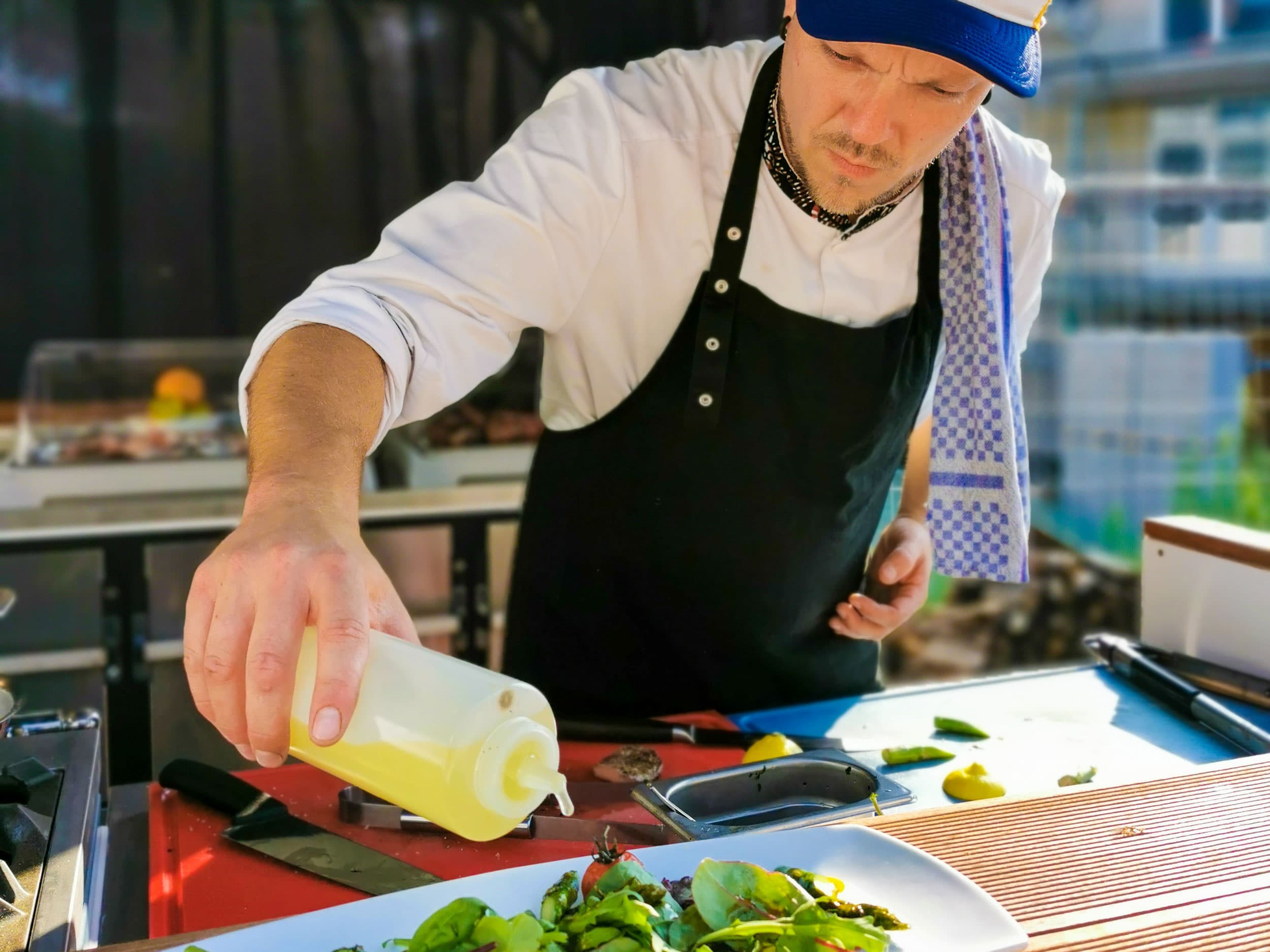
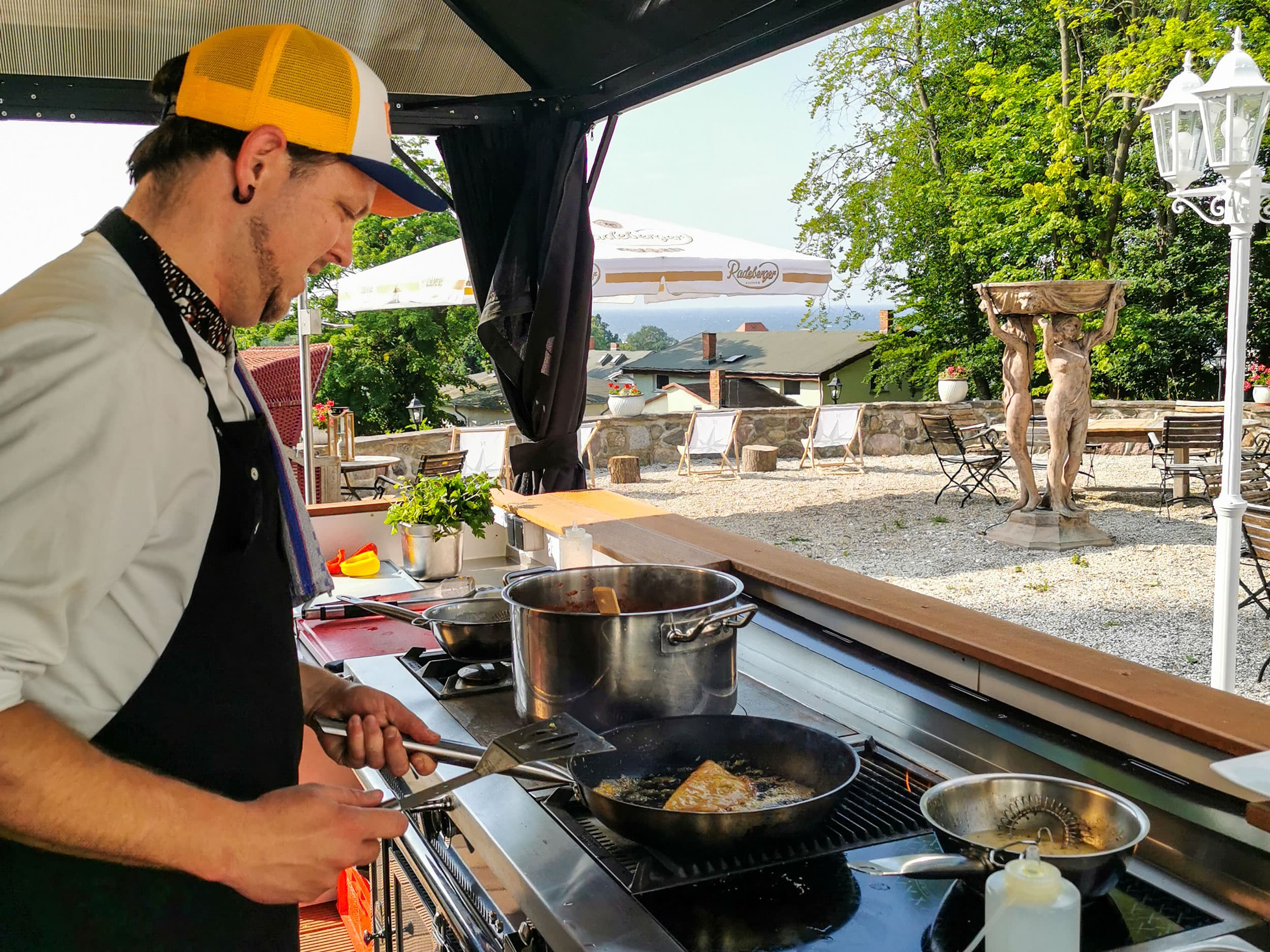
Definitely the White Castle—with that view! Every Thursday, we cook live in our outdoor kitchen on the terrace. Of course, I don’t just keep my eyes on the grill—I also love letting my gaze wander over to the Baltic Sea every now and then.
Thank you very much for the interview!