The Usedom Mustard Renaissance
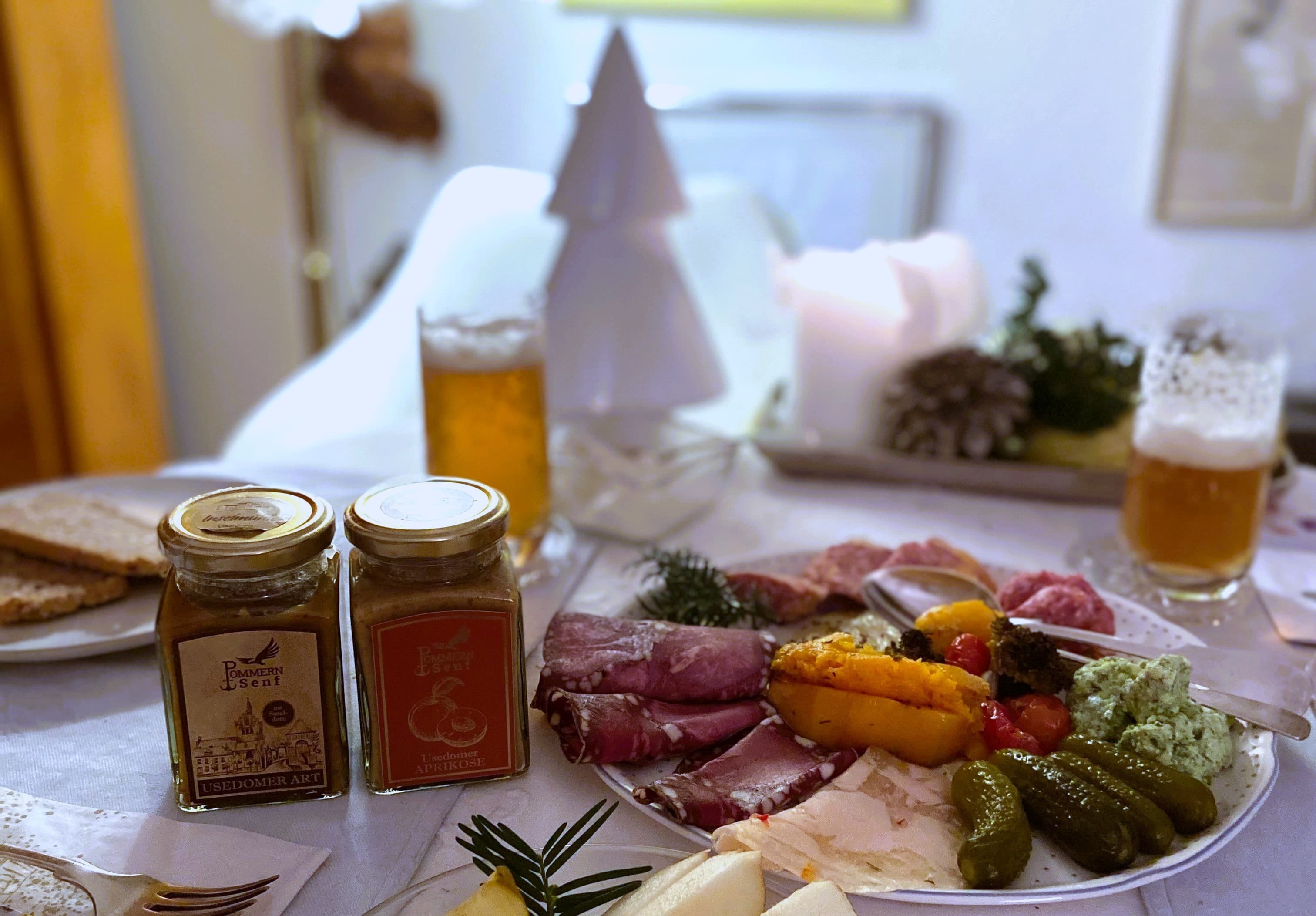
During the GDR era, Tutower mustard was a true cult brand from Western Pomerania. Today, this spicy horseradish mustard is produced according to the original recipe by Inselmühle Usedom and sold under the name "Pommern-Senf Tutower Original."
The Usedom Mustard Renaissance
On the sunny island of Usedom and in eastern Germany, mustard has a particularly long and cherished local history. The spicy paste made from rapeseed-yellow mustard plants isn’t just a symbol of nostalgia for the GDR. Since the reunification, the long-standing per-capita consumption of mustard—about 1.5 kilograms per year—has declined only slightly over the years. So it wasn’t just because of ketchup, which was a rare treat served with sausage in the new federal states. Good mustard was even considered a staple food. Subsidized by the state, the small, iconic yellow and blue plastic jars of “Bautz’ner” and “Tutower” cost only a few pennies. Mustard, right alongside salt and pepper, was always within reach on every East German table; it was even spread directly on a good buttered slice of bread and accompanied every snack of cold cuts and cheese. In the Mecklenburg-Western Pomerania region, it was served as a firm yet creamy accompaniment to the many meat dishes—preferably with a hint of horseradish. After all, it can taste spicy, savory, sour, and even sweet all at once. It simply pairs perfectly with the hearty Mecklenburg-Pomeranian cuisine, which is known above all for its fish delicacies such as smoked fish, the iconic fish sandwich, or Müritz fish soup.
Mustard—a cultural treasure of the East
Mustard used to be produced in 17 towns. Five of them still exist: The best-known is the Saxon brand—the “Bautz’ner”—which has been associated with mustard production in East Germany since 1866 (meaning it wasn’t invented in the GDR) and, as the market leader throughout Germany, can be found in many refrigerators. It has been produced in Kleinwelka since the 1970s. In Jüterbog, Brandenburg, there is another mustard brand of the same name, and in Thuringia, the label bears the name “Born Senf.” Altenburger mustard, with its Köstritzer Schwarzbier mustard, has also been back in Thuringia since 1992 in a revived version. East German mustard was recognizable by its pale color; in the West, mustards were often colored with turmeric.
Usedom-Style Mustard
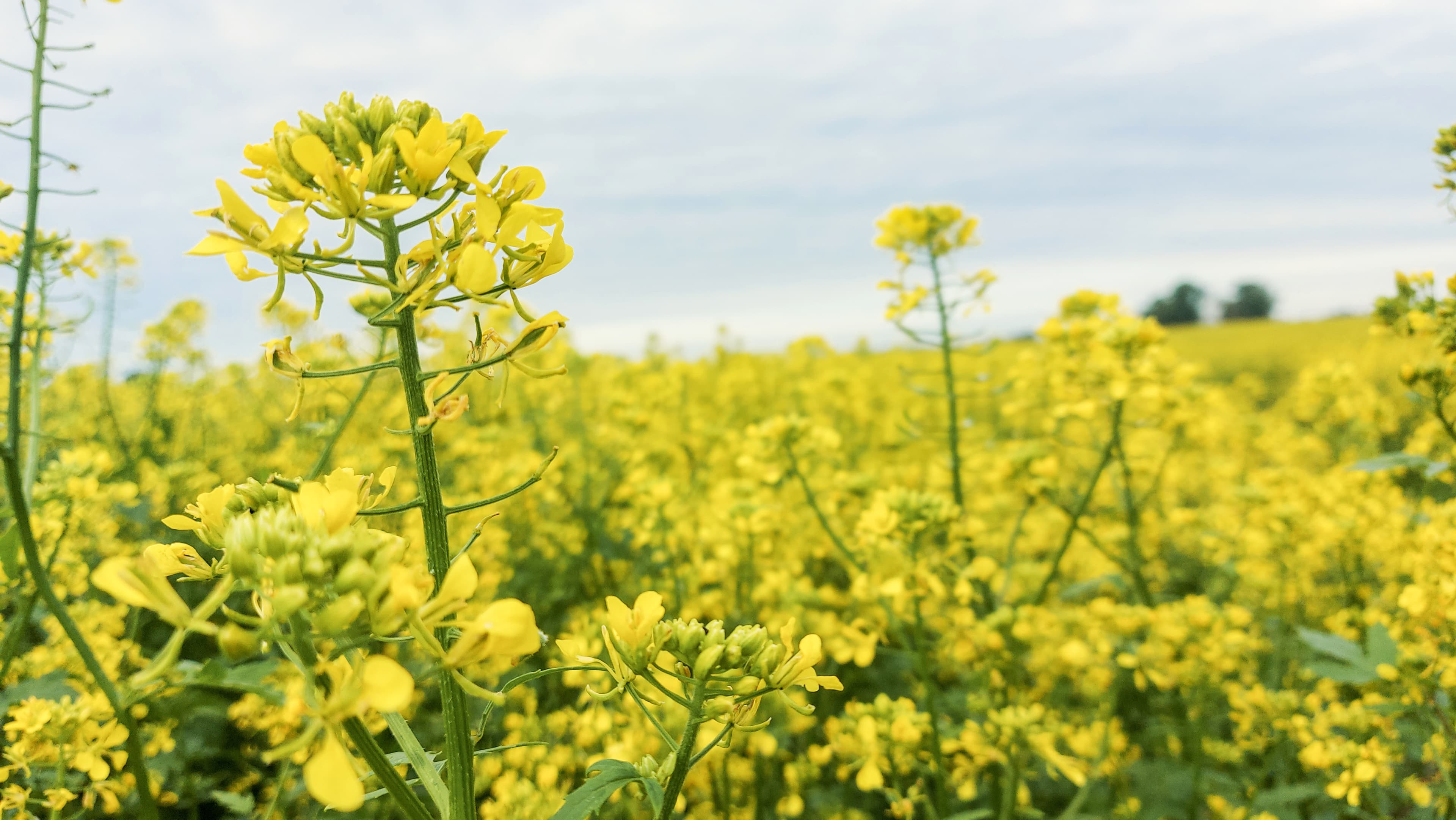
The “Sun Island” of Usedom also has its own mustard local hero—the “Pommernsenf.” It sounds old-fashioned, but it’s actually a “new name” for a traditional product. Even though its recipe is already 150 years old, the original Tutower mustard nearly disappeared from the mustard scene forever. It wasn’t until 2022 that the Usedomer Inselmühle began producing it again according to the original recipe. The only independent, natural artisanal producer on the “Sun Island” had just reopened in 2021 and is breathing new life into old traditions with many other products (most of which are organic). Starting with its location and building: in the 160-year-old brick building—which once featured a windmill and a mill—grain was ground for a very long time. Following a major renovation, mustard is once again being produced here today, alongside cold-pressed rapeseed and other edible oils, natural fresh-pressed juices, fruit spreads, and fine spirits. The Inselmühle in the town of Usedom also includes about 200 hectares of land—stretching from the lagoon down to Karnin and Mönchshof. In addition to fruit trees and aronia bushes for wines, jams, and chutneys, yellow mustard flowers and an apricot orchard with 6,000 trees have recently taken root here. The gentle sea breeze keeps pests at bay. These are ideal conditions for the Pomeranian Goldcreme. At the Inselmühle’s nearby second project—the Schloß Rattey winery—wine is once again being cultivated in the region for the first time, and fine wine vinegar is being produced—a key ingredient in Mostert.
How It All Began
But let’s take a look at the original mustard jar and its history: The recipe for Insel mustard was developed in Stettin over 150 years ago. A company called Müller & Bolle first bottled it. Then the war came, and the mustard went on a journey: Bombed out in the final days of the war, the company sought a new location. First, it moved to Loitz in the Lower Peene Valley. Expropriated in the 1950s, production was finally relocated in 1964 to the Peeneland canning factory of “VEB Nordfrucht” in Tutow, in the Vorpommern-Greifswald district. The Loitz table mustard was renamed the identity-defining “Tutower” and thus finally achieved cult status. No flavor enhancers or artificial colors, but nice and spicy—that was the motto even back then. With horseradish for a spicy kick—or without—it was henceforth available in a handy, compact, bright yellow plastic cup. Every resident of Tutow—and the people of Mecklenburg—had their Tutower in the cupboard, and many—reportedly almost all—in the little mustard town of 1,000 souls worked at the production facility at some point.
How Everything Ended and Went On
Despite its popularity, the company was forced to file for bankruptcy in 2002. After several changes in ownership, production was relocated to Stavenhagen near Neubrandenburg. In 2010, the local GDR museum found a new home in the old canning factory in Tutow. The historic production facility was preserved as a museum in a side wing of the building complex. In September 2020, production of Tutow’s traditional mustard came to an end. The last owner, from Lower Bavaria, announced that production of the traditional “Tutower Senf” brand had been discontinued for good, for reasons that remain somewhat unclear to this day. The expansion of the mustard business had apparently not worked out. The last batches were sold like relics. Tutow was in mourning.

The Mustard Savers from the Island
But then everything happened very quickly: Stefan Schmidt, the winery manager at Schloss Rattey—which belongs to Inselmühle—reached out to Tutow’s mayor, Roland Heiden, and got in touch with former employees of the Tutow mustard factory. Together, the Tutow delegation traveled to Inselmühle Usedom with the original recipe in hand and conducted experiments under production conditions. It was a success. The experiment worked. The mustard tastes just like the original.
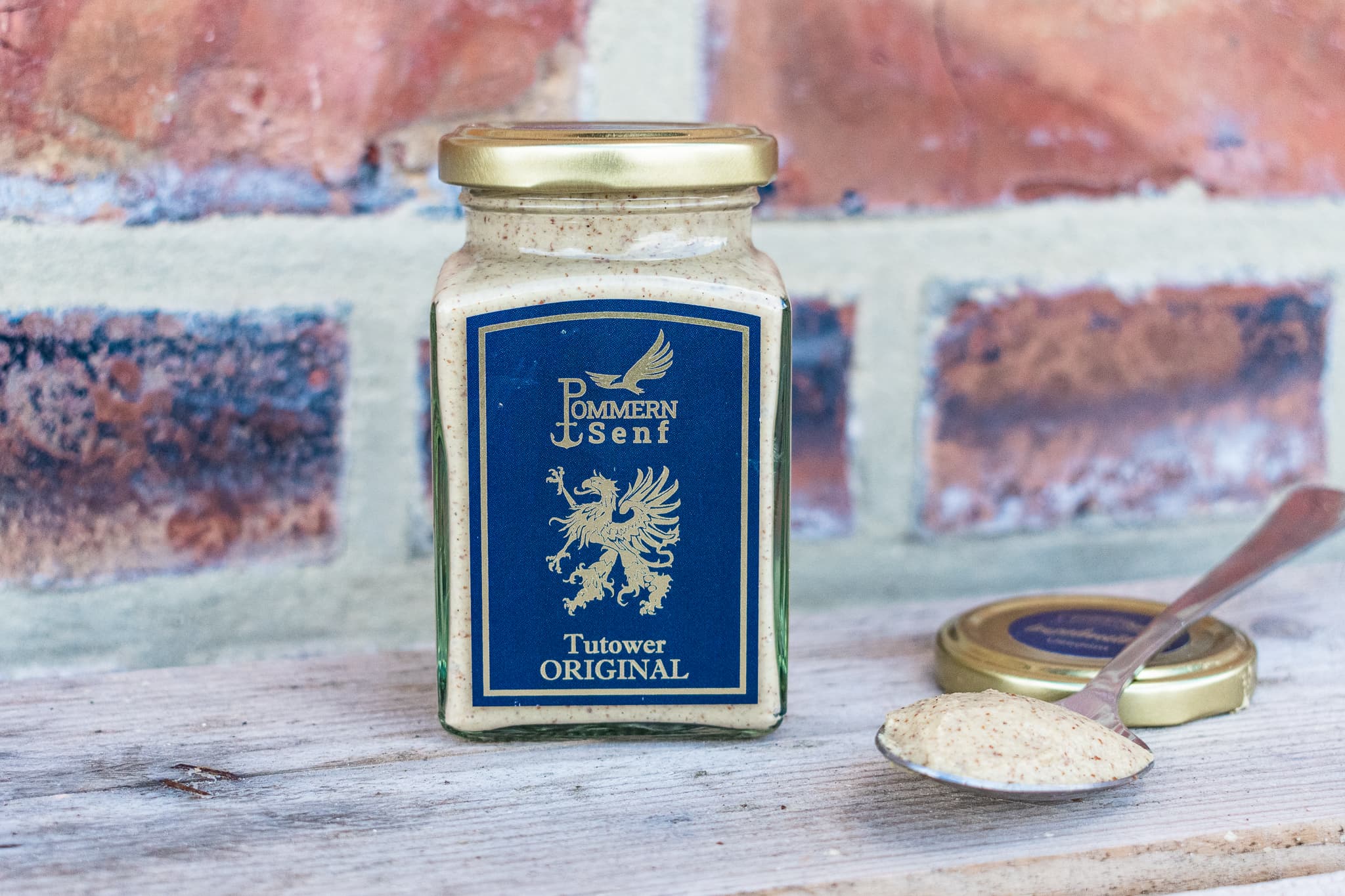
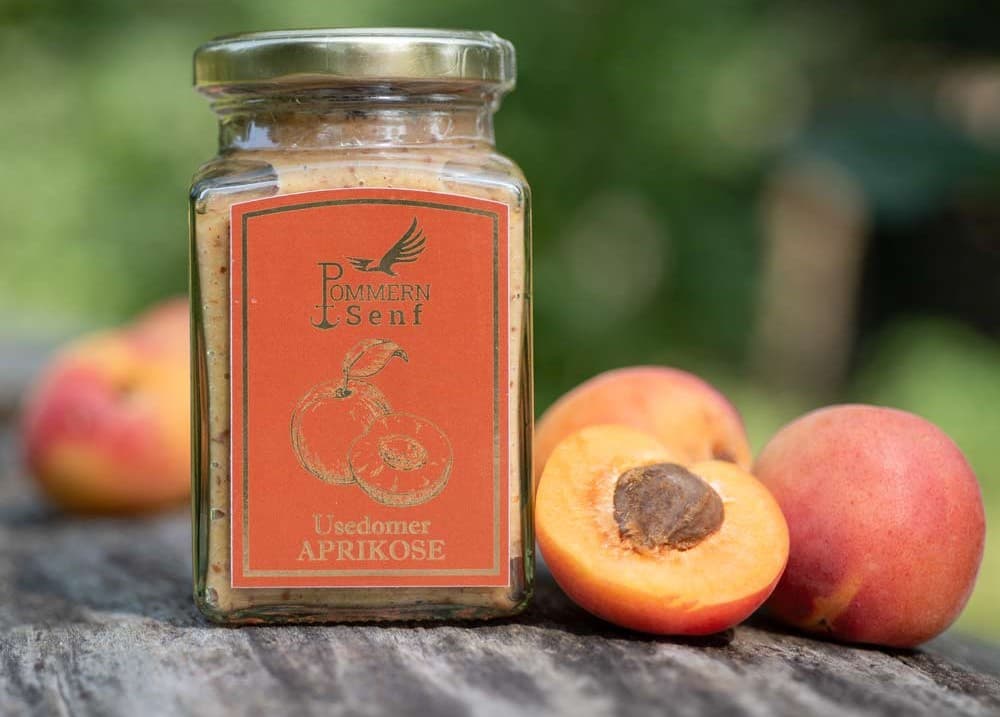
Mustard made in the style of the (Sonnen) Inselmühle
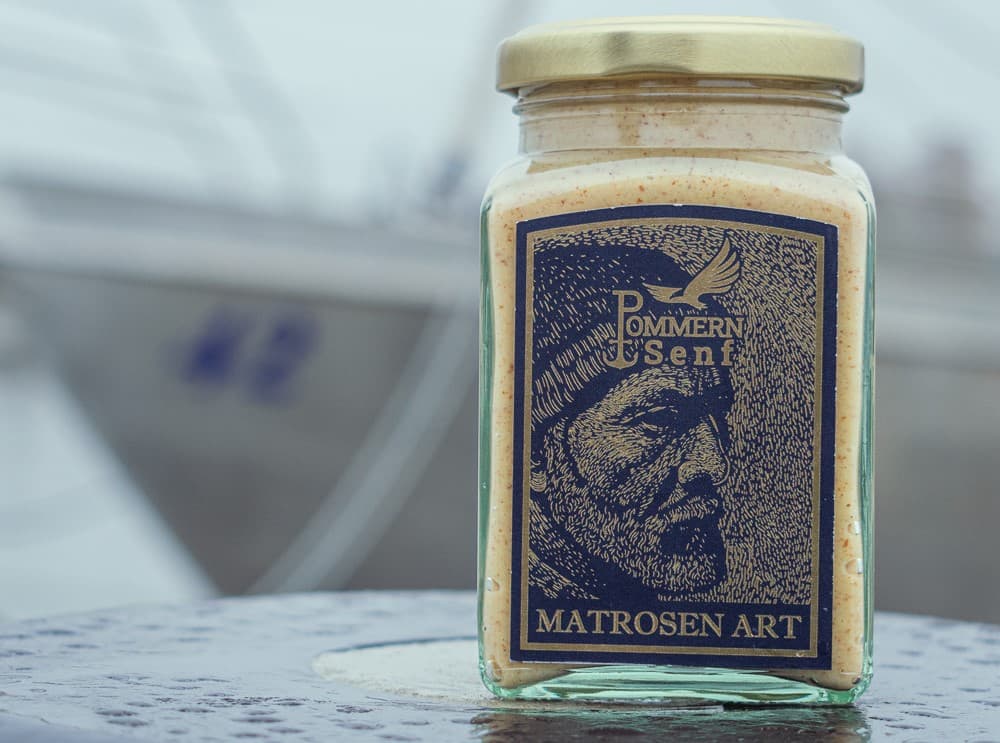
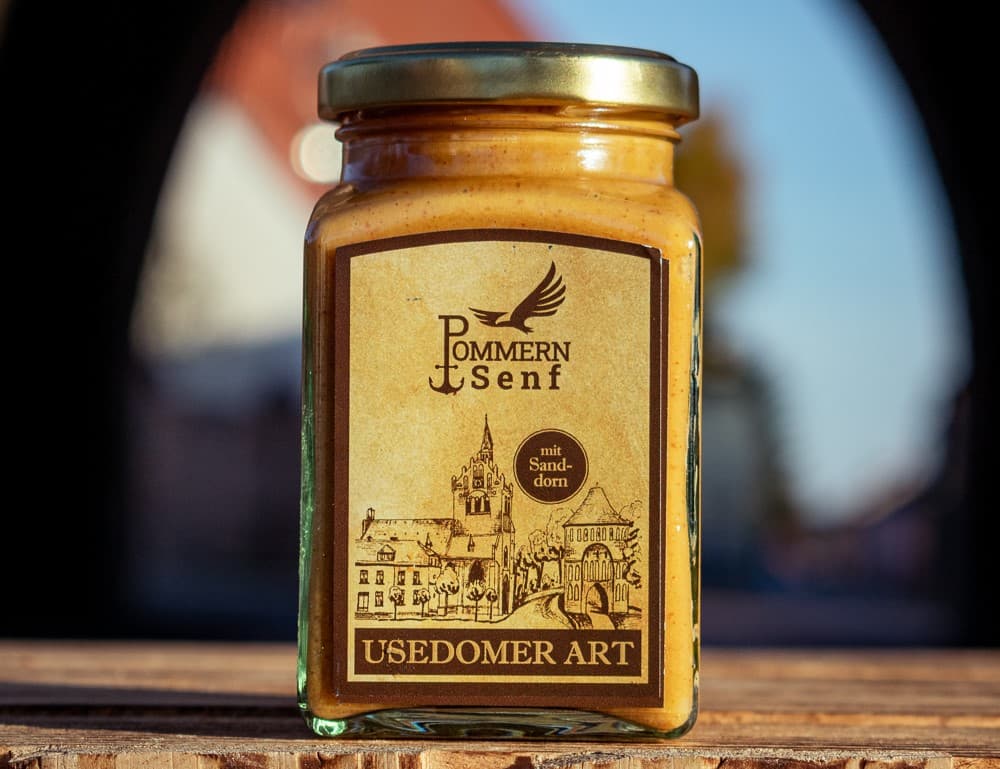
From now on, the mustard is called “Pommernsenf Tutower Original,” and it’s already available in five varieties: the original (with and without horseradish), with apricot, with sea buckthorn, and as “sailor’s mustard” with rum. That way, a taste of the coast is right there in the jar. In addition, there are two varieties of Pomeranian sauce—barbecue sauce and ketchup.
It doesn't get much more local than this
All main ingredients are grown on Inselmühle’s own land or in the surrounding area of Usedom. Naturally, they contain no mustard flour, artificial flavors, or preservatives. Two varieties of mustard seeds, grown in the fields of the Inselmühle on Usedom, are freshly ground there, cold-brewed, and bottled on site. Sea buckthorn has historically always played an important role in Mecklenburg-Western Pomerania. In addition to fruit spreads, juices, and liqueurs, the yellow berries are now also used in “Pomeranian Mustard, Usedom Style—Original from Mecklenburg-Western Pomerania.” You can buy the mustard on-site at the Inselmühle Usedom, as well as at select supermarkets, farm stands, delicatessens, and hotels in the region, or order it online. Guided tours of the production facility are also offered, and all varieties of mustard can be sampled in the shop, which features a bistro. But be warned: the fresher the batch, the spicier the mustard!


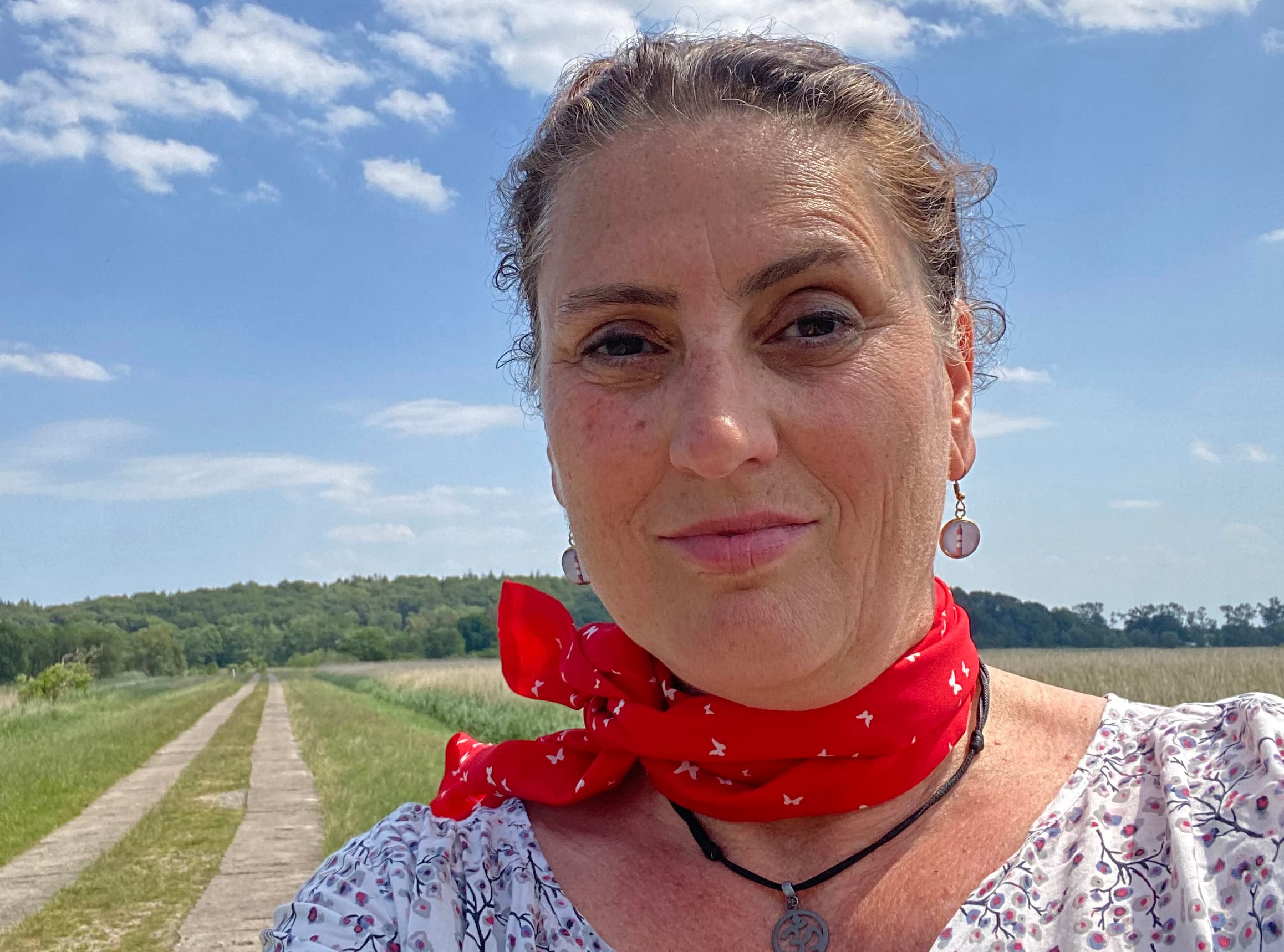
About the Author: Anke Sademann
Green lifestyle and travel journalist and author Anke Sademann doesn’t just roam through European regions. For more than a decade, this slow-travel specialist has also been exploring her adopted home of Berlin and its surrounding areas, all the way up to the coast. Anke Sademann writes for various magazines and newspapers, focusing on mindful living. She has also visited our “sunny island”: in an authentic and approachable way, she shares her very personal perspective on Usedom and its natural and travel attractions.
Share this discovery
By clicking the icons, you leave this website.