The gateway to the realm of the ONH is the museum garden and sculpture park, which “passersby”—whether on bike, on foot, or by water—can discover on the narrow strip of land between the sea and the lagoon. Sheltered by a low stone wall, it offers a glimpse into a parallel world: beneath the protective canopy of poplars and oaks, sculptures made of marble, cast cement, sandstone, or bronze lie, kneel, sleep, or stand in the grass. The sculptures bear witness to ONH’s large circle of friends, which included many well-known sculptors of the interwar period, such as Fritz Cremer, Waldemar Grzimek, Wieland Förster, Werner Stötzer, Jo Jastram, and Peter Makolies. Niemeyer-Holstein himself was not a sculptor. Only upon a second glance does one come to understand the seemingly idyllic garden area as a well-conceived open-air gallery of open, intersecting axes. Over the course of many decades, this densely landscaped space gradually became a natural stage for art.
The Art of Silence Between the Baltic Sea and the Achterwasser
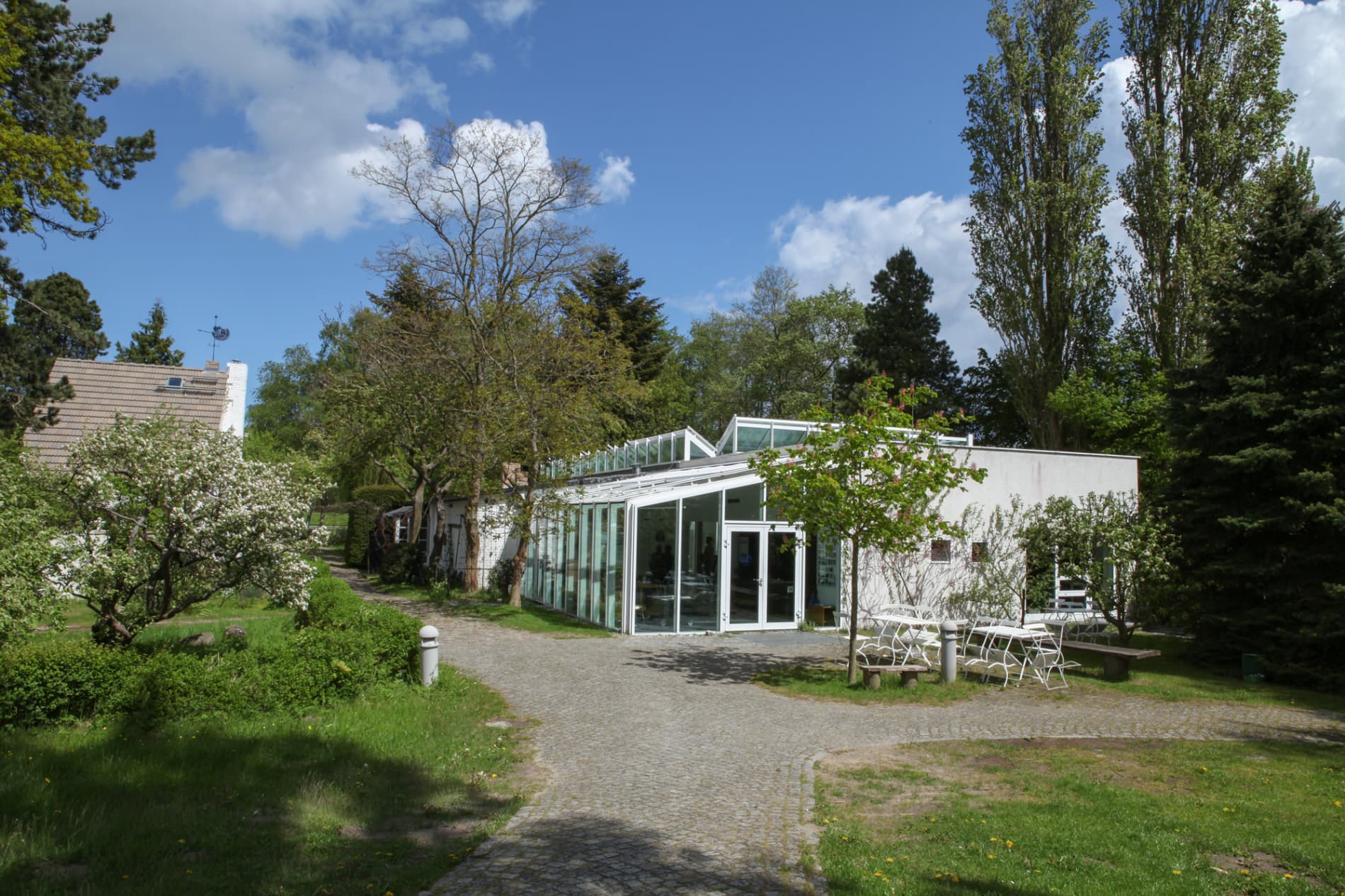
The Otto Niemeyer-Holstein Museum and Studio is located at the narrowest point of Usedom. It is a place to slow down. It’s worth taking the time to immerse yourself in the artist’s world.
A brushstroke between water, land, and sea
Lüttenort: At this special spot, only three hundred meters separate the Baltic Sea from the Achterwasser. This “little town” between Koserow and Zempin is home to a great legacy. Arguably the most famous painter of the Baltic Sea region, Otto Niemeyer Holstein (1896–1984)—affectionately and pragmatically abbreviated as “ONH” by locals—lived and worked here for nearly five decades. At first, he used his retreat as a summer and weekend home; later, it served as a political enclave and a refuge from the Nazis.
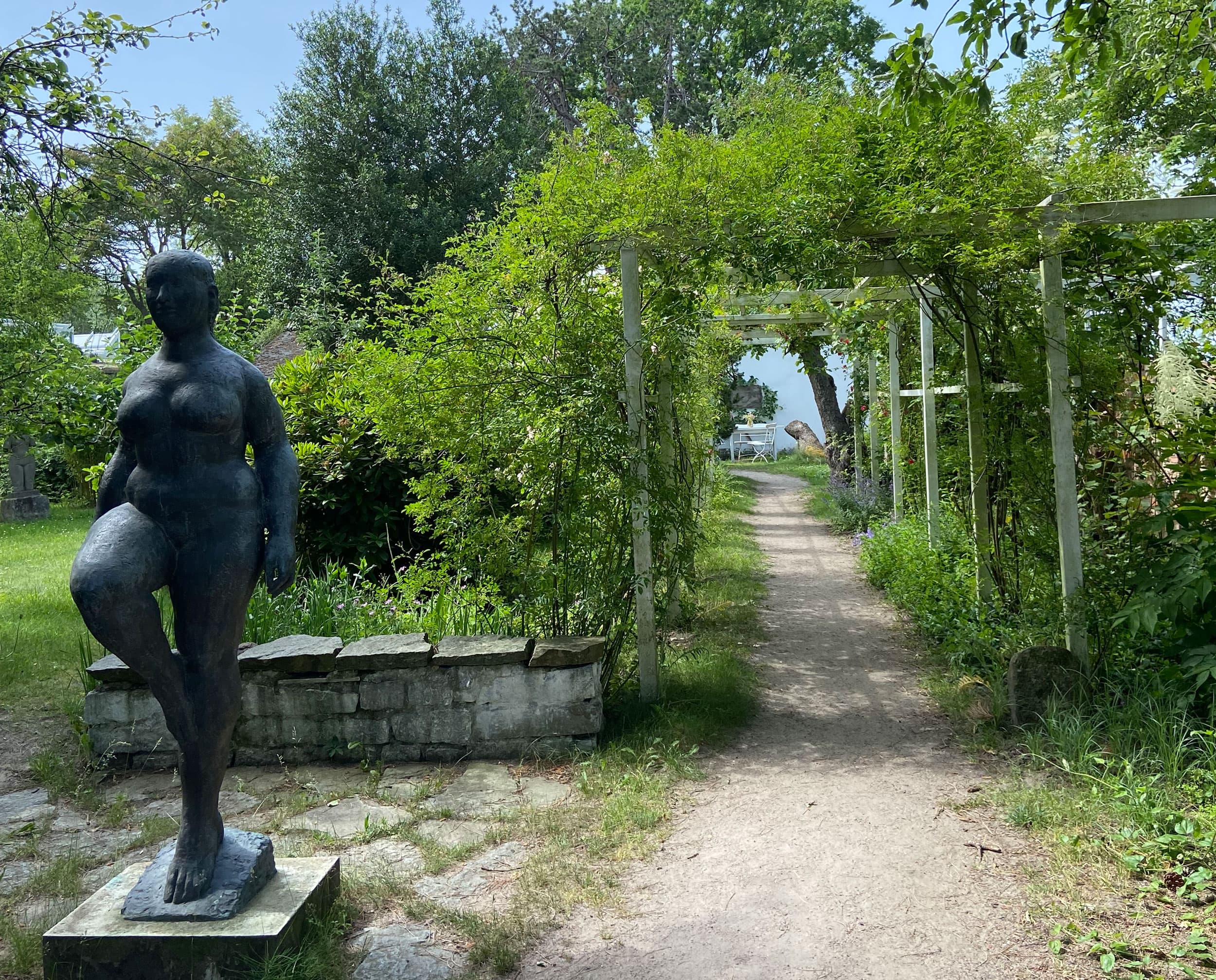
90 years ago, the visionary acquired the 5,000-square-meter “barren wasteland devoid of vegetation.” On his travels through Europe, he had repeatedly visited gardens. By composting horse manure and lime, he succeeded in transforming the no-man’s-land—devastated by seawater salt—into this open-air art oasis. Today, the complex of a residence, studio, and garden—which has evolved historically since 1933—is a “personal museum” that visitors can experience firsthand and a unique gem. Upon his death in 1985, ONH bequeathed his life’s work to the island of Usedom so that visitors could grasp the inner world he captured on canvas and paper and understand his living space as his alter ego. The estate in Lüttenort also included the architectural plans for the gallery extension, completed in 2001. The transparent rooms in the modern glass cube were intended to serve as a “light-flooded frame for paintings.” The exhibitions, which change twice a year, feature works from the museum’s own collection as well as works by some 200 fellow artists of the “classical modernism” movement. The artists exchanged or gifted their works to one another.
A Decommissioned Berlin Stadtbahn Freight Car Turned into a Residential Building
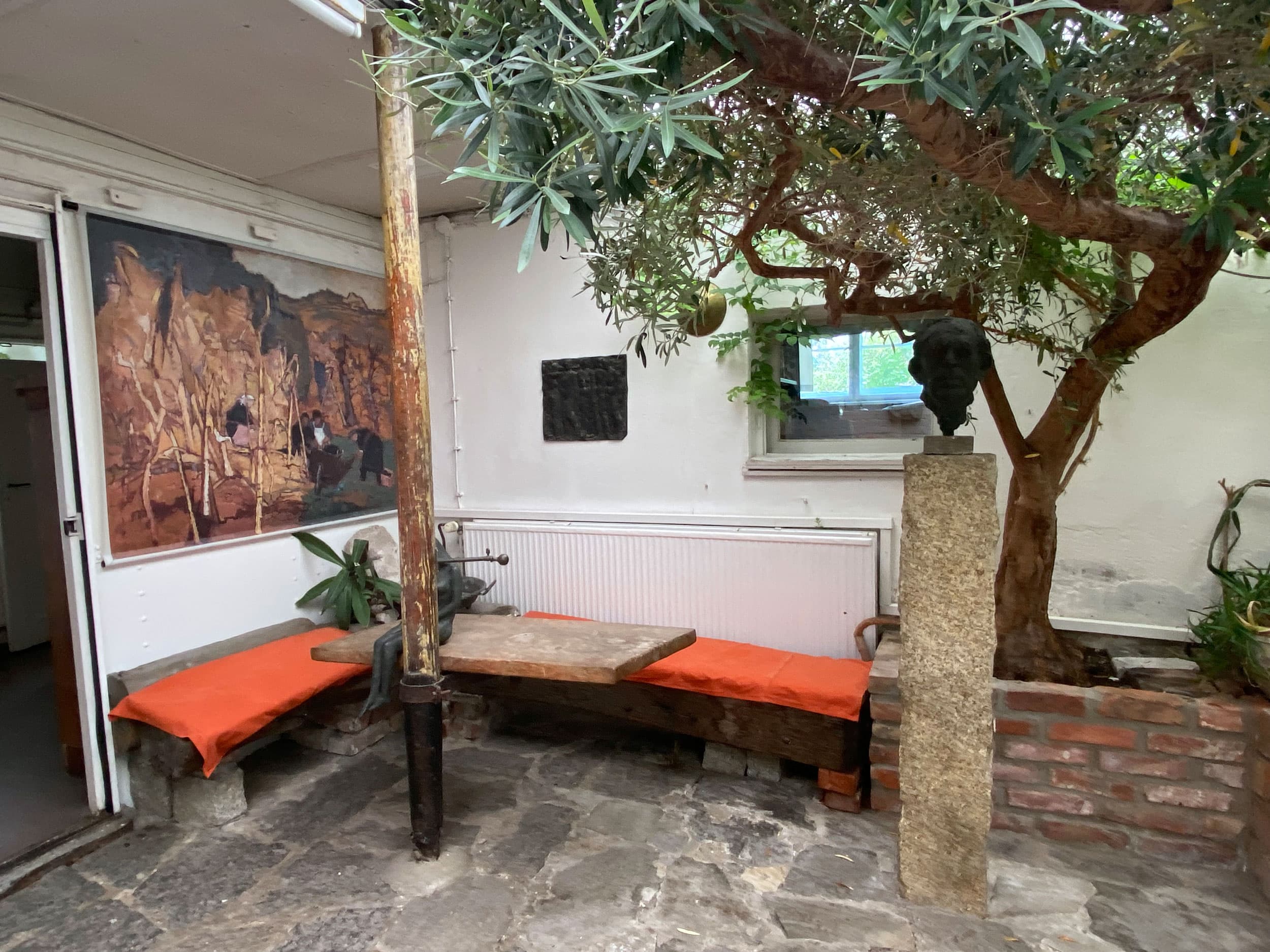
In 1925, the artist, who was born in Kiel, had moved to Berlin after living in various places throughout Europe. While searching for a temporary home surrounded by nature, he had discovered the plot of land as early as 1928 during a sailing trip with his wife, Anneliese. The core of his home is a decommissioned passenger car from the Berlin streetcar system, which Otto Niemeyer-Holstein had towed to Lüttenort in 1933 to serve as a summer residence. Later, the wagon became the connecting element between the garden and the living area. The interior looks like a patchwork of pieces thrown together to create a certain atmosphere. One might think they were in Italy, France, Spain, Great Britain, Switzerland, or Berlin all at once. From all his travels and life stages, this restless (life) artist had brought back furniture and artifacts. Before Lüttenort became his home and center of activity—but also his place of refuge and arrival—his life itself was like a gallery of moving experiences.
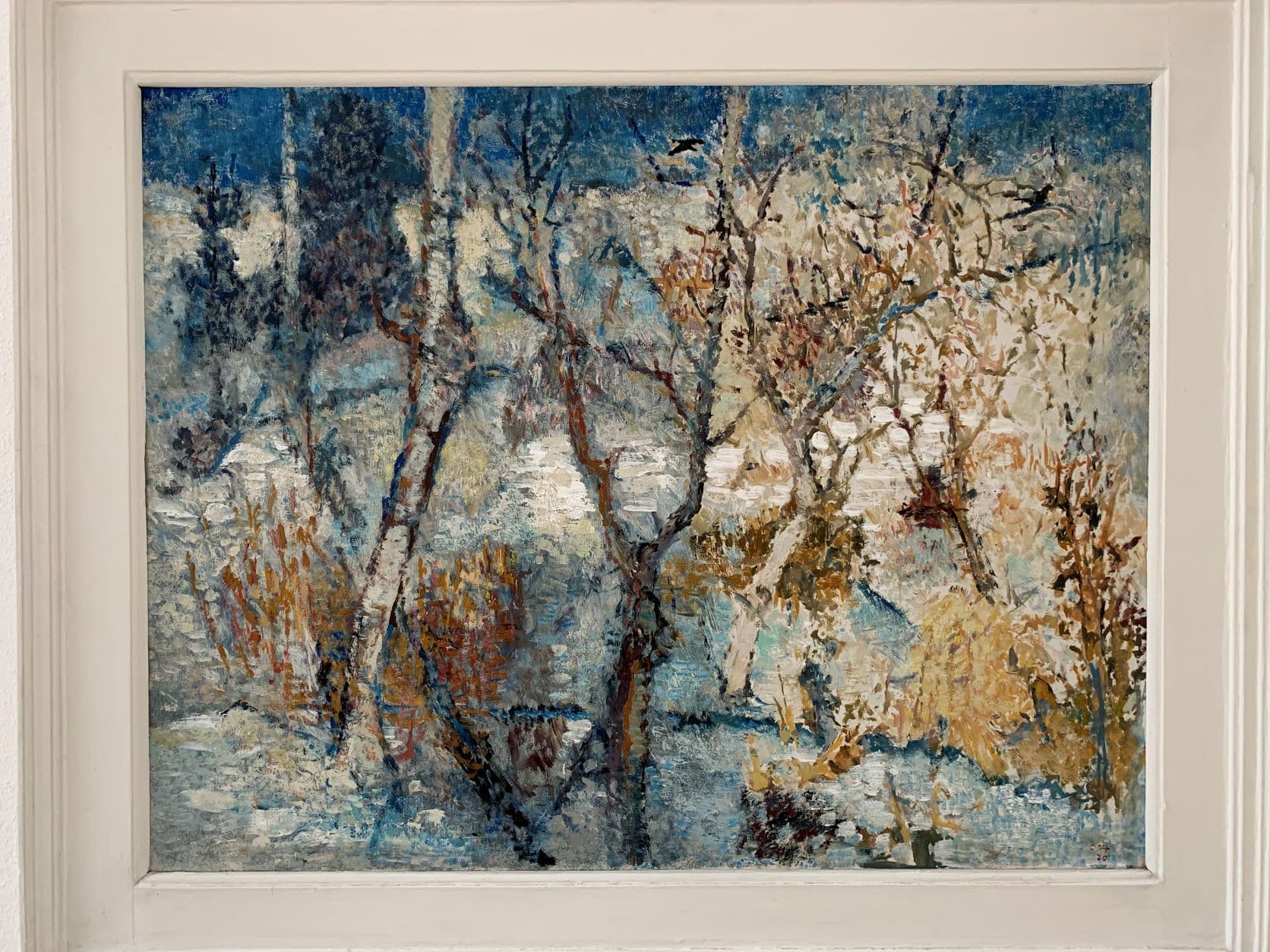
Snapshots of nature rendered in delicate brushstrokes
ONH was fascinated by the borderland between land and sea, saltwater and freshwater, dikes and groynes. He never grew tired of his daily walks. Nor did he ever tire of capturing on paper—time and time again with fine brushstrokes—the graphic arrangement of the pilings, the beige-gray hues of the stones, the coarse-grained sand of the backwaters, or the beach on the Gnitz Peninsula. He was particularly taken with the wintry beach and its subdued light, which caught in the reeds as the wind blew.
2023 Summer Exhibition
Under the title “Dreaming of Faraway Places – Otto Niemeyer-Holstein – Images of the Sea,” the Otto Niemeyer-Holstein Studio will open its 2023 summer exhibition on April 15. The works, which have been gathered on loan from seven museums and three private lenders, will be on view through October 15. The exhibition primarily features paintings the artist created of the Baltic Sea and the coastal landscape of the island of Usedom. These are considered the highlight of his mature work.
About the Author: Anke Sademann
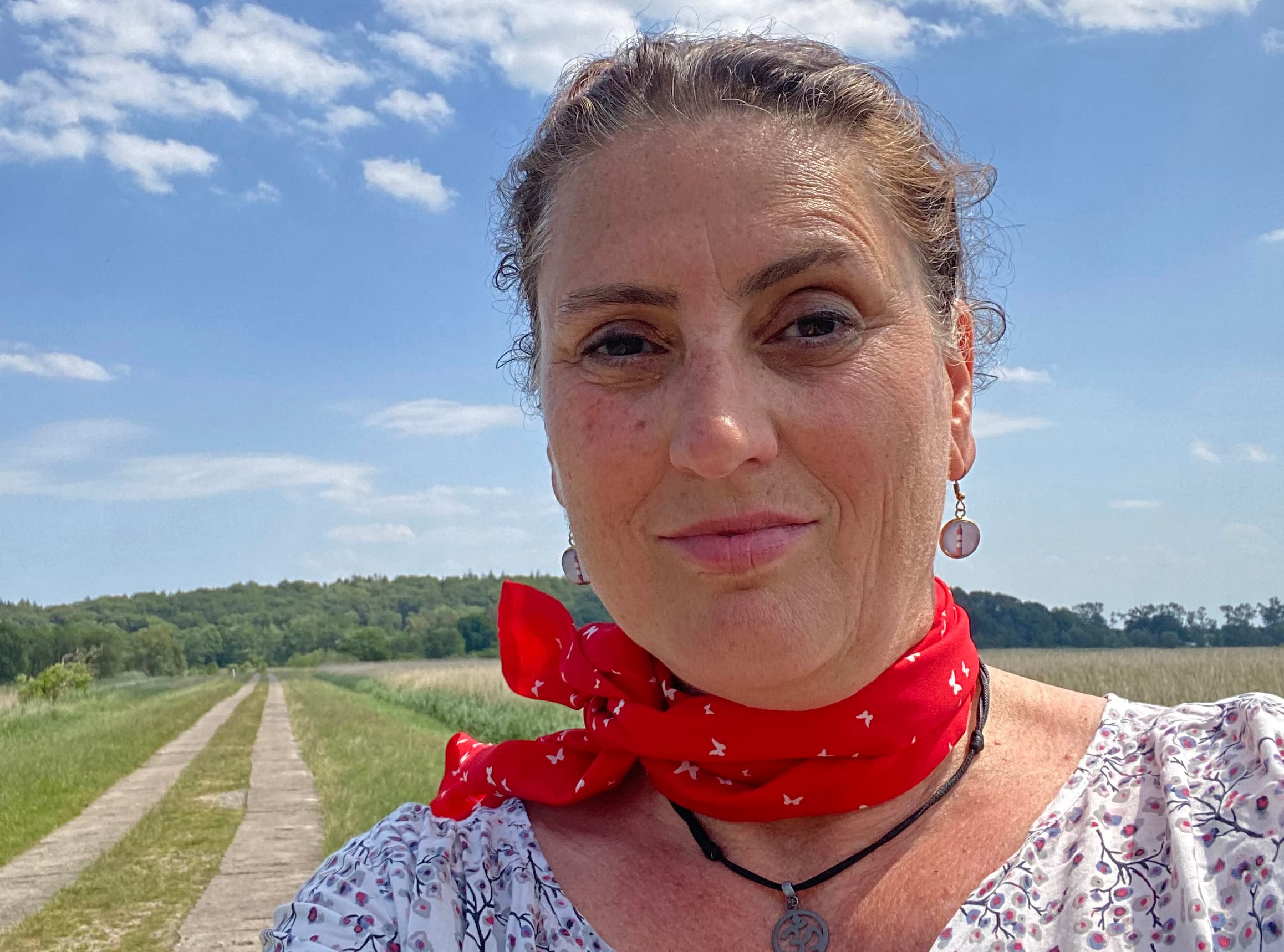
Green lifestyle and travel journalist and author Anke Sademann doesn’t just roam through European regions. For more than a decade, this slow-travel specialist has also been exploring her adopted home of Berlin and its surrounding areas, all the way up to the coast. Anke Sademann writes for various magazines and newspapers, focusing on mindful living. She has also visited our “sun island”: in an authentic and approachable way, she shares her very personal perspective on Usedom and its natural and travel offerings.
Share this discovery
By clicking the icons, you leave this website.