The interview was conducted by Karina Schulz for usedom.de on April 8, 2022.
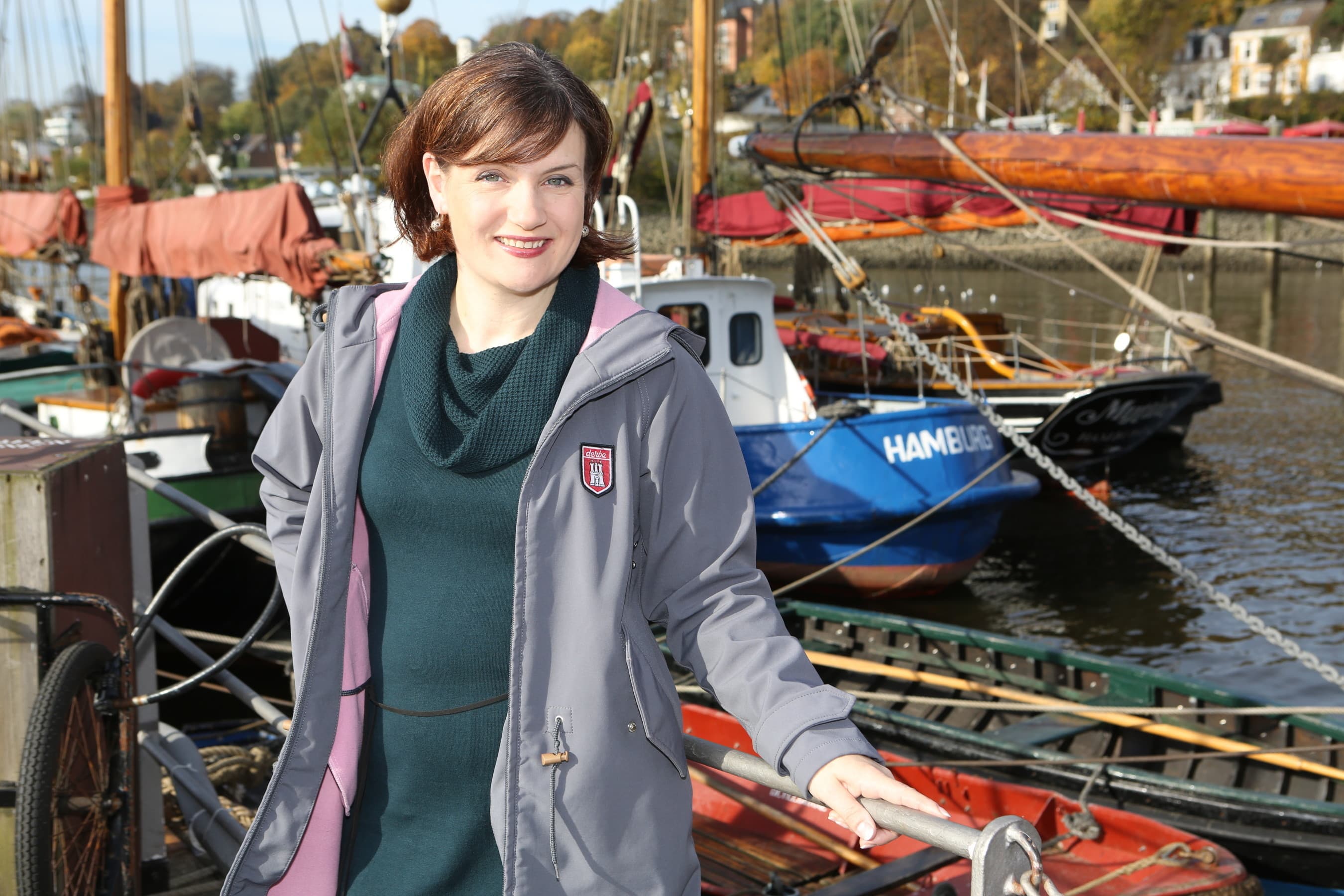
Face of the Island: Author Frauke Scheunemann
Magazine
14.04.2022, Usedom Tourismus GmbH
Frauke Scheunemann is known as the author of family novels as well as children’s and young adult books. “Der Tote im Netz” is her first crime novel. The crime scene is the harbor of the fictional fishing village of Zeglin on the island of Usedom.
When I see the pier, I'm happy!
With "Der Tote im Netz" ("The Dead Man in the Net"), you’ve written your first mystery novel for adults. But you’re already familiar with the genre, since Winston the Cat, the title character of your young adult series, also solves criminal cases. How does your approach differ when you write for adults?
The biggest difference is that the fantastical element is missing. In crime novels for adults, for example, there are no talking animals to assist the protagonist. The plot is also much more complex. The dramatic narrative structure is different when you’re unfolding the story over 400 manuscript pages instead of 200. In children’s and young adult books, friendship plays a very big role. Unlike in books for adults, the romantic aspect isn’t as much in the foreground. Winston the cat does fall in love with the neighbor’s cat, Odette, but in a rather childlike way. In my mystery, there’s definitely some chemistry at times between the detective and the journalist. But there are also many parallels. Logic is important in both cases. A good story is a good story. With children, it’s even more important that they’re immediately captivated; a slow start usually doesn’t work for them. Adults might finish a book they’ve started, even if they aren’t initially very enthusiastic about it. Children won’t do that if they find the story boring.
What appealed to you about the island of Usedom as the setting for your new mystery novel?
As a child, I often visited the Baltic Sea—my mother is from there. I’m a big fan of Usedom. Usedom is simply a beautiful island. I find the contrast between the beautiful setting and a heinous crime dramatically interesting. I also like the character of the people up here in the northeast. The people of Western Pomerania are reserved, sometimes a bit eccentric. In any case, they don’t push themselves on others. They don’t wear their hearts on their sleeves, but you can see in their faces that they’re thinking their own thoughts. I find that fascinating.
The fishing village of Zeglin is the scene of the crime. Is this a fictional village, or did you have a specific place in mind?
The village is fictional, but of course I had a real place in mind while writing. I set the plot of "Der Tote im Netz" in the northern part of the island. I imagine the setting as a mix of the rustic harbor of Peenemünde and the chic marina further north. This works well because the fishing port of Freest is located directly across from it. The central theme of the mystery novel is the ongoing conflict between the fishermen and the fisheries inspector.
You place great importance on your stories being logical and internally consistent. That’s why you visited the locations in advance. How did you find the on-site research?
Of course, it’s nice when you can combine business with pleasure. I arrived on the island in June 2021, right after the long lockdown. The atmosphere was just great. You could really feel how happy the islanders were to have guests. I experienced incredible hospitality. When doing research, it’s fun to let new details inspire you. Of course, the story was already in place. Sometimes you discover something new on site that fits much better than the original idea. Nothing can replace on-site research. The islanders’ willingness to help was unparalleled. My very first appointment was at the police station in Heringsdorf. The station chief mentioned that the criminal investigation department in Anklam handles serious crimes. On the spot, he put me in touch with his colleague in Anklam, who gave me great tips. The harbor masters and fishermen in the town of Usedom and the fishing village of Freest also provided me with expert information on the fishermen’s situation, the regulations, and the low catch quotas. It was important to me to portray the fishermen’s concerns and hardships realistically.
What’s the mystery novel about? Would you like to give us a little sneak peek at the story?
Franzi works as a radio reporter at Bäderland Radio in Heringsdorf. The local Baltic Sea station, which serves both locals and vacationers, is being bought out by a major Berlin radio station because of its frequency. As a result, Franzi and her colleagues are very worried about their jobs. Hoping that the new bosses will keep them on, they come up with a new radio series. In this new “suggestion box” format, islanders can voice their concerns and receive immediate support. The first case involves Maik Peters, a fisherman from Zeglin, who feels he’s being harassed by the fisheries inspectorate. Due to declining catch quotas, he has already shifted his business to offering sightseeing tours for tourists. Now he fears that his family’s 200-year-old tradition will be completely destroyed by arbitrary government action. When Franzi arrives at the port of Zeglin for the interview, the fisherman is found dead—wrapped in his own fishing net.
Journalist Franziska Mai and Inspector Kay Lorenz—two very contrasting characters—clash…
Detective Kay Lorenz is less than thrilled that the press is already on the scene when he arrives at the crime scene. But Franz won’t be fobbed off—after all, the press is free in this country. So the two have no choice but to put aside their differences and solve the case together. Yet they couldn’t be more different. Their collaboration is anything but free of tension. Kay Lorenz is an islander, but because of his Cuban father’s heritage, he doesn’t look very North German. Perhaps that’s why he comes across as deliberately reserved and tight-lipped. Franzi, on the other hand, is a cheerful soul from the Rhineland whose direct and unconventional manner draws people out of their shells. This allows her to learn a lot about the islanders. That annoys Kay Lorenz and perhaps even makes him a little jealous at times. And Franzi surely often thinks to herself, “Come on, just loosen up a little already.”
Is "Der Tote im Netz" the start of a series? Will Franziska Mai and Kay Lorenz solve more criminal cases on the island of Usedom?
I’m already working on the second book. It’s scheduled to be released in March 2023. We’ll see how things go from there. First, we want to see how the first two mysteries are received by readers.
You have a doctorate in law and worked for many years as a journalist and press spokesperson. What made you switch from journalism to writing?
As a journalist, I always regretted it when a story didn’t turn out the way I would have liked. Of course, I always reported truthfully. But I realized that I prefer a good story to a true one. I just love immersing myself in fiction. When I’m telling stories, I can really let my imagination run wild and aren’t bound by the limits of truth. I just find that more fun.
Surely some aspects of your law school education have benefited your crime writing?
Language is an important tool in the legal profession. After all, as a lawyer, you want to be persuasive, and you achieve that with strong arguments and precise language. For years, I pursued both paths, working as both a lawyer and a journalist. Now I’ve taken the best of both worlds.
You know Usedom very well by now. Do you have a favorite spot on the island?
I love the Ahlbeck pier. It was love at first sight. I first saw it in Loriot’s movie “Pappa ante Portas” and immediately thought: absolutely gorgeous—I absolutely have to go there! Whenever I see that pier, I’m happy.
Thank you very much for the interview!
Share this discovery
By clicking the icons, you leave this website.