Lyonel Feininger—An Artist on Usedom
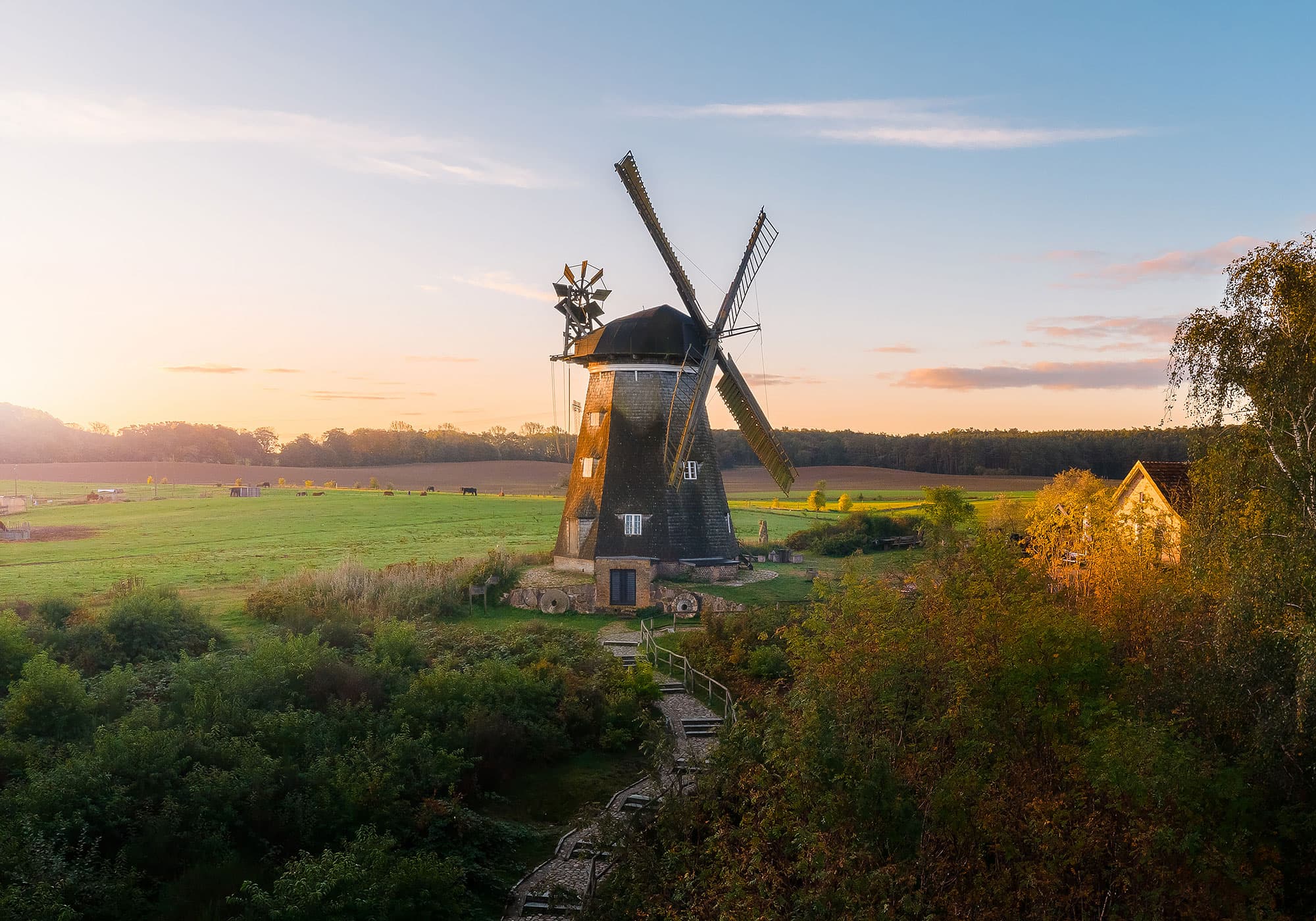
The German-American Lyonel Feininger was one of the most important artists of classical modernism. During the summer months, Lyonel Feininger often spent time on the Baltic Sea coast—first on Rügen, and later on Usedom, where he created several more paintings. He enjoyed riding his bike around the island, always on the lookout for new nature inspirations. Based on these sketches, he later created various graphics, watercolors, and oil paintings.
Lyonel Feininger - The Career of a Talented Artist
When he accompanied his parents to Germany at the age of 16, he had no idea what a successful future lay ahead of him. His artistic roots, however, were embedded in him from birth. At the request of his father, Karl Feininger—a violinist and composer—his son was also expected to pursue a career in music. At the time, Feininger decided against his father’s wishes and attended the School of Applied Arts in Hamburg, followed by studies at the Royal Academy in Berlin.
Thanks to his talent, he was signed by various magazines and publishers as a cartoonist at a young age. During this time, the talented artist married his first wife, the pianist Clara Fürst.
Feingener's Paintings at the Art Exhibition in Berlin
Thanks to his exceptional talent, his picture stories were exhibited at the major art exhibition in Berlin in 1904. In 1905, Lyonel separated from his first wife and their two children. A year later, he met his second wife, the artist Julia Berg.
During a trip to Paris together, Lyonel Feininger, who was born in New York, also met the artists Robert Delaunay and Henri Matisse. After securing additional contracts with an American newspaper, he later settled in Berlin. There, in 1909, Lyonel Feininger joined the Berlin Secession, an artists’ group.
Lyonel Feininger and Cubism
In 1911, Lyonel Feininger participated in an exhibition at the Salon des Indépendants in Paris with six paintings. It was during this time that he first encountered Cubism. By this time, Lyonel Feininger’s paintings had already gained widespread recognition. Among other subjects, he painted churches and village centers in the Weimar region of Thuringia. He referred to his own form of Cubism as “Prisma-ism.”
In May 1919, he was accepted by Walter Gropius as a master teacher at the state-run Bauhaus in Weimar. There, he served for several years as the director of the printmaking workshops. In 1924, he joined forces with other artists to form the exhibition group “Die Blauen Vier” (The Blue Four). Due to the relocation of the Bauhaus, Feininger moved with his family to Dessau in 1926. At his own request, Lyonel Feininger later resigned from the Bauhaus.
Feininger and His Work on the "Sun Island"
From 1908 to 1913, Lyonel Feininger chose towns such as Benz, Heringsdorf, and Neppermin as his summer residences. He began his bicycle route in Heringsdorf, where he painted, among other things, the magnificent beach promenade and the pier. From there, he continued via Bansin to Sallenthin and on to Benz. In addition to the well-known St. Petri Church, he also chose the popular Dutch windmill as a subject there. On the route between Neppermin and Balm, he captured several mills and barns in his sketches. Unfortunately, many of these buildings have already been demolished due to disrepair.
In the village of Mellenthin, the village church and the moated castle are among his best-known subjects. Returning via Bansin, his route took him south again toward Zirchow, where he also made several drawings. His journey continued on to Swinemünde, beyond today’s Polish border. There, he sketched the old town hall and the mill beacon. From there, he traveled about 12 kilometers along Europe’s longest beach promenade, passing through the seaside resort of Ahlbeck on his way back to Bansin. Today, art lovers can still view his sketches on the Feininger bike tours. In total, Lyonel Feininger created about 80 paintings on Usedom.
Degenerate Art and Return to the United States
During the Nazi era in Germany, Feininger’s paintings were denounced as “degenerate art.” The Nazis removed 378 of his works from public collections. After the Nazis came to power, the artist decided to leave Germany with his wife and settled back in the United States. Although he was by no means as well-known in the U.S., he was later elected president of the Federation of American Painters and Sculptors. Lyonel Feininger died in New York in 1956 at the age of 84.
Share this discovery
By clicking the icons, you leave this website.