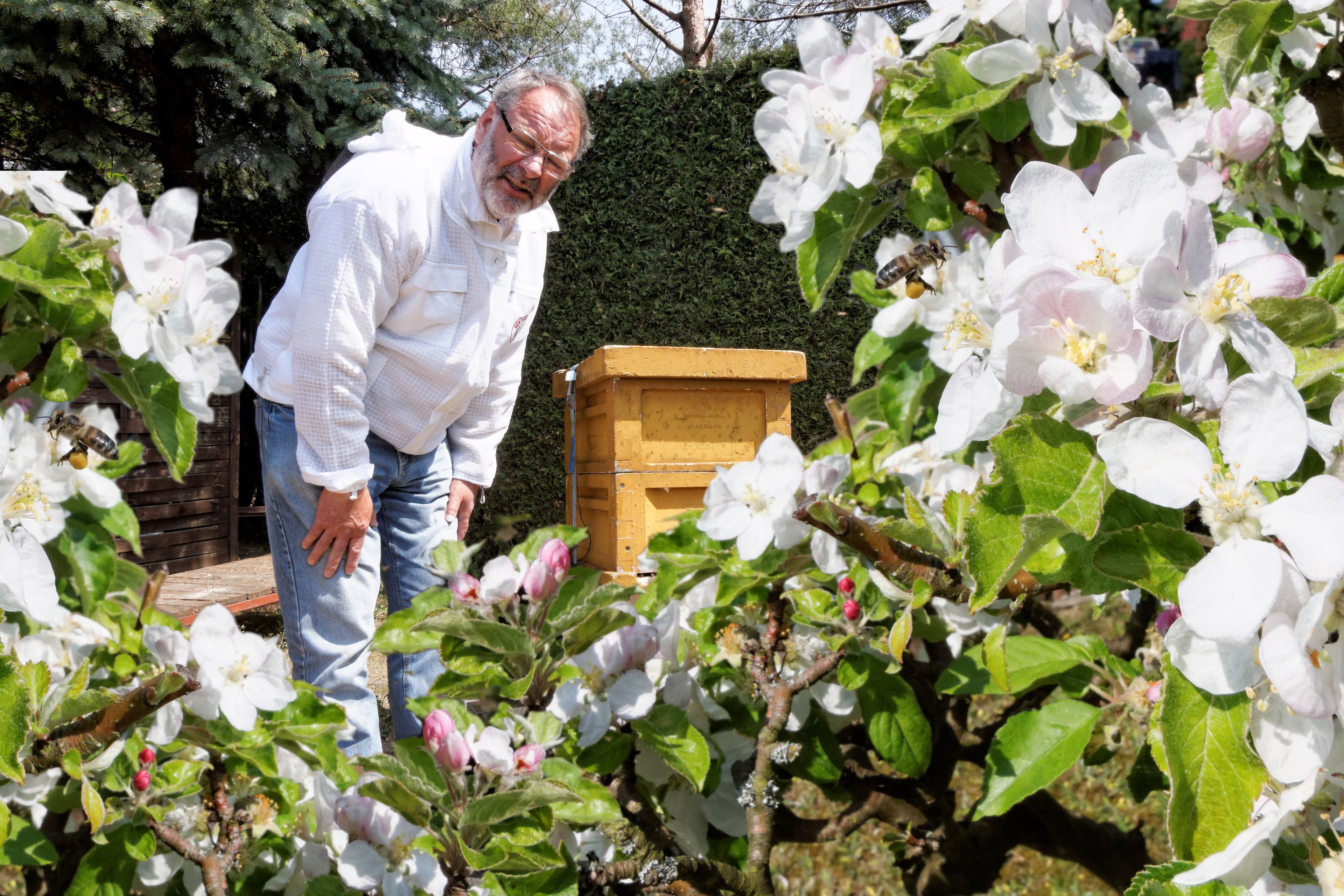
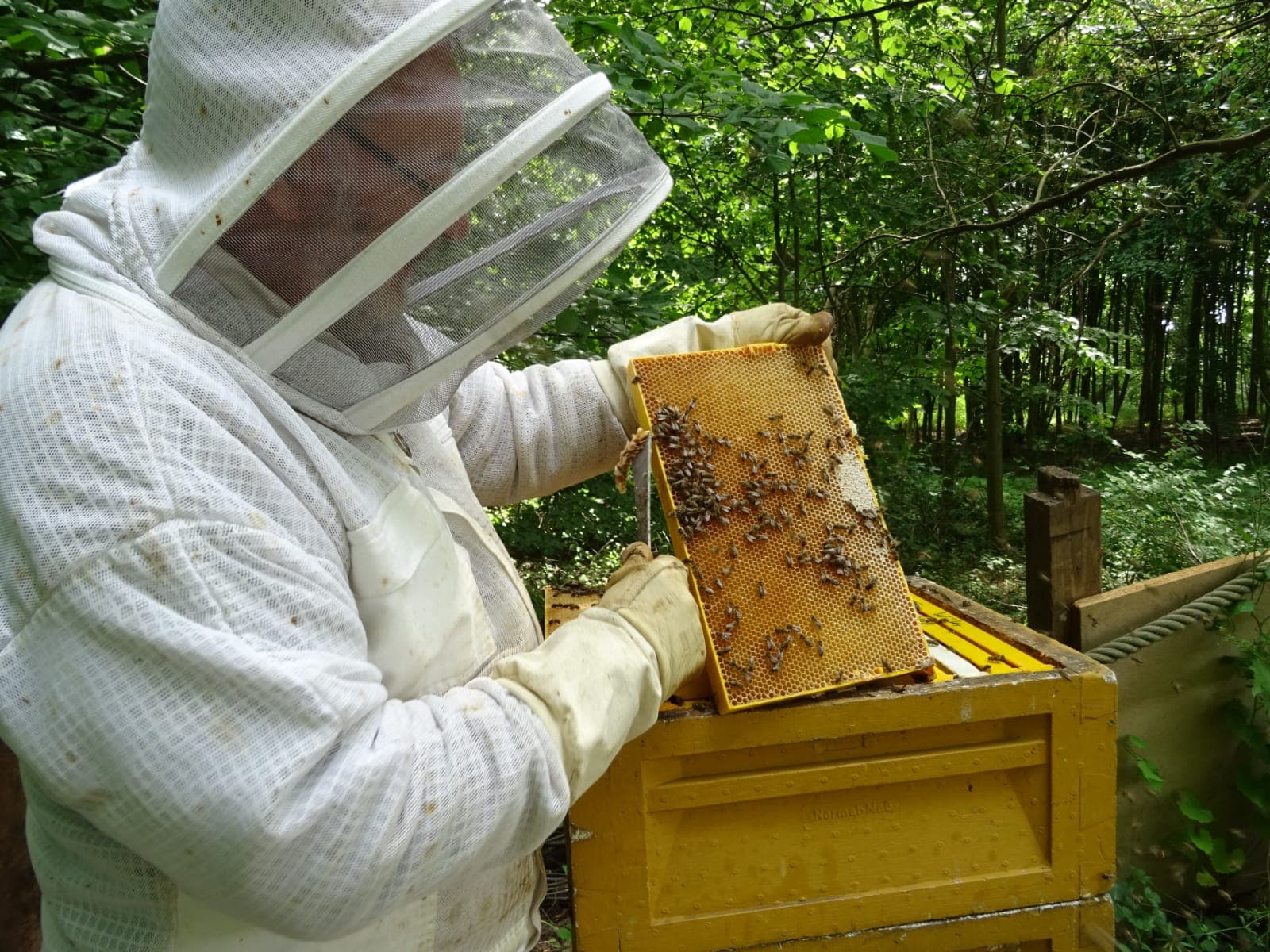
How much honey do you produce each year?
I used to get about 30 to 50 kilograms of honey per hive. However, production dropped dramatically last year—I only got a third of the usual amount.
What caused this massive drop?
The weather was bad. We only had two days above 18 degrees in the spring, so the rapeseed didn’t produce nectar because it was still too cold. The dry summer also didn’t do the flowering plants any favors.
How many members are there in the Usedom Beekeepers’ Association, where you’ve been actively involved for many years?
We have between 25 and 30 members.
What exactly are the association’s responsibilities?
We do a lot of public outreach and, of course, encourage collaboration among beekeepers. Beekeepers who are members of the association always have better information than those who aren’t. It starts with the bureaucratic hurdles. You can’t just set up beehives in your garden; you need the appropriate permits from the authorities. You have to register the bees, just as residents must register where they live.
What about the next generation? Beekeeping has been experiencing a small boom for a few years now, especially because bee mortality has been a major topic in the media.
Personally, I’m very happy about this boom. We’re seeing many young people—and, increasingly, many women—taking an interest in beekeeping. We prepare them and assign them a mentor with whom they can discuss technical matters. You have to keep in mind that beekeeping is still a trade that requires several years of training. Even if you want to run a beekeeping operation, there’s a lot to learn. That’s where the beekeepers’ association comes in.
The term “bee colony collapse” has been making the rounds in recent years: How do you assess the current situation?
The topic of bee mortality always makes my hair stand on end. The problem exists, but it’s of our own making. For 20 years, I’ve been urging beekeepers to extract honey from their combs by the end of July and then treat the bees with formic acid to protect them from mites. That’s because mite populations peak in July and August. But many beekeepers are determined to get every last three grams of honey and leave the hives untouched until the very end. Then they run into the problem of having no bees left in September or October because the mites got to them first.
Older beekeepers often do this because their parents and grandparents used to extract honey on a specific date. But nature’s cycle has shifted forward. It gets warm earlier, and everything blooms earlier, so the harvest must also take place earlier. Unfortunately, very few beekeepers are adapting to these new circumstances.
And, of course, the number of flowering plants has decreased significantly in recent years. I don’t want to blame the farmers at all. They have their own problems and need to bring in decent harvests. But we need more flowering areas, not manicured lawns. As a beekeepers’ association, we’re in close contact with farmers, and they certainly understand this. But private individuals can also do a lot to help by planting flowering plants instead of creating gravel gardens that are hostile to bees. Rock gardens are the opposite of environmental protection.
You created the Bee Trail together with the Usedom Beekeepers’ Association. What can hikers expect along the trail?
We opened the Bee Hiking Trail back in 2008 on the occasion of the Beekeepers’ Day organized by the Mecklenburg and Vorpommern State Association in Heringsdorf. It runs around Lake Gothen. The goal was—and still is—to make beekeeping more interesting through the hiking trail.
A few years ago, we made the trail even more interesting by installing large information panels that help people learn more about bees and beekeeping. This has been very well received: many people stop and read the information. The Bee Hiking Trail is especially popular with tourists.
Where can people buy your honey?
We used to spend a lot of time at markets selling our honey. Now, people just come to my house. I also get a lot of calls from people who’ve tried my honey before and want to restock. Then I ship it to them as well. In addition, several hotels on Usedom buy my honey for their guests.
Thank you very much for the interview!