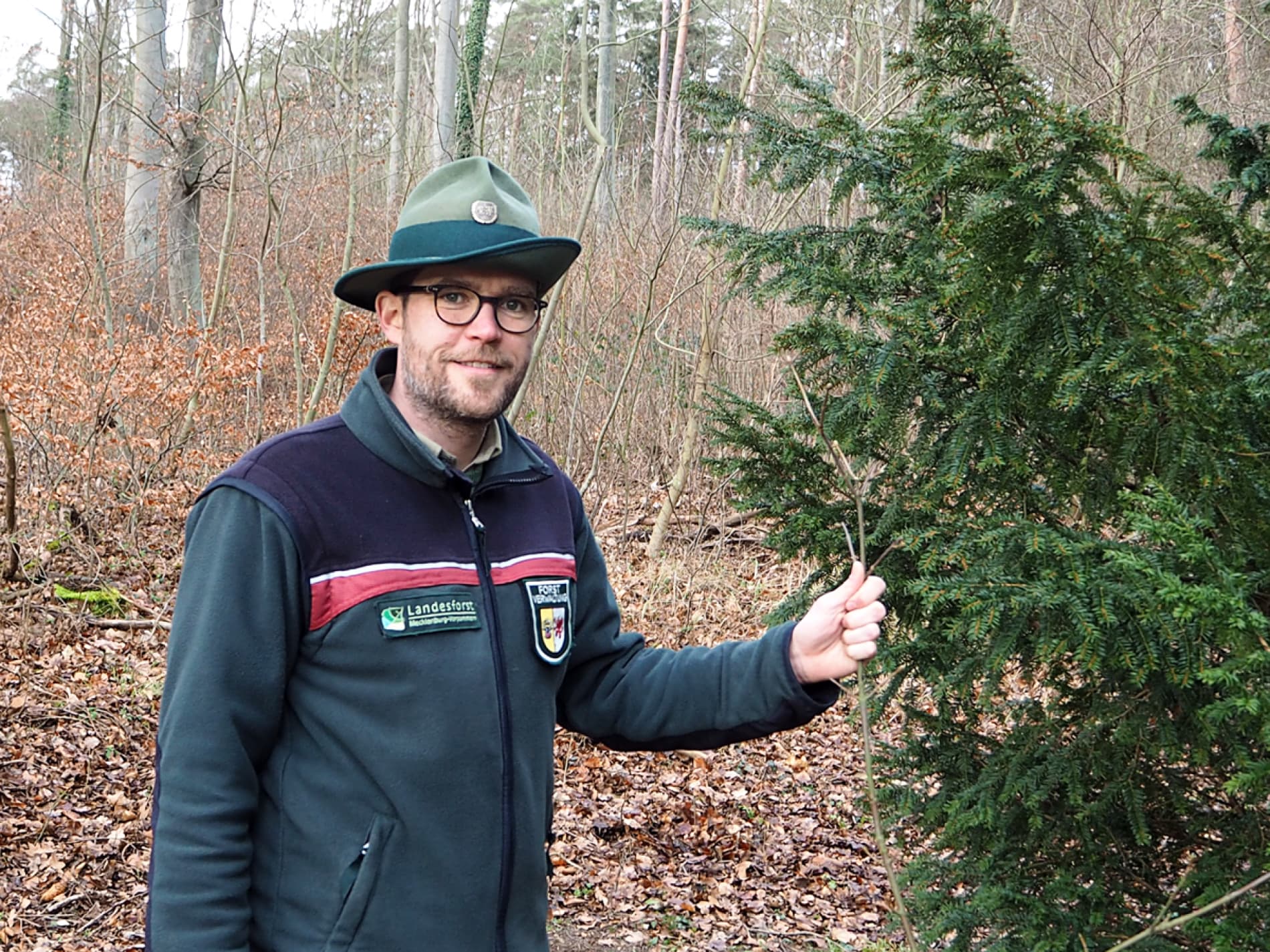
Island Profile: Forestry Office Director Felix Adolphi

Magazine
Forestry Office Director Felix Adolphi
©
27.01.2021, Usedom Tourismus GmbH

At the age of 34, Felix Adolphi became the youngest forest district manager in Germany. As chief forester of Neu Pudagla, he is responsible for 12,000 hectares of forest. In this interview, he talks about the unique characteristics of the coastal forest, the curative and healing forest, and his favorite hiking trail on the island.

The Unique Coastal Forests of Usedom

Mr. Adolphi, how long have you been a forester on Usedom?

I’ve been heading the Neu Pudagla Forest District since December 2015. Before that, I worked at the headquarters of the Mecklenburg-Vorpommern State Forest Service, where I was responsible for public relations and environmental education. Usedom was particularly interesting to me because it’s a relatively atypical forest district. In addition to the forestry operations we carry out there in the state forest, we face particular challenges in the areas of forest management and public relations.

How much forest—and what kind of forest—does Usedom have to offer?

One-third of the island is covered by forest, which amounts to 12,000 hectares. While that isn’t particularly much, the proportion of forested area on Usedom is higher than in the rest of the state. As the local forestry authority, we’re responsible for all 12,000 hectares and must, for example, ensure compliance with the State Forest Act. Just under 5,000 hectares of this forest are state-owned, which we manage. This involves maintaining the forest, harvesting timber, regenerating stands, building trails, and managing hunting.

The forest on Usedom is characterized by being highly fragmented—in other words, the forest areas are often interrupted by roads and communities. A large part of the forest stretches along the coast. These are mostly narrow, elongated forested areas, with communities in between and paths leading to the beach. The fact that the forest extends all the way to the Baltic Sea is, of course, part of its charm. For us as foresters, however, this doesn’t necessarily make management any easier, because we have to take tourist interests into account.

About 40 percent of Usedom is deciduous forest and 60 percent is coniferous forest. The main tree species are pines and beeches. In the long term, the area covered by beeches is expected to exceed that of pines.

Curative and Healing Forest on Usedom
©

The Unique Features of the Usedom Forests

What makes the coastal forest on Usedom particularly distinctive?

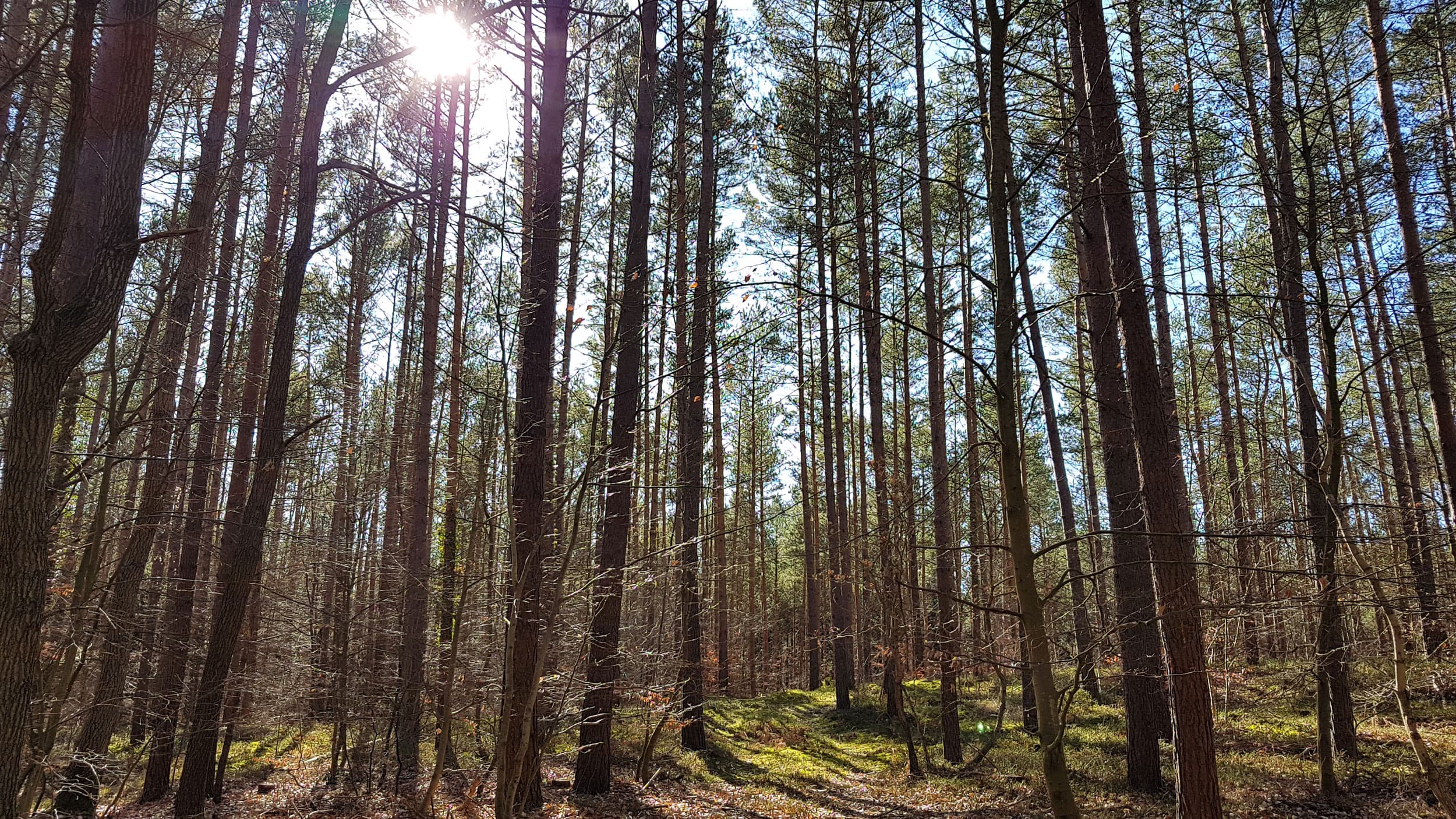
When you walk into the forest in Peenemünde, you’ll notice that it’s a pine forest growing on sandy soil. It’s a very sensitive ecosystem where a specific plant community has developed due to the lack of nutrients. What makes all coastal forests unique is that they benefit from the high humidity of the Baltic Sea, allowing them to remain healthy despite low precipitation.

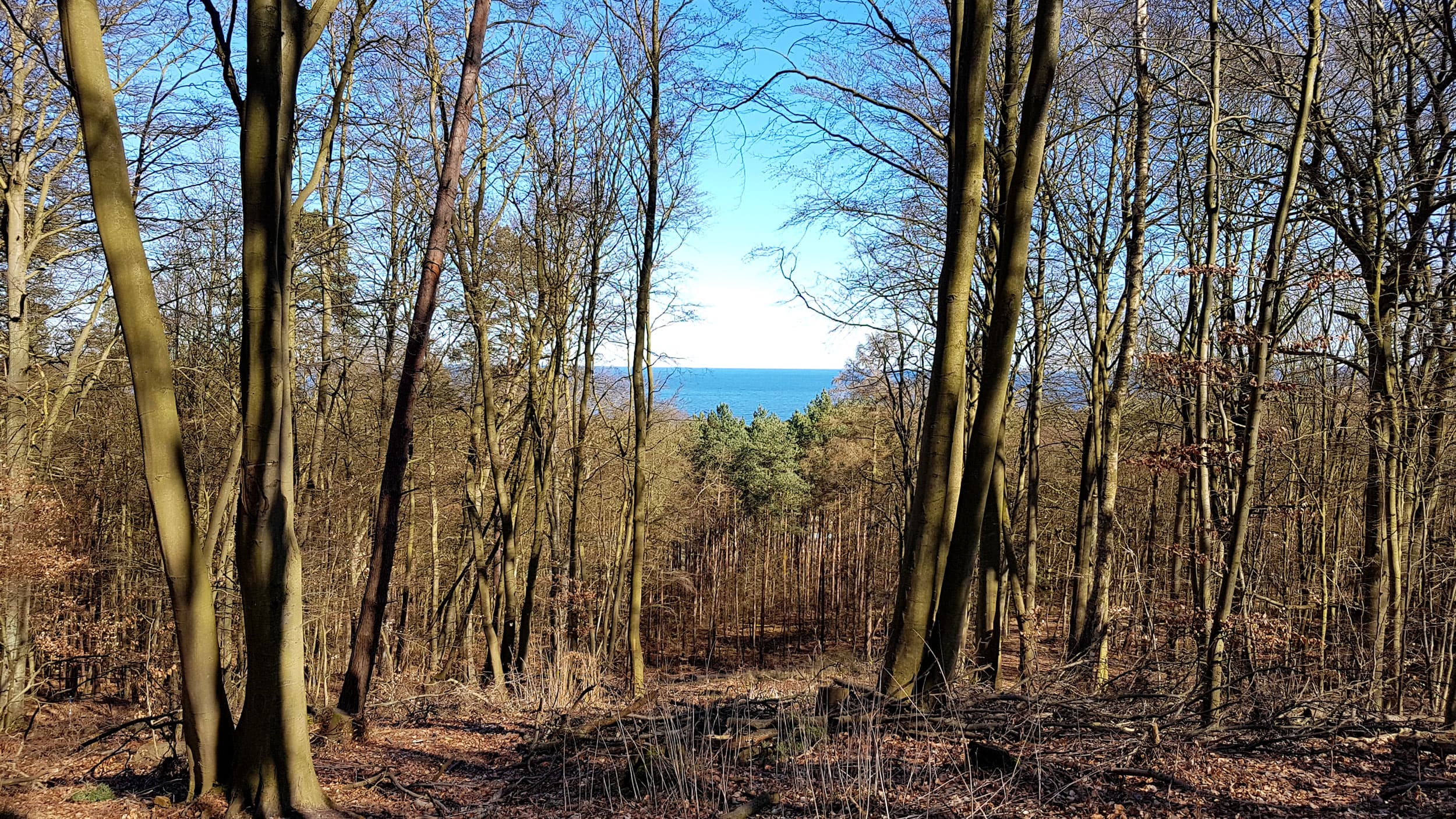
If you look further to the southeast, you’ll also find beech forests that extend all the way to the coast. These grow on soils with a higher clay content. You can clearly see that the beech trees are exposed to the harsh coastal weather. For example, the strong winds from the Baltic Sea are evident in the crowns of the trees. The leaves on the forest floor are also blown away, which means that the surface vegetation does not receive a great deal of nutrients.

The coastal forest is not only aesthetically unique; it also protects the coast in many places. For this reason, it is specially protected under the State Forest Act.

You’ve already mentioned that coastal forests are better able to cope with drought. How has the drought of recent years affected the health of Usedom’s forests?

The water table has dropped significantly due to the drought. It is now up to 1.5 meters lower than usual. Naturally, that puts a strain on  the trees. We monitor the condition of the forest very closely, primarily by closely observing the tree crowns and foliage.

One clear sign that the trees are weakened, for example, is that the oaks on the island carried a very large number of acorns last year. Normally, oak trees reproduce only every seven to ten years in what’s known as a “full mast” year. Because conditions were so poor, the trees essentially panicked and tried at all costs to produce offspring. That’s why even more acorns were produced last year—but this, in turn, weakens the tree because it requires a significant amount of energy. This year, we’ve observed the same phenomenon with the beech trees.

The trees on Usedom are able to compensate quite well for the lack of precipitation through increased humidity. But “compensating” simply means that problems and damage aren’t immediately noticeable. The trees are suffering nonetheless. And I also expect that the health of these two species in particular will be worse in the coming years than I would like. However, I am hopeful that the situation here will not be as drastic as in other parts of the country further south.
Europe's first therapeutic forest is located on Usedom

Since 2016, Usedom has been home to Germany’s first curative and therapeutic forest. What exactly does that entail?

The therapeutic forest is owned by the municipality of Heringsdorf. In doing so, the municipality is continuing a tradition of health, spa, and therapeutic services that have always been offered in this seaside resort. For example, physical exercises were once conducted in the forest, and there are remnants of tennis courts there. So this has a long tradition here, which the municipality has now revived in collaboration with the forestry office.

With the therapeutic forest, we don’t necessarily want to appeal only to people who already go to the forest regularly to exercise. It’s about people who, due to physical or mental impairments, are prevented from going into the forest. We’ve created an infrastructure with accessible paths so that even people who otherwise wouldn’t be able to can visit the forest.

Information boards tell visitors about the forest’s benefits and encourage them to perform specific exercises. In addition, a small group of physical and occupational therapists uses the therapeutic forest to conduct exercises here with their patients. And there are many guided tours on the topic of forests and health, offered by the Forest Service and the resort administration.

Smartphones are prohibited in the therapeutic forest. But you don’t go around the forest handing out tickets to people who have their phones in their hands, do you?

There is, in fact, a regulation stating that the use of mobile devices should be avoided. We’re trying to encourage visitors to be more mindful. They should tune in to nature and themselves, and naturally, any distraction—such as a smartphone—is a hindrance.

At the same time, however, visitors to the forest use their smartphones to find their way around and get information. That means we don’t enforce the ban. If I see someone with a cell phone in the curative and healing forest, I might speak to them about it, but there are no fines or anything like that. Especially since there’s even a dedicated app for the curative and healing forest.

The most beautiful hiking trails lead through the forest

To wrap things up, please tell us your favorite spot on Usedom. Which part of the forest is a must-see for visitors, or which hiking trail should they definitely take?

What’s certainly unique to Usedom is the beautiful forest along the Baltic Sea coast. Thanks to the Usedomer Bäderbahn, anyone can hike one way and take the train back. I’d recommend that people walk the trail along the Baltic Sea coast, for example, between the Kaiserbäder and Ückeritz. The section between Bansin and Ückeritz is very beautiful. I also enjoy walking that trail in my free time.

Otherwise, the forest in the southeast of the island is wonderful because it’s far from the Baltic Sea coast and isn’t as heavily frequented. I also go there with my family in my free time to take walks and pick mushrooms.

Thank you very much for the interview!

View of the Baltic Sea from the coastal forest
©

The interview was conducted by Mr. Koprek on behalf of SEM SEO GmbH for usedom.de on December 9, 2019.

Share this discovery

By clicking the icons, you leave this website.

Book Your Vacation Now