Nordic Walking on Usedom
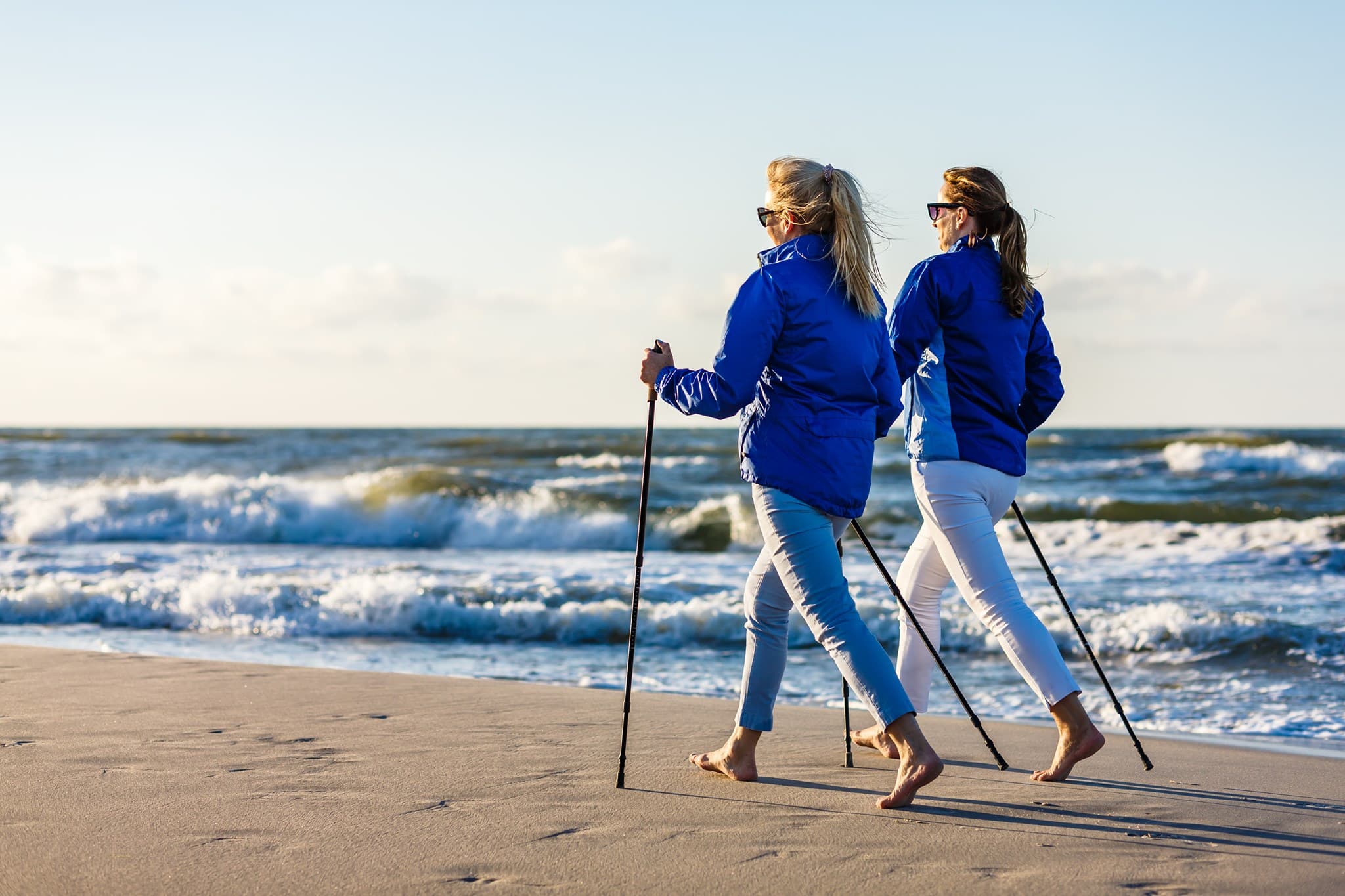
"Grab your poles" is the motto of the popular sport of Nordic walking. With its long, wide beaches and fresh sea air, Usedom offers ideal conditions for this activity. Originally from Finland, this sport is more popular than ever.
Stay Active Even in Winter
Nordic walking is considered a year-round sport and therefore offers the best opportunities to stay physically fit even in winter. For many, the freezing temperatures and a winter landscape covered in frost and snow are particularly appealing. It’s important to maintain a firm footing during the cold season with the right Nordic walking poles. This can be a practical advantage on snow-covered ground. However, you should be more cautious on black ice, as even good Nordic walking poles reach their limits and can slip on the slippery surface.
For this reason, it’s best to choose sunny routes for Nordic walking in winter. There, black ice is easier to spot, and the snow melts faster. Usedom’s beaches therefore offer an ideal spot for Nordic walking in winter. Trails in the woods are less suitable, as black ice tends to linger there the longest when it’s freezing.
Climate Hike on Usedom
Nordic walking on Usedom also offers another special benefit: physical activity is combined with the inhalation of soothing, salty aerosols from the sea air. Aerosols are tiny droplets of liquid suspended in the air, which are particularly beneficial for people with respiratory problems. Exercising in the aerosol-rich sea air is also known as “climate walking.”
Usedom is home to a total of seven signposted Nordic walking trails in the imperial resort towns. Depending on your mood, you can cover distances ranging from 4 to 20 kilometers on these trails. Most of the Nordic walking trails on Usedom run from pier to pier along the fine sandy beach. You can obtain information and maps at the tourist information offices.
The right technique is crucial
People often make mistakes when walking with poles. Experts estimate that over 80 percent of all Nordic walkers use the wrong technique. It’s usually beginners who set out on their own using the wrong technique. With our tips, you, too, can master this trendy sport and practice Nordic walking correctly on Usedom: Before you start walking, make sure your shoulders and arms are relaxed. Then look straight ahead and start walking slowly. Keep your arms slightly bent as you move forward. Hold the poles firmly with your hands. As you walk, plant each pole at the level of the heel of the opposite leg. As you swing your arm backward, fully extend that arm and open your hands. Your left arm should always swing with your right leg, and your right arm with your left leg. Try to keep your shoulders relaxed at all times while walking.
Just as important as the correct execution of the arm movement is the rolling of the heels. With each step, roll your heels all the way through before pushing off firmly with your toes. When you land on the ball of your foot, your knees should never be fully extended. To avoid straining your knees, hips, and back, you should avoid taking steps that are too long.
What makes for good Nordic walking poles?
To practice Nordic walking properly, you’ll need special Nordic walking poles. You can determine the correct length using the following formula: your height in centimeters multiplied by 0.7. Some of the poles are even height-adjustable.
In addition to the correct length, each user can choose the material. Nordic walking poles are made of aluminum, carbon, and a carbon/fiberglass blend. The handles are often covered with cork to prevent slipping when you sweat. A properly fitted wrist strap is important; it helps guide your hands while walking.
Otherwise, standard running or hiking shoes, as well as athletic clothing, are sufficient. Although special walking shoes are available, they are not strictly necessary for walking.
How healthy is Nordic walking?
Unlike jogging, Nordic walking is considered extremely gentle on the joints, ligaments, and spine. As you walk at a steady pace, two poles swing alongside your body. This lively movement tones your arms, shoulders, and back muscles. As a result, this workout is more effective than simply hiking or walking. Even problems in the knee or hip areas can be completely resolved. Likewise, many doctors recommend light Nordic walking as a rehabilitation program following sports injuries. Nordic walking also helps relieve tension in the shoulders and neck. Medical professionals even note a lower risk of developing typical age-related conditions such as high blood pressure, diabetes, and osteoporosis. This Scandinavian sport also stimulates cardiovascular function and boosts metabolism.
Regular training also helps the pounds melt away quickly! If you walk at about 6 km/h, you can burn up to 400 kilocalories!
How often you should do Nordic walking depends on your fitness level. As a beginner, it’s perfectly sufficient to walk about two to three times a week to start with. You should plan on a good half-hour per training session. It’s best to always take a rest day. Go for it—give Nordic walking a try during your next vacation! Experienced walkers, on the other hand, can walk up to four times a week for 45 to 60 minutes. With regular walking, your body recovers faster and muscle soreness is rare.
Share this discovery
By clicking the icons, you leave this website.