Lifeguard-Patrolled Beaches
Carefree Under Watchful Eyes
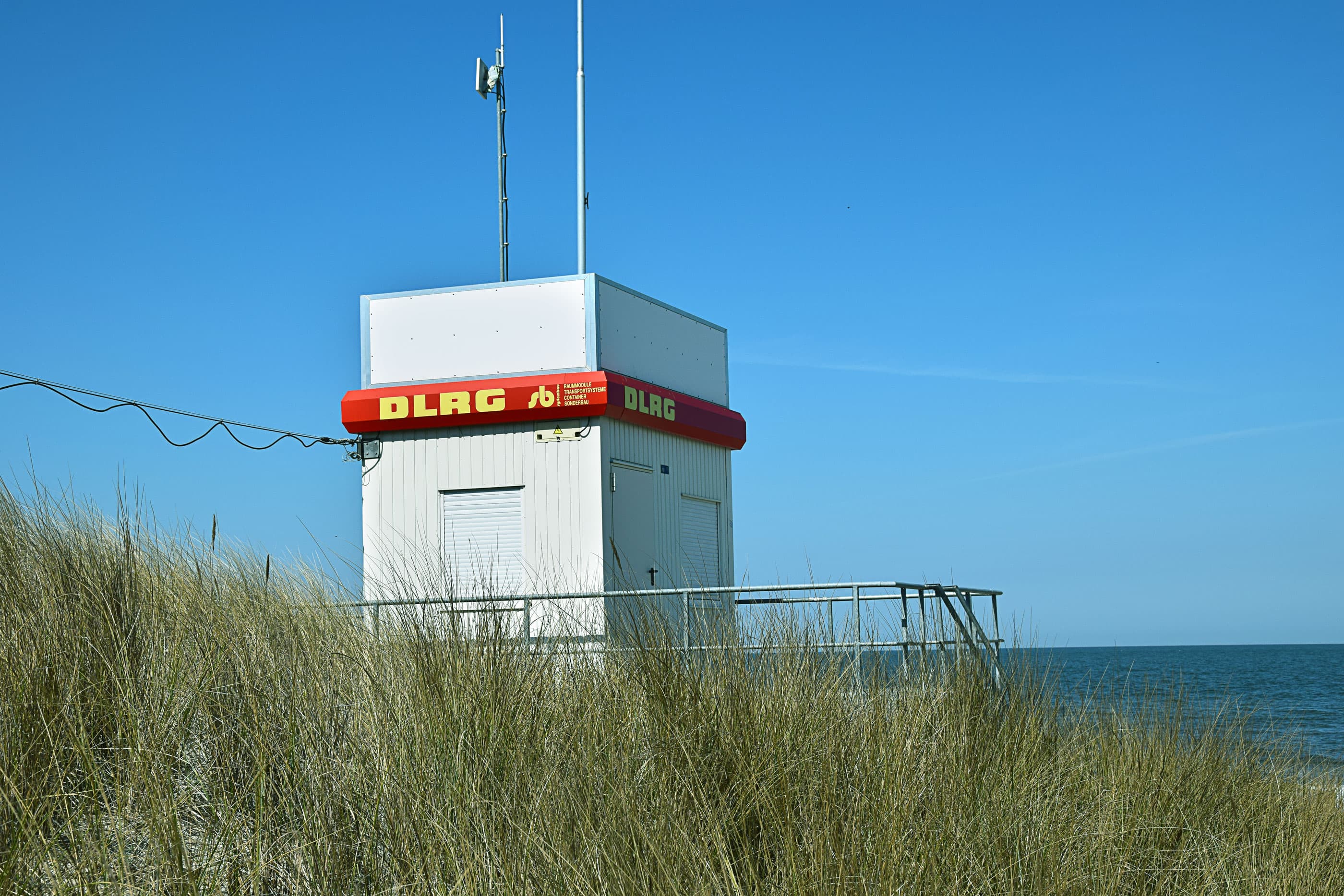
As a landlubber, are you familiar with the various current conditions in the Baltic Sea? Don’t worry. At the lifeguard-patrolled beaches, the lifeguards won’t take their eyes off you for a moment. If you overestimate your abilities, they’ll step in.
The Guardians of Usedom's Beaches
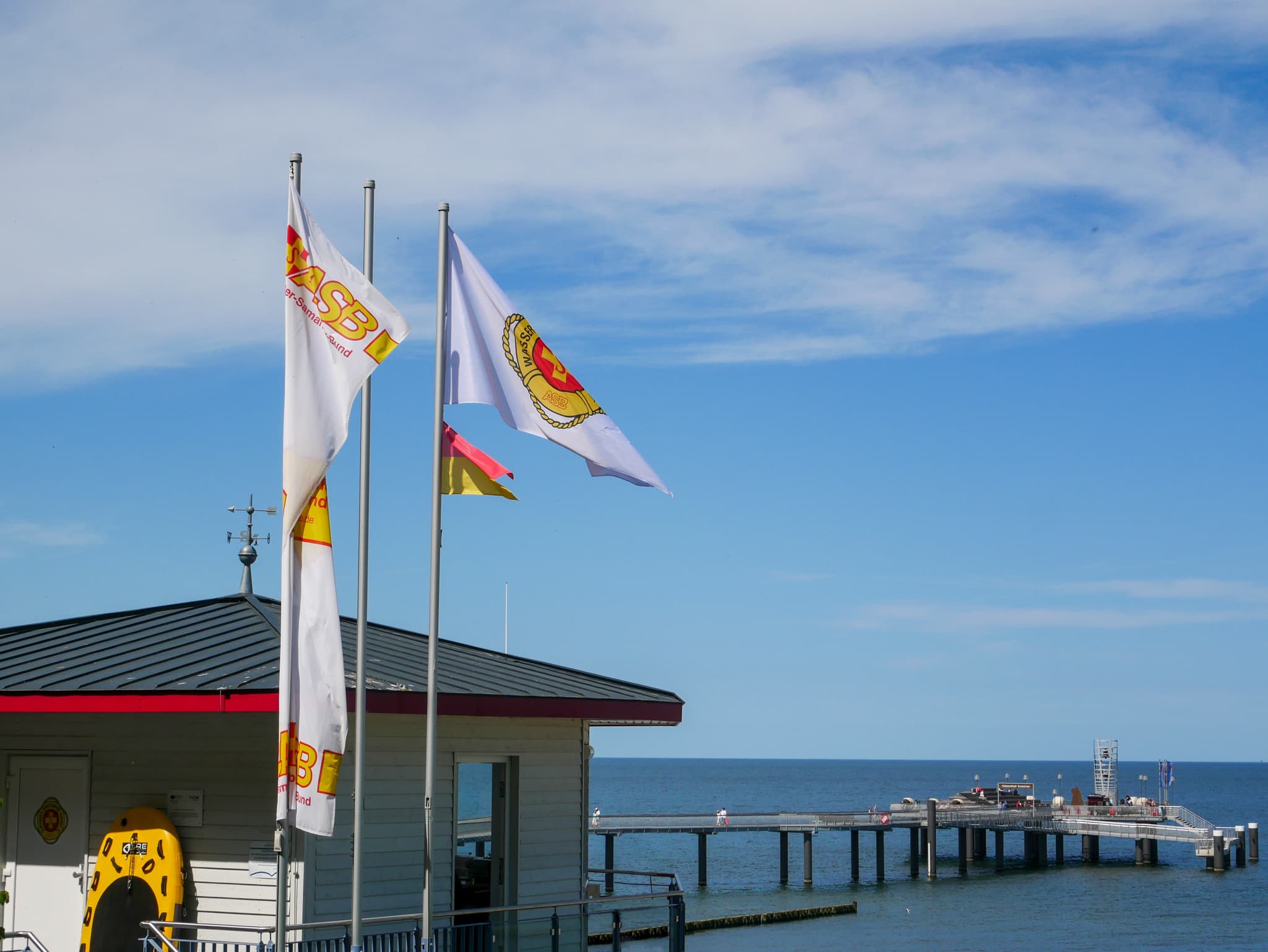
Every year, from spring through fall, well-trained lifeguards ensure your safety. These volunteers have been trained by the German Life Saving Association (DLRG), the German Red Cross (DRK), or the Workers’ Samaritan Federation (ASB) and have been awarded a lifeguard certification. As professionals, the lifeguards have the experience to recognize accidents in and around the water and know exactly what to do in such situations.
What do the flags mean?
Every morning, the lifeguards use the appropriate flag to inform you of the current swimming conditions. A yellow-and-red flag indicates that the lifeguard tower is staffed. The yellow flag signifies Warning Level 1 and prohibits children under 14 and non-swimmers from swimming. When the red flag is flying, swimming is generally prohibited. Waves and currents are often so strong at that time that swimming can be life-threatening. Be sure to heed these warnings to ensure a worry-free vacation.
Please always follow our 13 swimming rules
- Do not swim alone in unsupervised waters.
- Never jump into unfamiliar waters.
- Do not overestimate your physical abilities.
- Do not use an air mattress or similar items as flotation devices.
- Swim only in designated swimming areas and avoid breakwaters and shipping lanes.
- If you are a non-swimmer, do not go too deep into the water.
- Do not go swimming when you are overheated, and do not swim on a full or completely empty stomach.
- Do not drink alcohol before swimming.
- Never call for help if there is no danger.
- Leave the water immediately during a thunderstorm.
- Follow the instructions of the lifeguards and pay attention to local warning signs (swimming prohibited).
- Finds of old munitions and unexploded ordnance are always possible. If you find any suspicious objects, notify the police or the local authorities.
- White phosphorus is found on Usedom once or twice a year. It looks similar to amber and can cause burns upon contact with the skin.
What should you do if you encounter a dangerous current?
Most of the time, the Baltic Sea is as calm as it looks. When the waves are small, it’s ideal for children to splash around. Sometimes, however, appearances can be deceiving. Be careful when there’s an onshore wind, as this can lead to dangerous undercurrents. If, despite taking every precaution, you are caught in a current and swept out to sea, do not swim against it. This will drain too much of your energy. Instead, swim parallel to the shoreline until you are out of the current. Then you can swim back to the beach.
The blue and black-and-white flag
Blue and black-and-white flags have nothing to do with your safety. The blue flag indicates beaches that are particularly environmentally friendly and have high water quality. Black-and-white checkered flags mark sections of the beach where water sports enthusiasts can launch their surfboards, sailboats, or jet skis. Water sports are permitted in the area between the black-and-white position flags. For safety reasons, swimming is therefore prohibited here.
Book Your Vacation Now
Swimming Despite Rough Seas
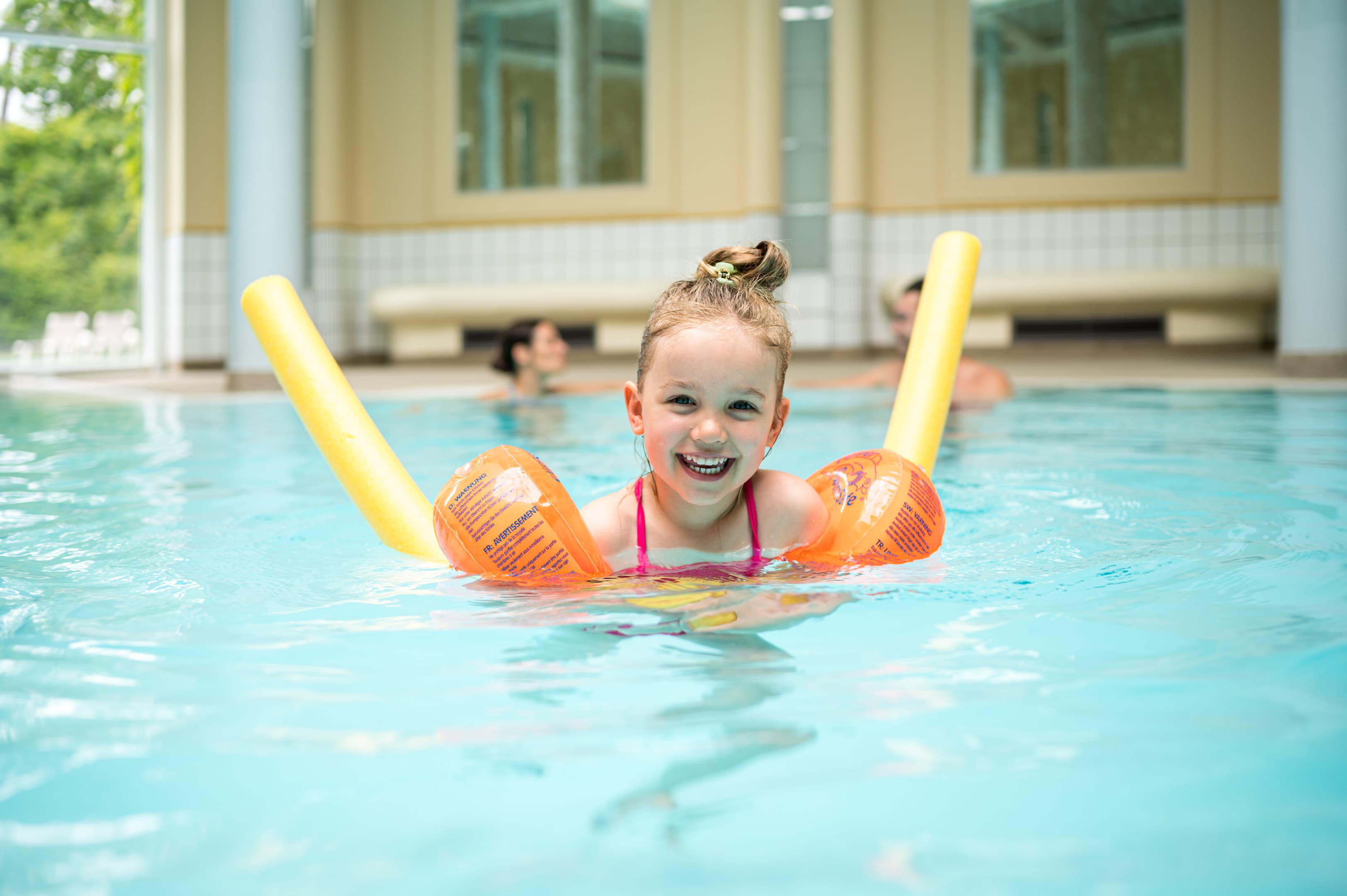
If swimming is prohibited, there's an alternative: Spend the day in the warm saltwater pool at one of Usedom's two thermal spas.
~ read more
Join us for that vacation feeling
By clicking the icons, you leave this website.
Exercising in nature makes you happy
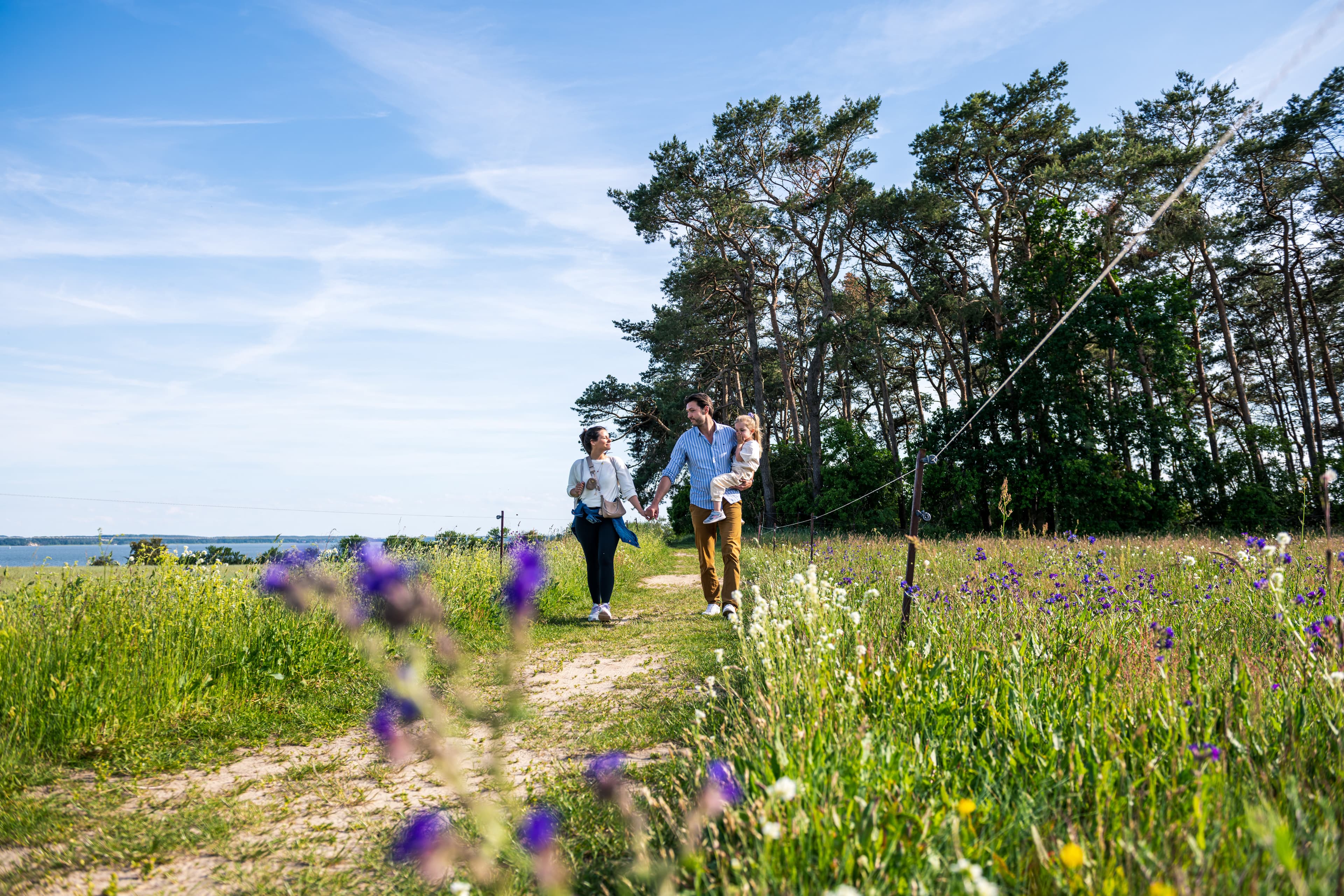
Whether on foot or by bike, on or in the water: Let your urge to be active run free.
~ read more