Amber
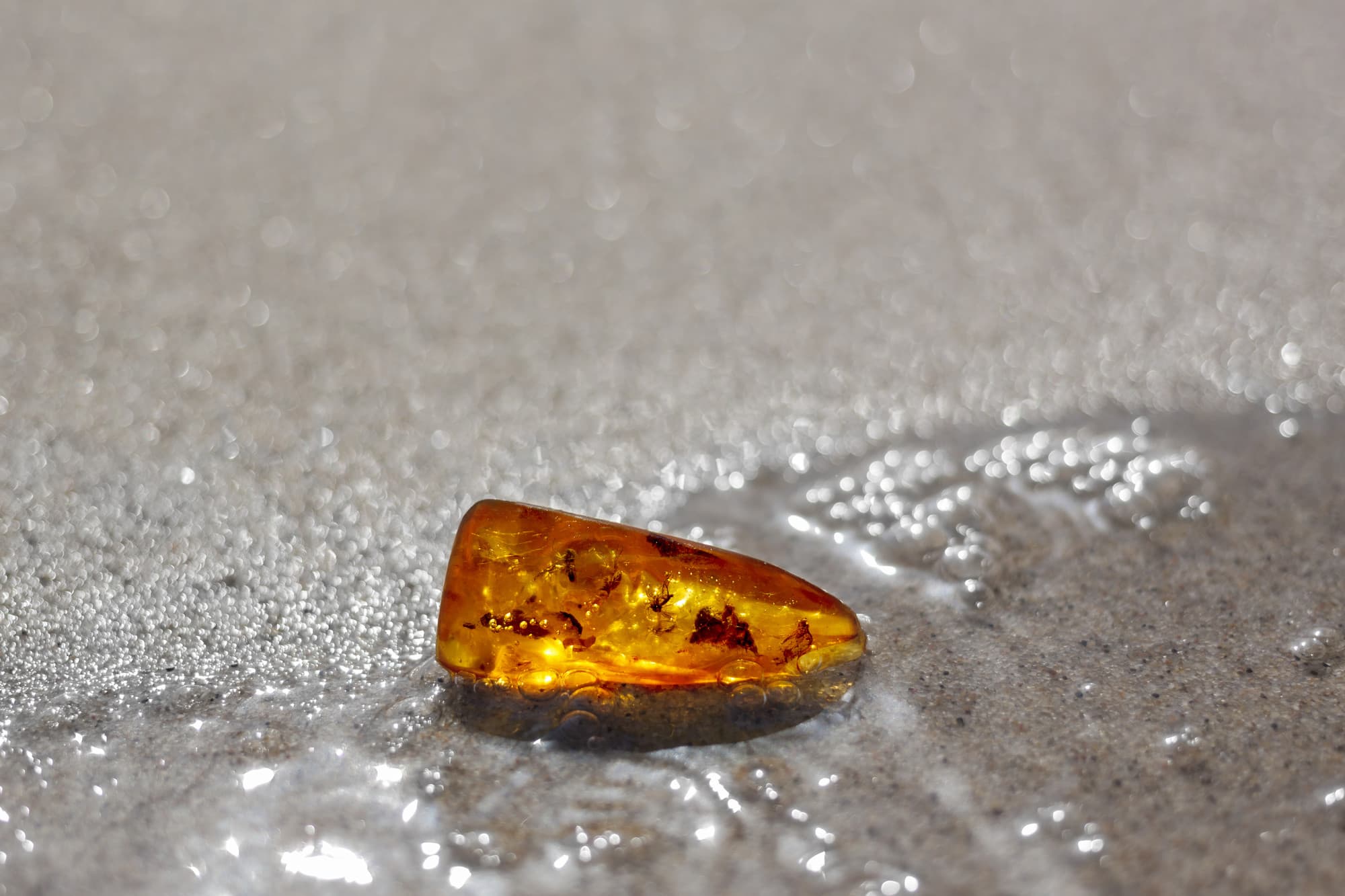
Treasure Hunt on the Beach
Do you find amber just as fascinating? On Usedom’s beaches, you have a good chance of finding amber during the cooler months. In stormy weather, however, you’ll have to get up early, because that’s when many locals and visitors get caught up in “amber fever.”
Stone or not stone?
Amber isn’t actually a real stone at all; it’s made of fossilized resin. Did you know that amber in the forests of the northeastern Baltic Sea region was formed from the liquid resin of the amber pine? This resin gradually hardened into amber and was preserved for eternity deep within the earth’s layers. Eventually, Ice Age glaciers carried the “Baltic amber” all the way to the coast of the island of Usedom.
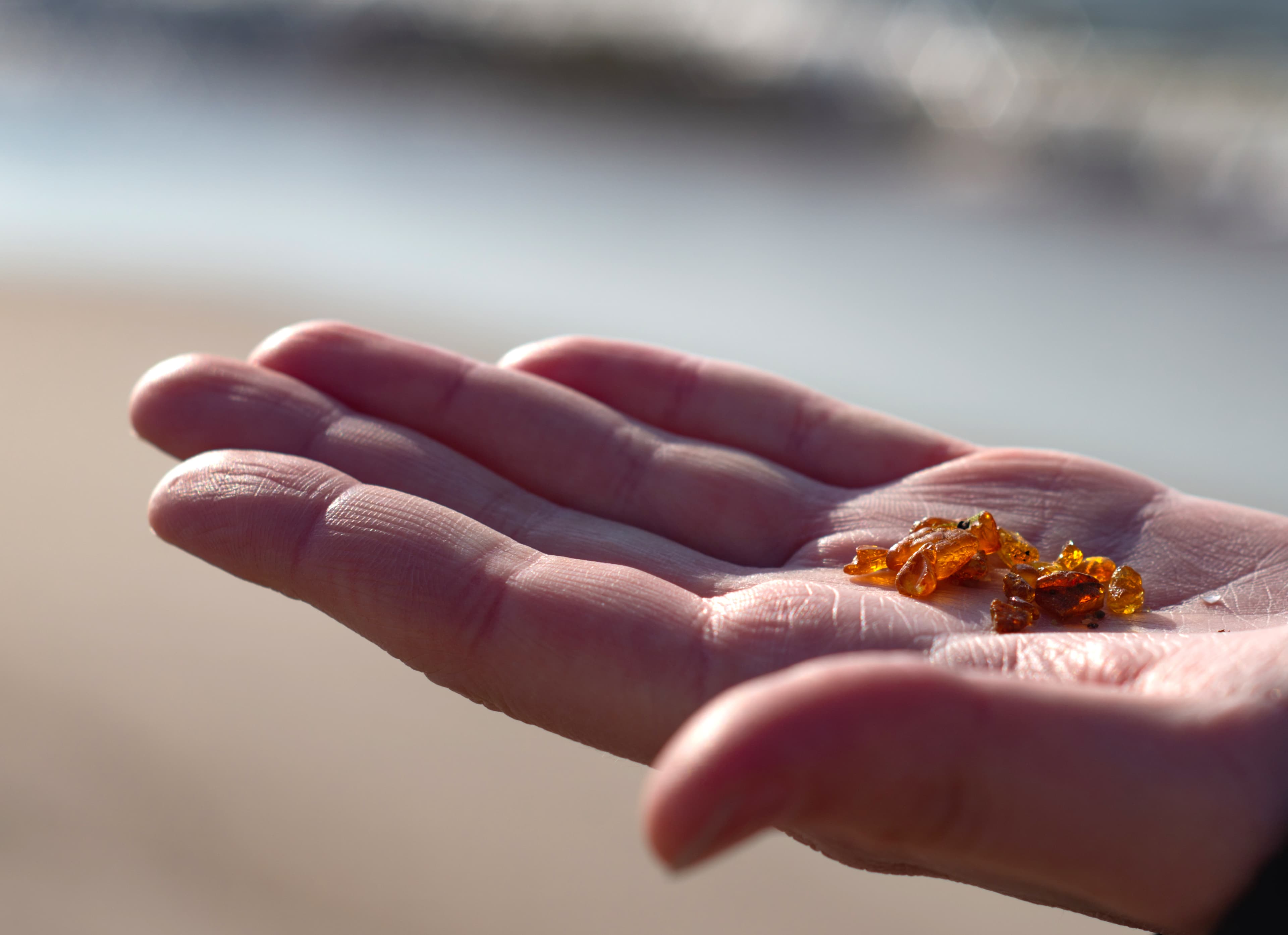
Good Fortune after Storms from the Northeast
When fall and winter storms churn up the Baltic Sea, the lightweight amber is washed ashore. Especially at temperatures around four degrees, when the salty Baltic Sea water is at its densest, amber floats to the surface. Look along the water’s edge, where small shells, driftwood, and seaweed lie. That’s where amber likes to hide. Anything that doesn’t stay there is carried away again by the Baltic Sea. That’s why professional amber hunters use nets to fish for it in shallow water.
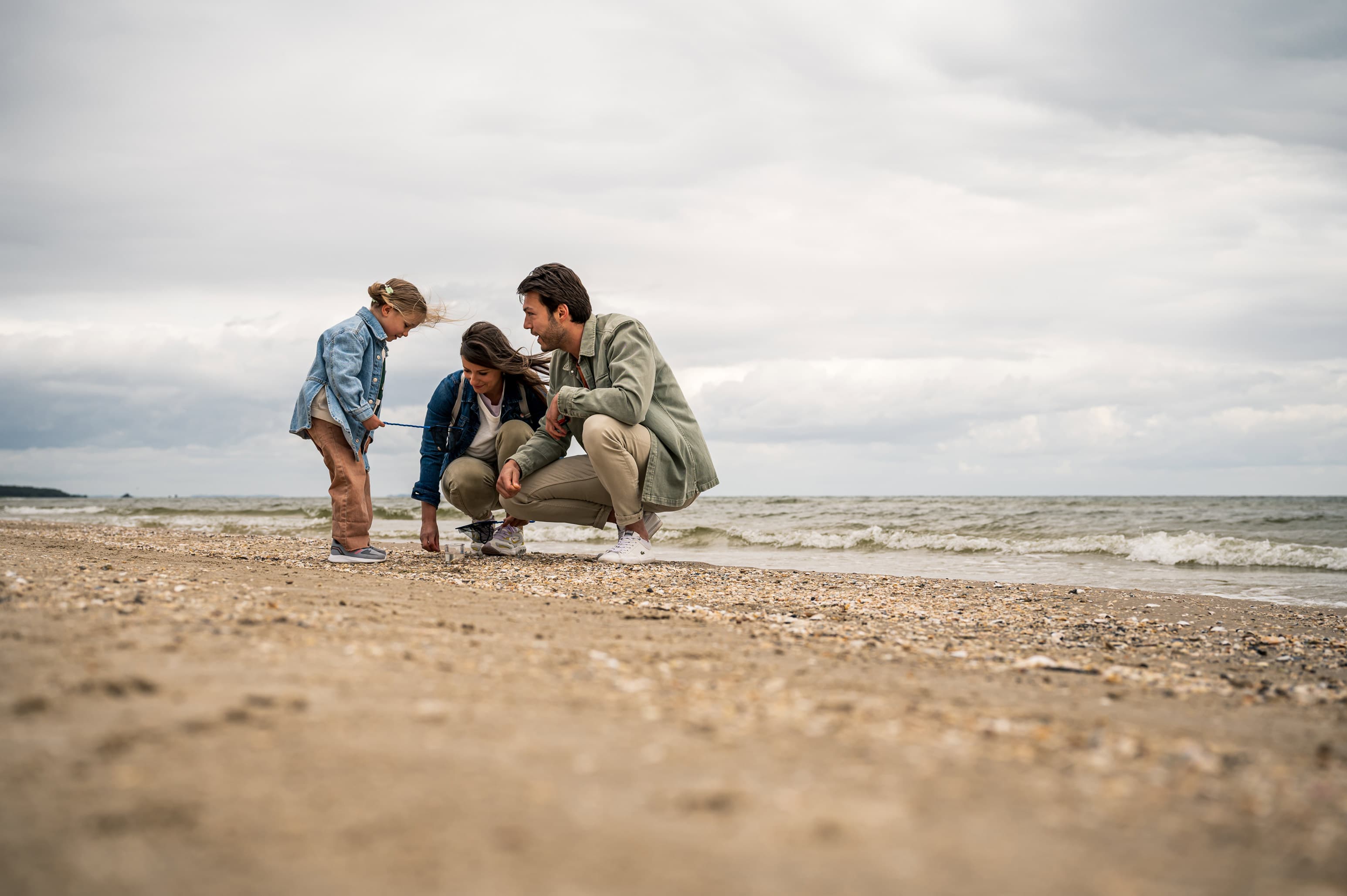
Do you have the "amber gaze"?
Inexperienced collectors often fail to recognize amber because its colors vary widely. Due to various factors, amber ranges in color from light yellow to reddish, brown, and even nearly black. Sometimes it glows transparently like honey; other times it is cloudy. You can test whether it is actually amber in a saturated salt solution: Genuine amber floats to the surface. Learn how to distinguish amber from ordinary stones on guided amber hikes.
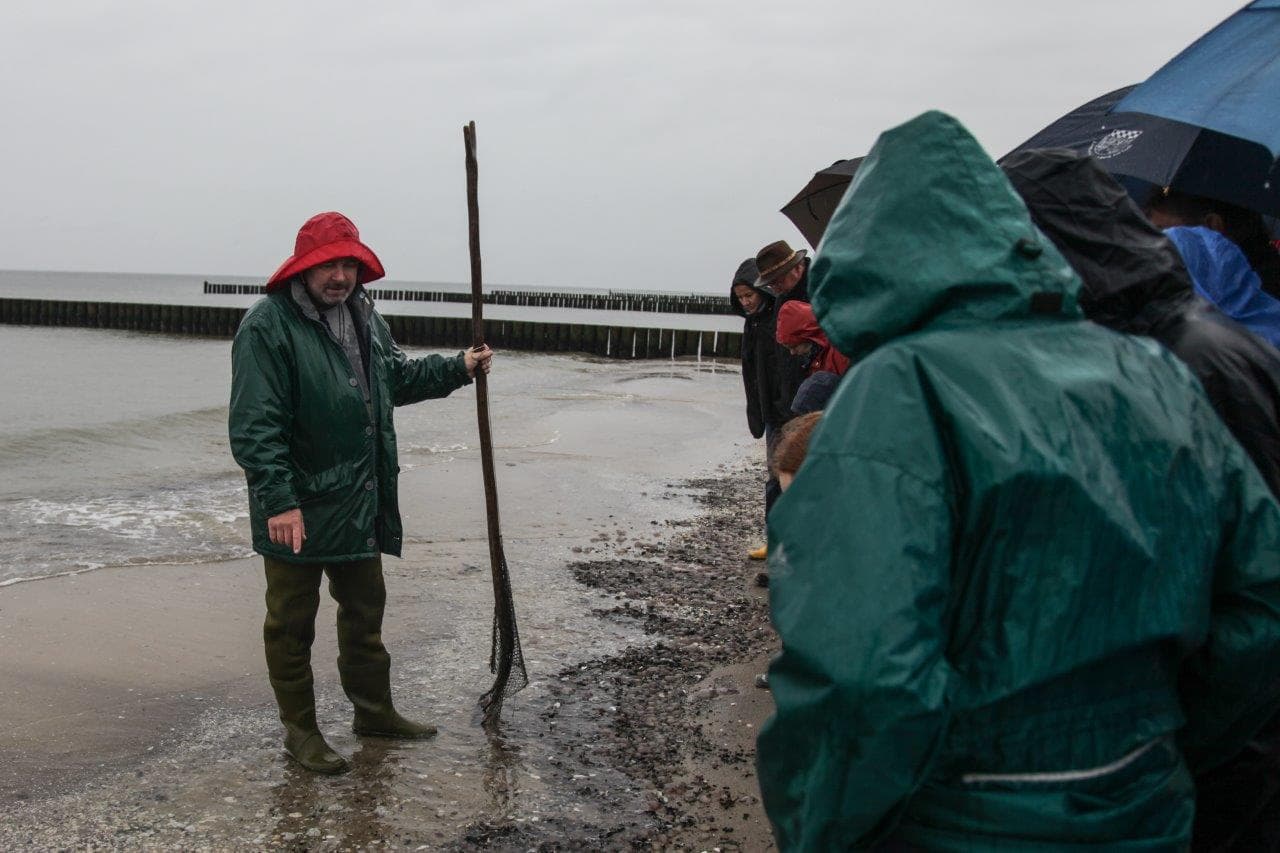
On a guided amber hike, you'll discover the "Bernsteinblick."
Warning: Risk of Confusion
On Usedom’s beaches, white phosphorus is sometimes washed ashore. Since it looks almost exactly like amber, this can be dangerous. Phosphorus is flammable at temperatures of 30 degrees or higher. Therefore, don’t just put your amber finds in your pants pocket; instead, store them in a glass jar or a metal container. Amber can also catch fire. The word “amber” is derived from the Low German “bernen” (to burn) and actually means “burning stone.”
Magical Powers and Healing Effects
The terms “gold of the sea” and “tears of the gods” clearly illustrate the great fascination that amber has held throughout history. Even in ancient times, this fossilized resin was a valuable commodity. The soft material can be easily crafted into jewelry and works of art. In the Middle Ages, it was believed to possess magical properties; today, it is said to have pain-relieving and calming effects.
Amber in Legends and Myths
Are you familiar with the story of the “Amber Witch,” which the Koserow pastor Wilhelm Meinhold wrote down in 1843? According to legend, Maria Schweidler, the pastor’s daughter from Koserow, discovered an amber vein in the Streckelsberg and used the proceeds to alleviate the famine among the local population. Because of her inexplicable wealth, she was accused of witchcraft by a spurned suitor. It was only at the last moment that Count Rüdiger von Nienkerken saved her from the stake.
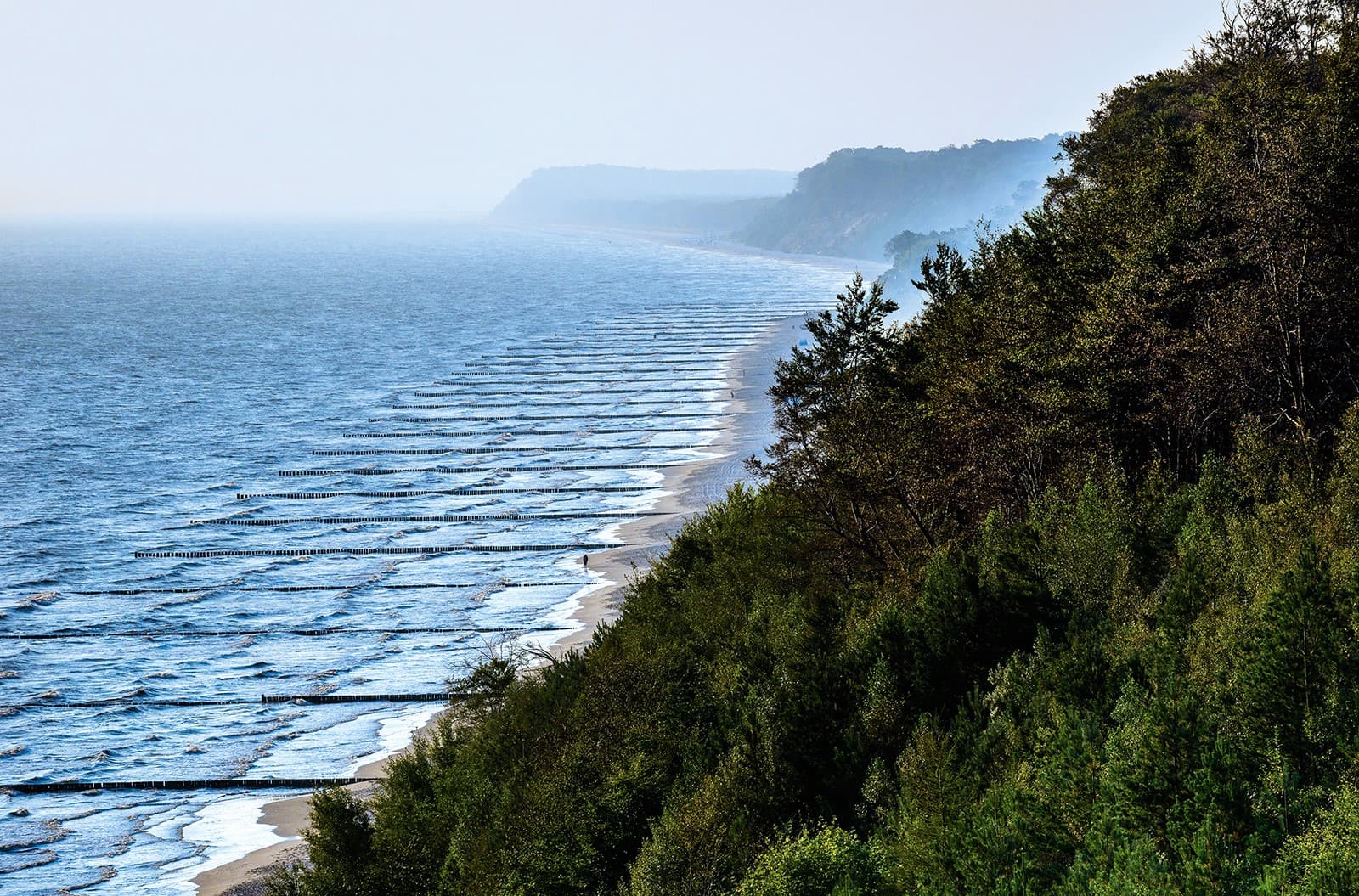
According to legend, a vein of amber was discovered in Streckelsberg.
Book Your Vacation Now
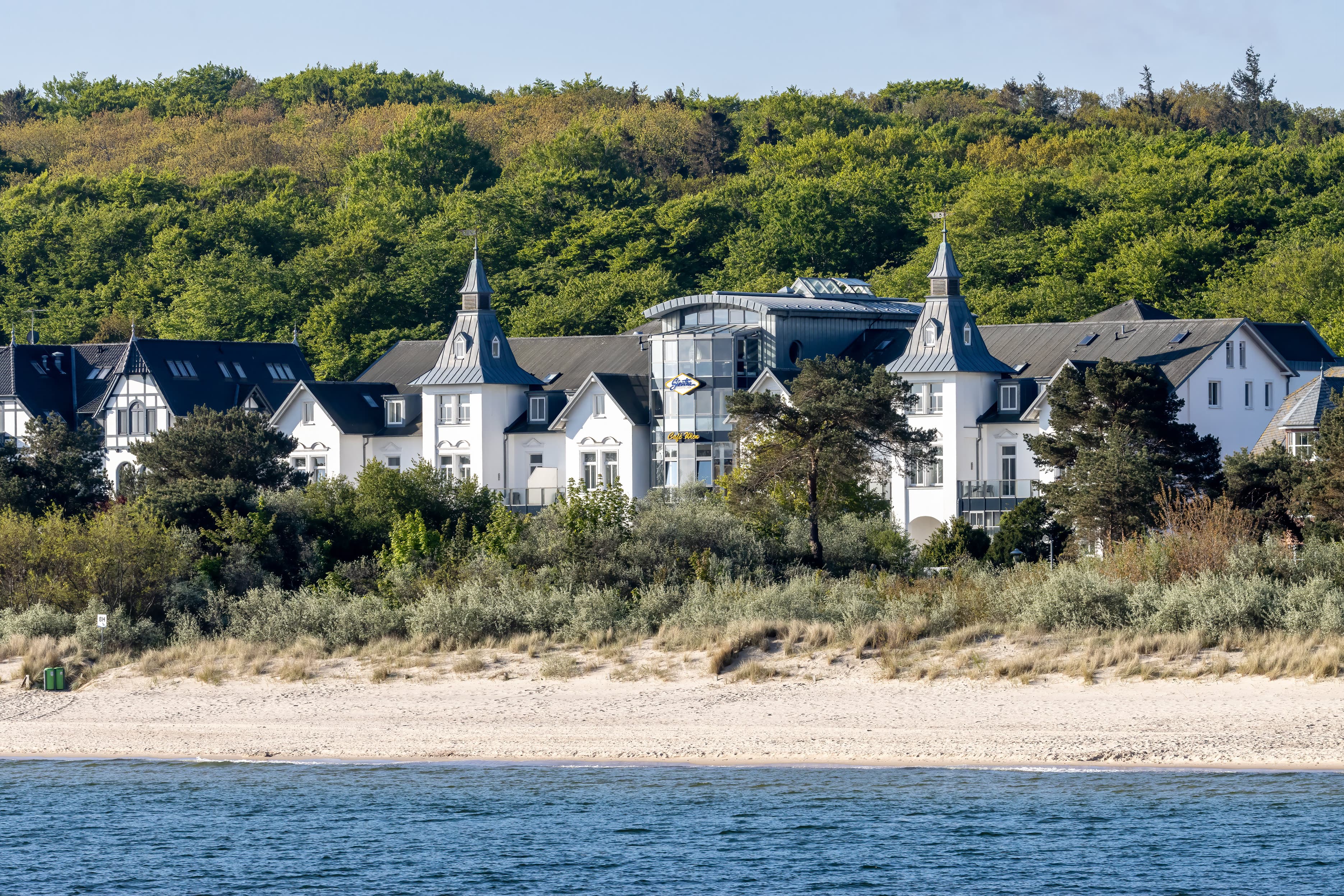
An elegant residential neighborhood on the Baltic Sea beach
Elaborately decorated portals, loggias, columns, bay windows, and turrets: This colorful mix of styles is what gives the famous coastal architecture its charm.
~ read more
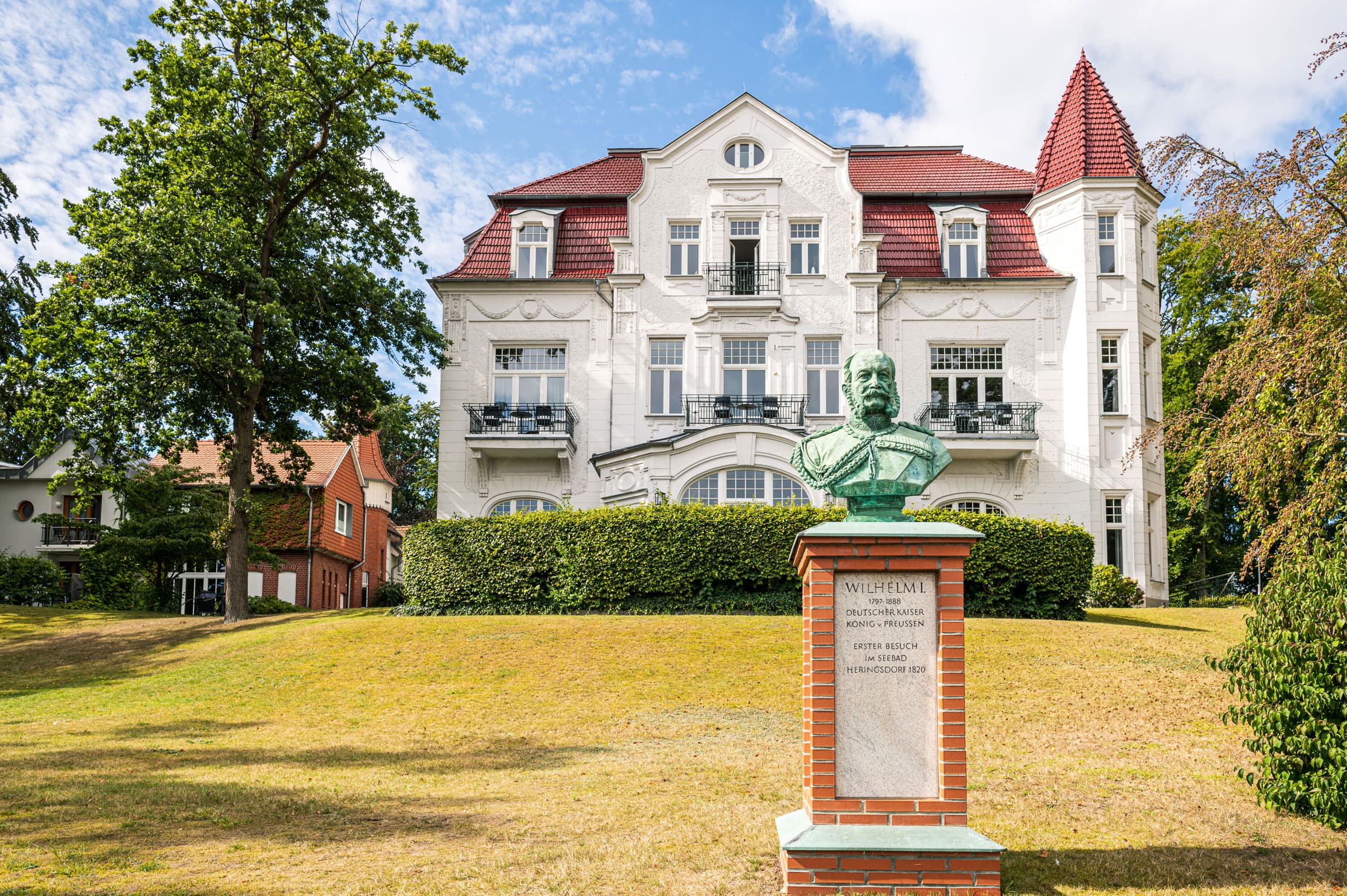
An identity that has evolved over centuries
A turbulent history, traditional craftsmanship, and living customs continue to shape the island of Usedom to this day.
~ read more