- Villa Irmgard
- White Castle
- Villa Achterkerke
- Villa Oechsler
- Villa Staudt
- Villa Bleichröder
- Villa Oppenheim
- Villa Hintze
Seaside Resort Architecture
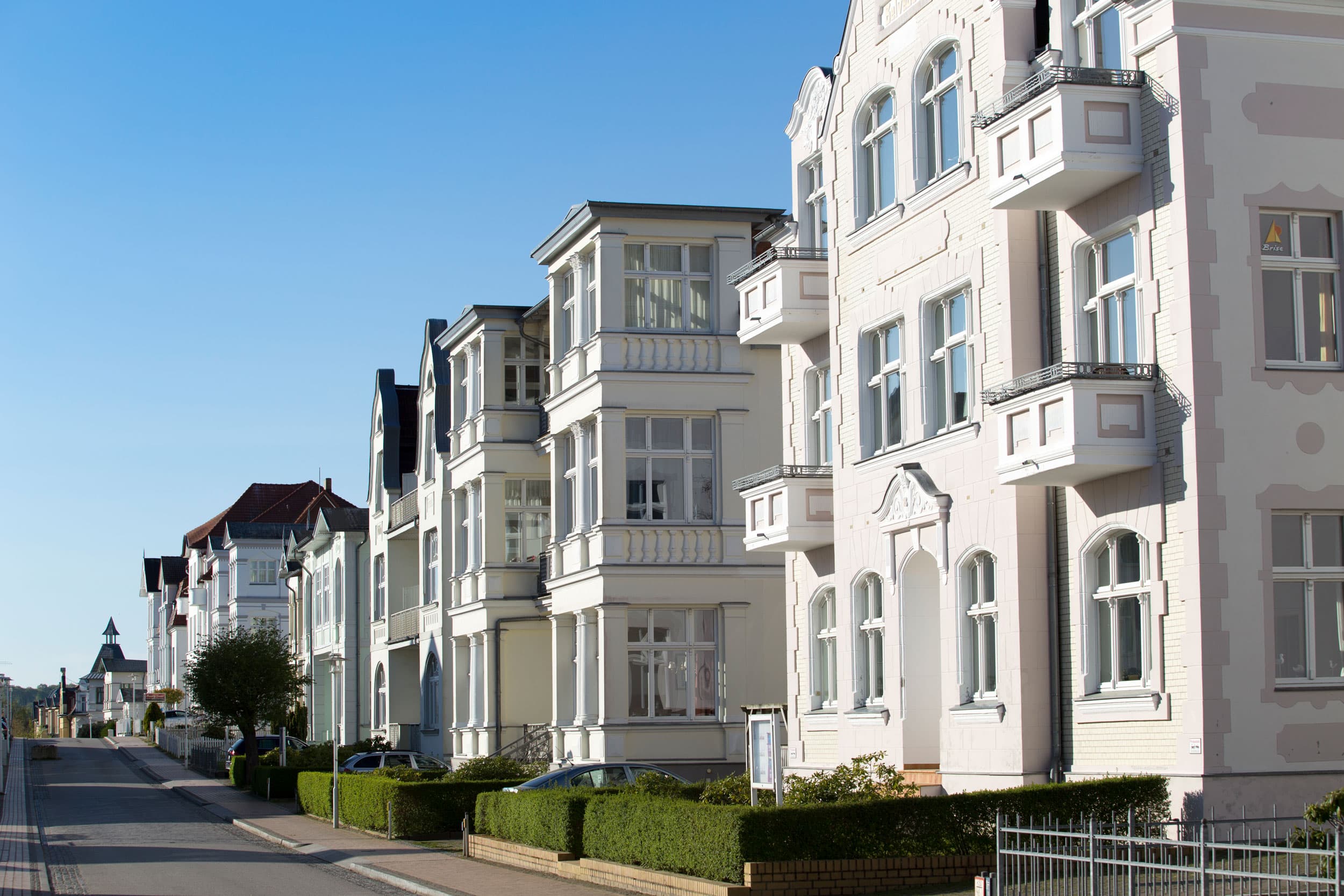
A Magnificent Legacy of Times Past
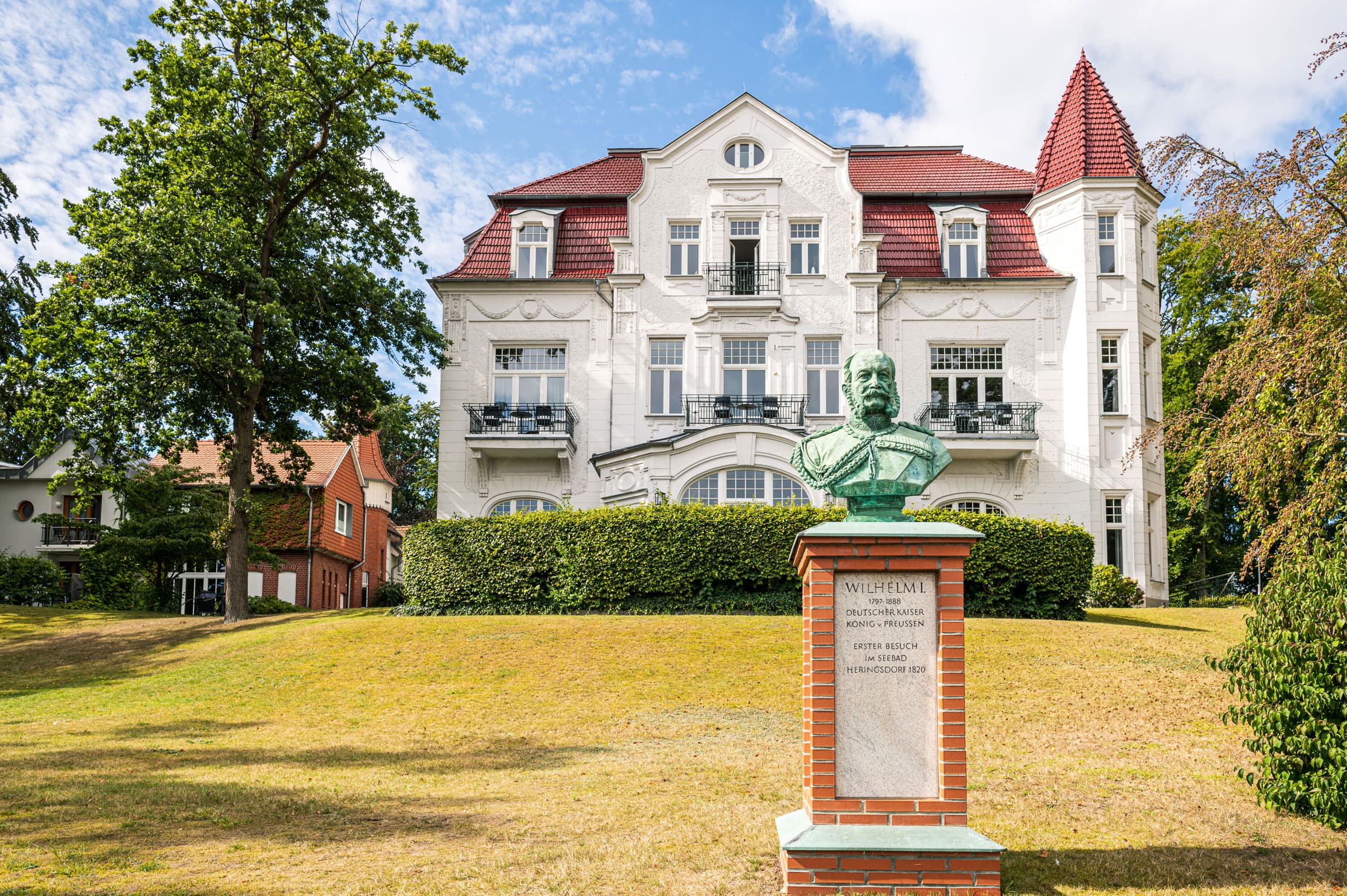
It is a precious treasure left behind by the former summer visitors to the island of Usedom. The seaside villas from the Imperial era seem to outdo one another in splendor and variety. You’ll be amazed by what you see here.
Transformation into a sophisticated seaside resort
As early as the 19th century, city dwellers discovered their love for the Baltic Sea. Within a few decades, the farming and fishing villages along Usedom’s coast transformed into elegant seaside resorts. It was particularly fashionable among the nobility and the wealthy upper middle class to spend their “summer retreat” on the Baltic Sea. By 1876 at the latest—when the railroad between the capital and Świnoujście began operating—Usedom had become the “Berliners’ beach resort.”
Social Life on the Promenade
“The Ku’damm in front, the Baltic Sea behind…,” joked Kurt Tucholsky. For Berlin’s high society at the end of the 19th century, “seeing and being seen” and “showing off what one had” played a major role even during summer vacations on the Baltic Sea. Even today, you can marvel at magnificent seaside resort architecture at every turn in the imperial resorts of Ahlbeck, Heringsdorf, and Bansin, as well as in the Baltic resort of Zinnowitz.
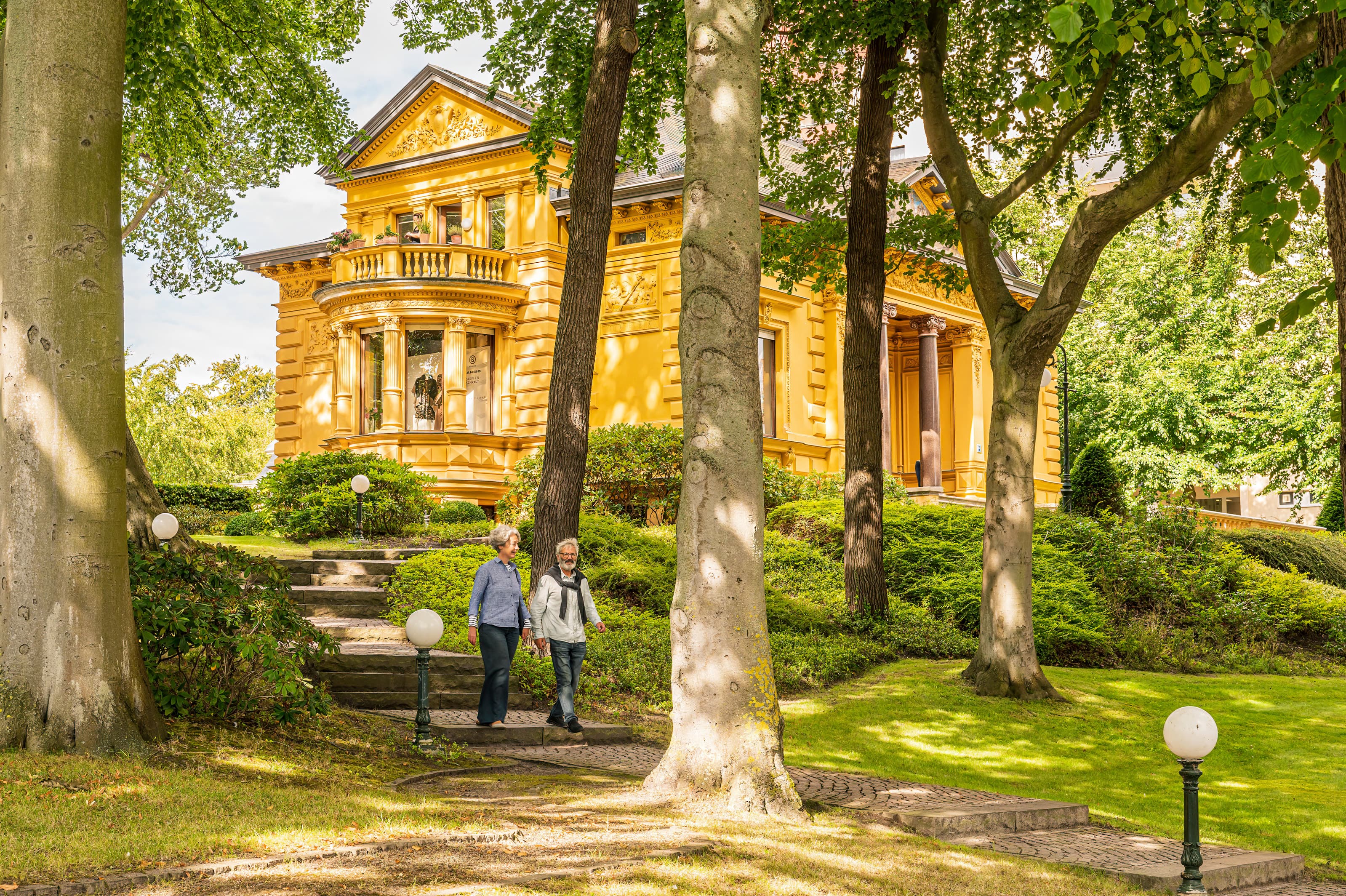
A Variety of Styles as a Program
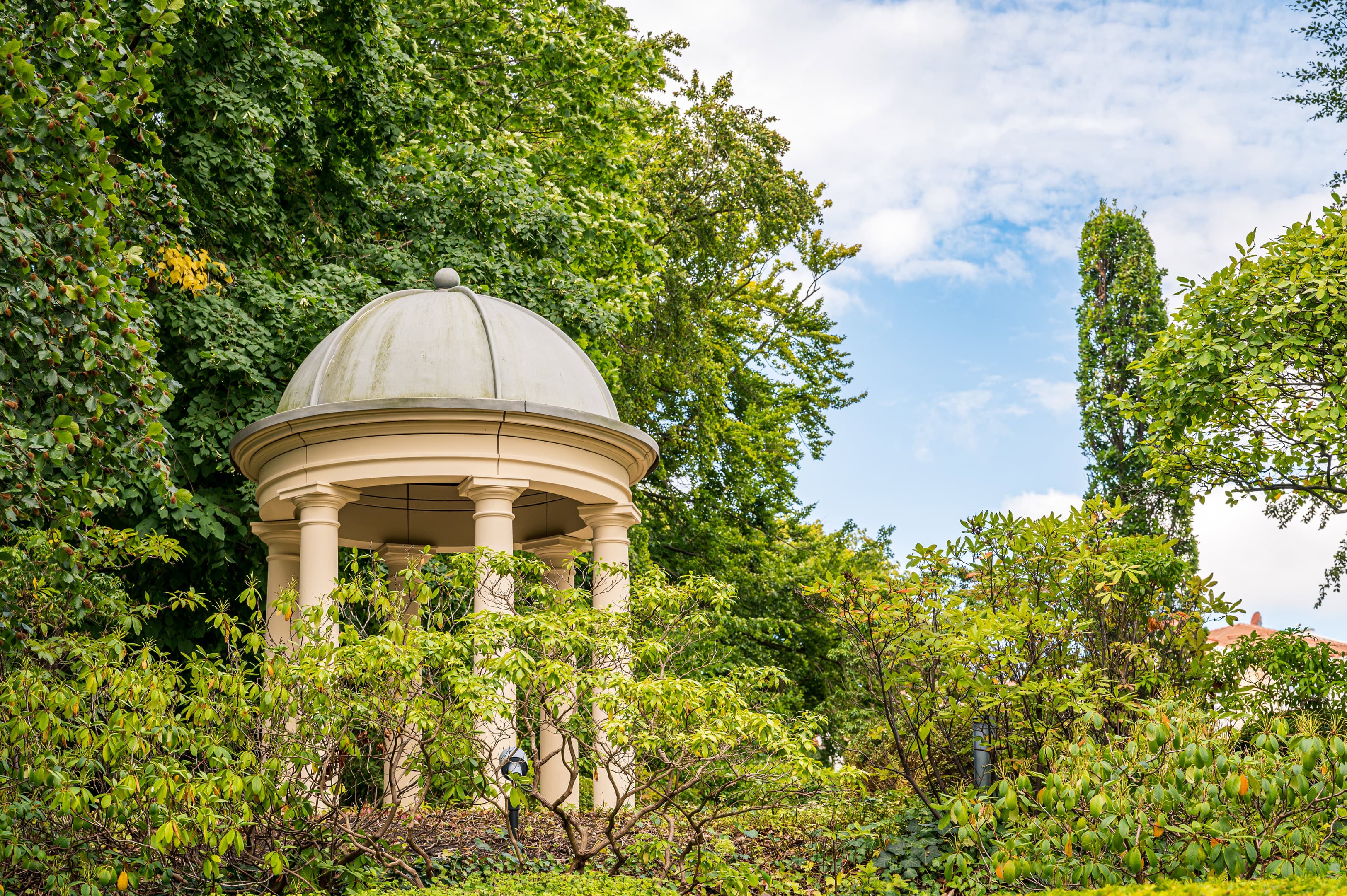
Back then, anyone who considered themselves someone of note had a prestigious summer residence built along the promenade, depending on their desire for prestige and the size of their wallet. The wealthy builders drew heavily on the architectural treasures of earlier eras. You’ll search in vain for design features common to all the villas. Rather, it is the diversity of styles that makes seaside resort architecture so appealing. The seaside villas are reminiscent of Italian Renaissance palaces, neoclassical merchant’s mansions, or Black Forest cottages.
Typical Design Elements of Seaside Resort Architecture
- Portals with ancient columns
- Richly decorated triangular pediments modeled after Greek temples
- Columns with richly decorated Corinthian capitals
- Wide open staircases and park-like gardens
- Spacious loggias (now mostly enclosed with glass)
- Winding bay windows and decorative turrets
- Elaborately decorated wooden porches and balconies
Every seaside resort with its own unique character
Heringsdorf: A Hotspot for Berlin's High Society
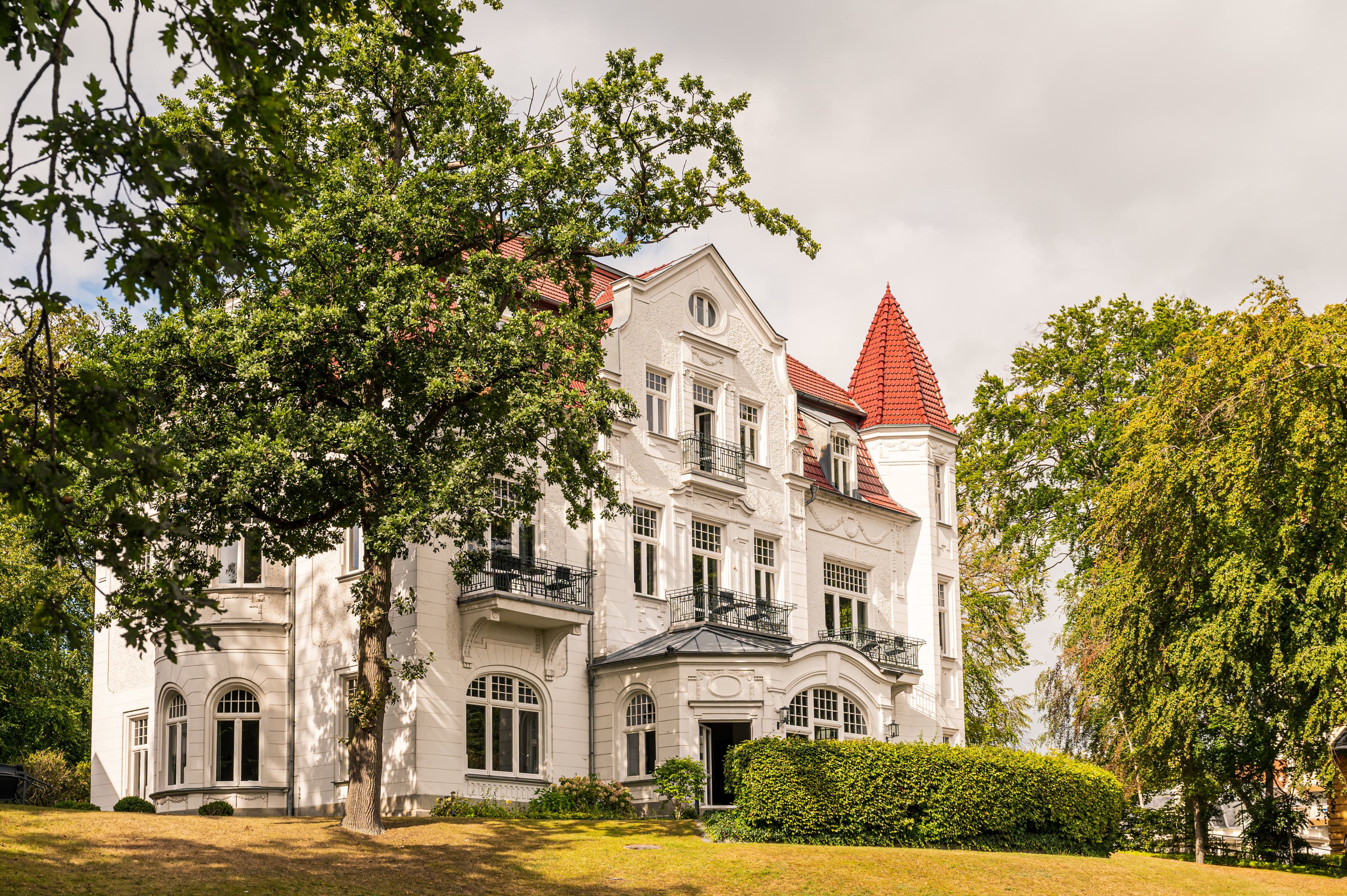
Did Forest Ranger Bernhard von Bülow have any idea that he would become a trendsetter? Loriot’s ancestor had the first guesthouse in Heringsdorf built on the Kulm. A few decades later, the small fishing village of Heringsdorf on the Baltic Sea had evolved into a prestigious seaside resort. This is where the nobility and prominent figures from the worlds of business and culture spent their summer vacations. To this day, the magnificent summer residences in the sprawling parks bear witness to the resort’s former glory.
Ahlbeck: A Seaside Resort for Everyone
Things were a bit less luxurious and exclusive at the seaside resort of Ahlbeck. Since the mid-19th century, numerous guesthouses and hotels had sprung up there. Ahlbeck was primarily a summer destination for middle-class families who could not afford—or did not wish to visit—the more sophisticated Heringsdorf. You can admire the most beautiful villas, built in the classicist seaside resort architectural style, along the promenade and on Stresemannstraße, Bismarckstraße, Ritterstraße, Goethestraße, and Kaiserstraße.
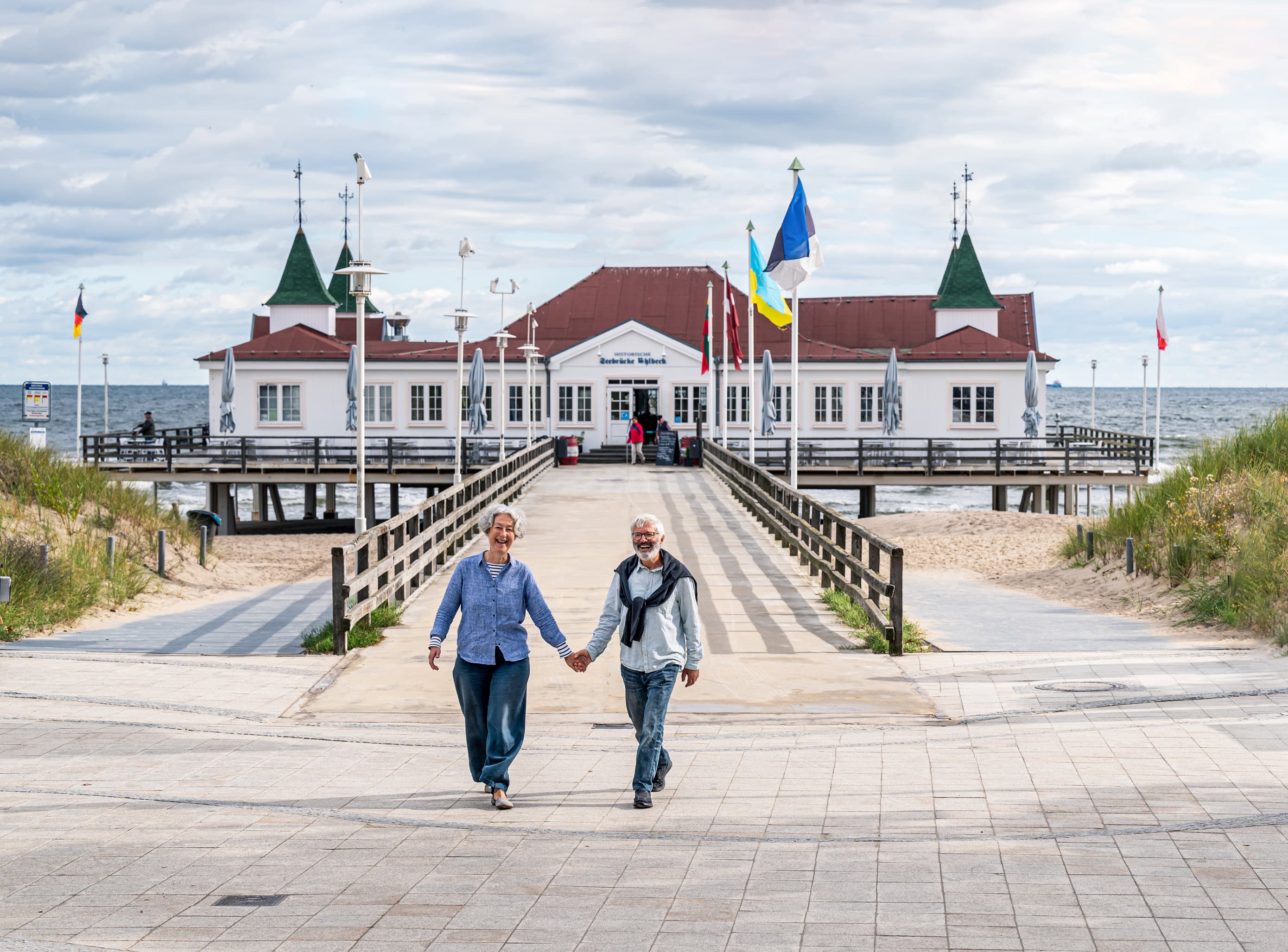
- Ahlbecker Hof
- Ahlbecker Pier
- Villa August Viktoria
- Villa Emmy
Bansin: Unobstructed View of the Sea
The newest and smallest of the imperial seaside resorts is Bansin. Unlike Heringsdorf and Ahlbeck, it was designed from the outset as a seaside resort in 1897. The developers deliberately had the hotels and guesthouses built with gaps between them. This allowed even summer guests in the second row to enjoy the magnificent ocean view. The elegant seaside resort architecture continues to define the town to this day. The ensemble of seaside villas on Bergstraße has been preserved in its entirety.
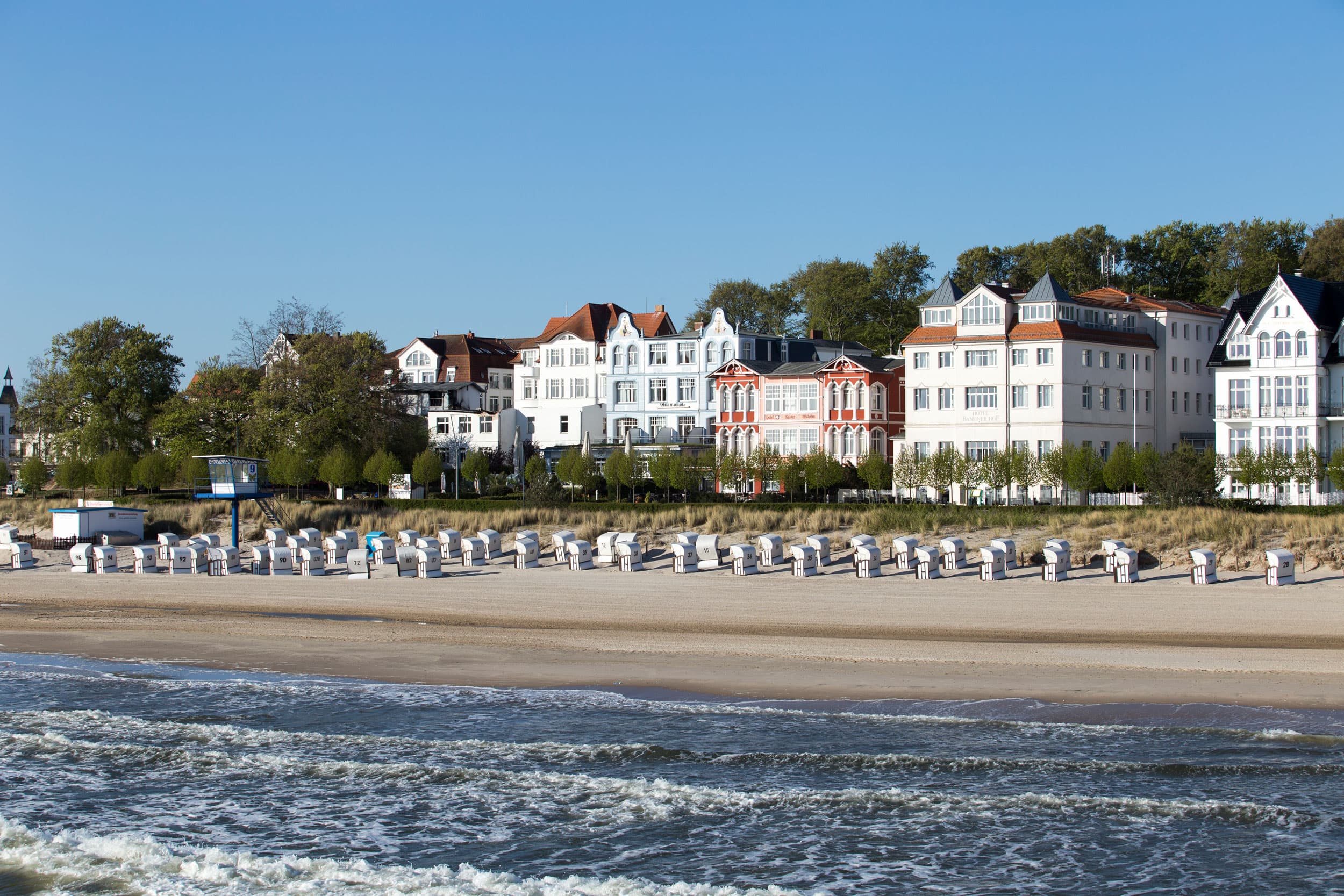
- Concert pavilion and Historic Bathing Carts
- Villas on Bergstraße
- Atlantic Beach Hotel
Zinnowitz: A Family Swimming Pool Then and Now
In Zinnowitz, too, you’ll feel the town’s more than 170-year-old tradition as a seaside resort everywhere you go. Seaside villas and guesthouses in the Classical and Art Nouveau styles characterize the townscape. You can admire particularly magnificent examples of seaside resort architecture on Neue Strandstraße, Bergstraße, and along the beach promenade.
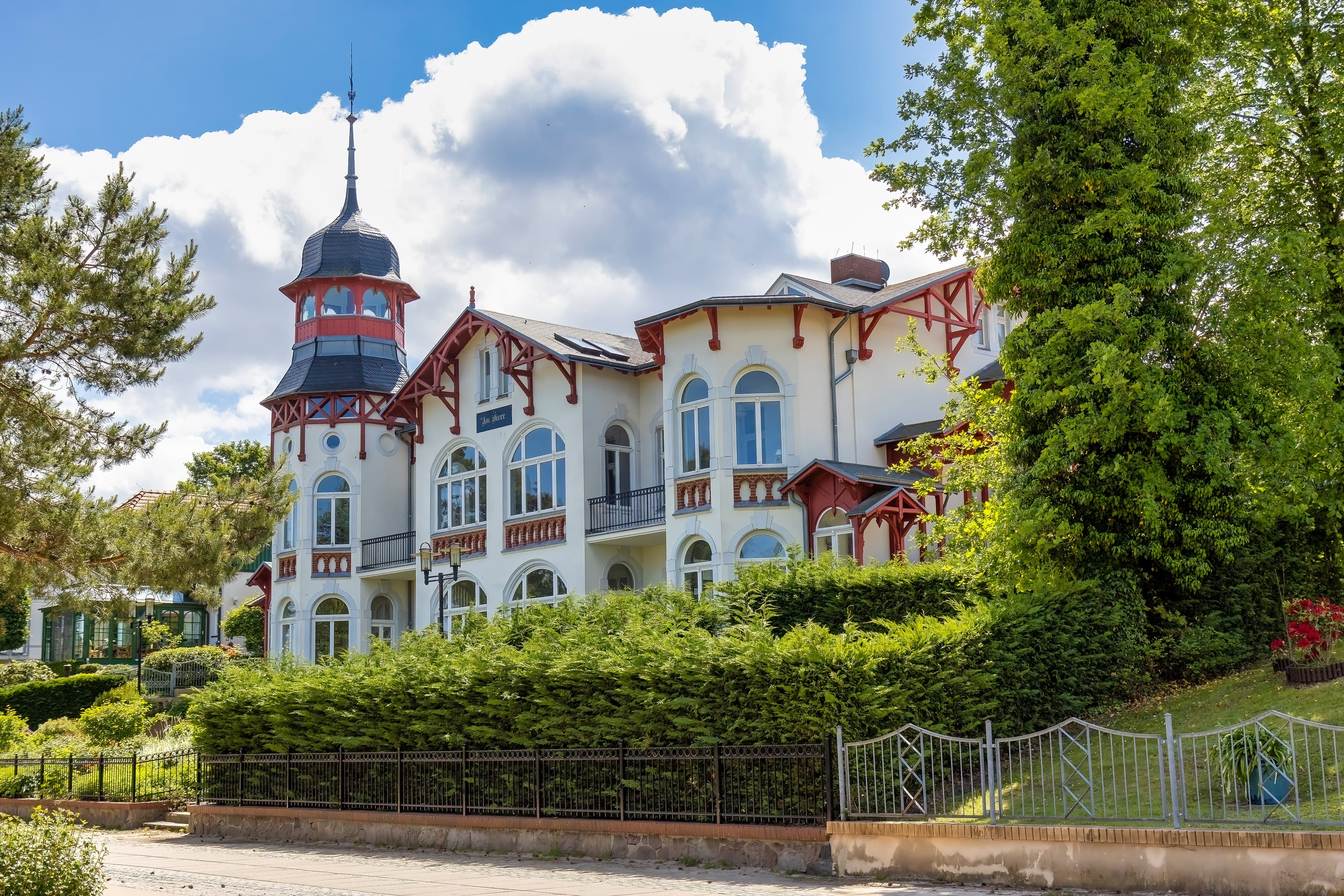
- Preussenhof
- Palace Hotel
- Villa Gruner
- Haus Waldesruh
- Hotel Asgard
- Hotel Seeschlösschen
Prefabricated Wooden Houses
Have you noticed the charming wooden houses along the promenade in Heringsdorf and Bansin? The so-called “Wolgaster wooden houses” are a unique variation of seaside resort architecture. They were mass-produced by the “Wolgaster Actien-Gesellschaft für Holzbearbeitung,” founded in 1865. Using these prefabricated parts, customers could order their own custom model from the catalog based on their taste and budget.
From the World’s Fair to Bansin
There are several Wolgast wooden houses to see on the Bansin promenade. The narrow villa “Ut Kiek” is particularly eye-catching. It was exhibited as a prototype at the World’s Fair in Paris and subsequently rebuilt in Bansin. Right next to it are Villa Vineta, Villa Heimdall, and Café Asgard. In this historic café, you can even tour a Wolgast wooden house from the inside.
- Villa Vineta
- Villa Heimdall
- Ut Kiek
- Café Asgard
- Villa Auguste Viktoria
- Heringsdorf Youth Hostel
We'll show you the most beautiful villas
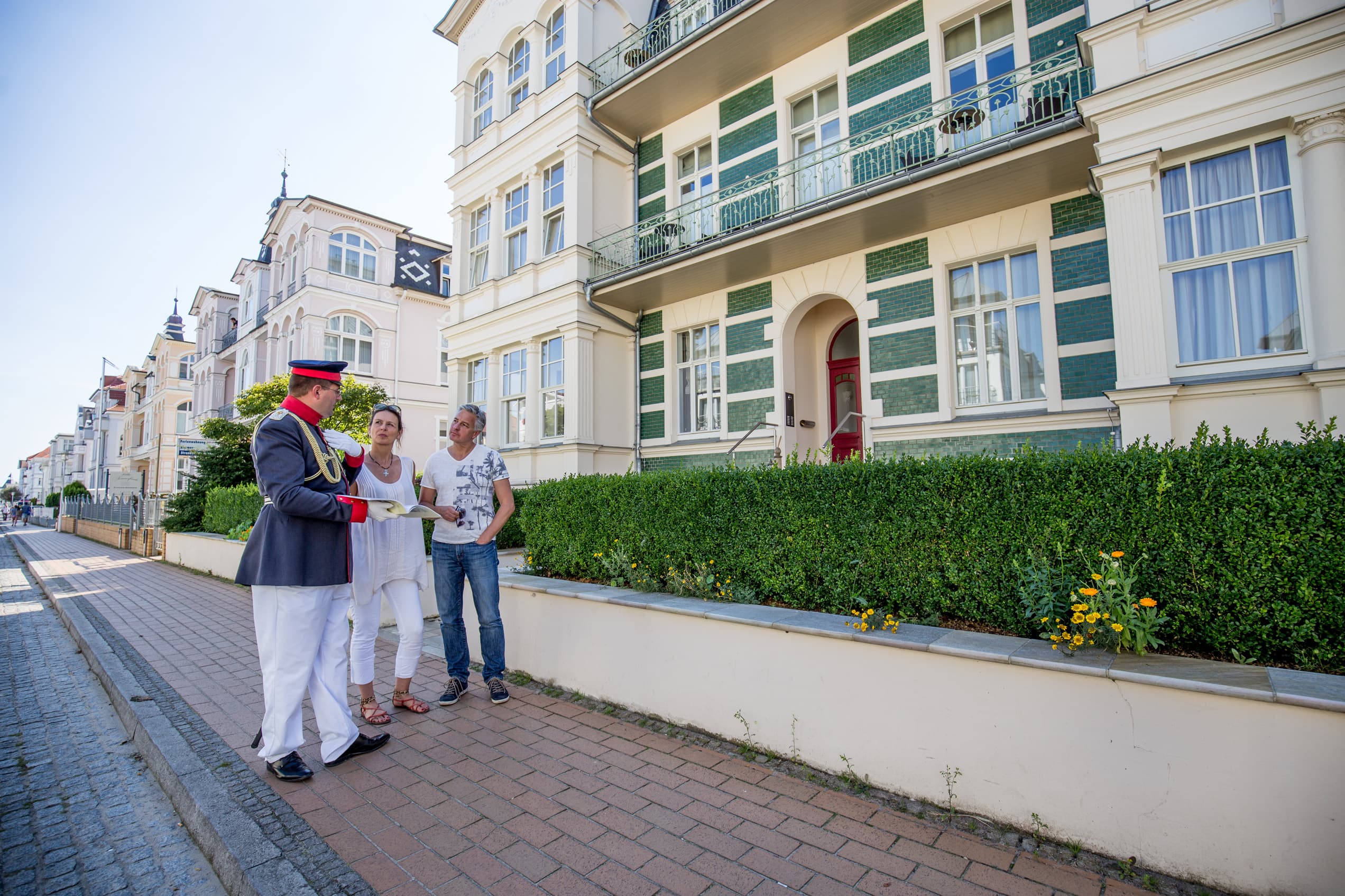
Once a year—during Coastal Architecture Week—the Imperial Resorts shine a spotlight on their historic villas. Learn more about this unique architectural style through lectures, films, and guided tours. On the Imperial Resort Towns Discovery Trail , you can use an app to explore the history of the Imperial Resort Towns on your own. In Zinnowitz, informational signs introduce you to the history of the architectural landmarks.
Book Your Vacation Now
An identity that has evolved over centuries
A turbulent history, traditional craftsmanship, and living customs continue to shape the island of Usedom to this day.
~ read more
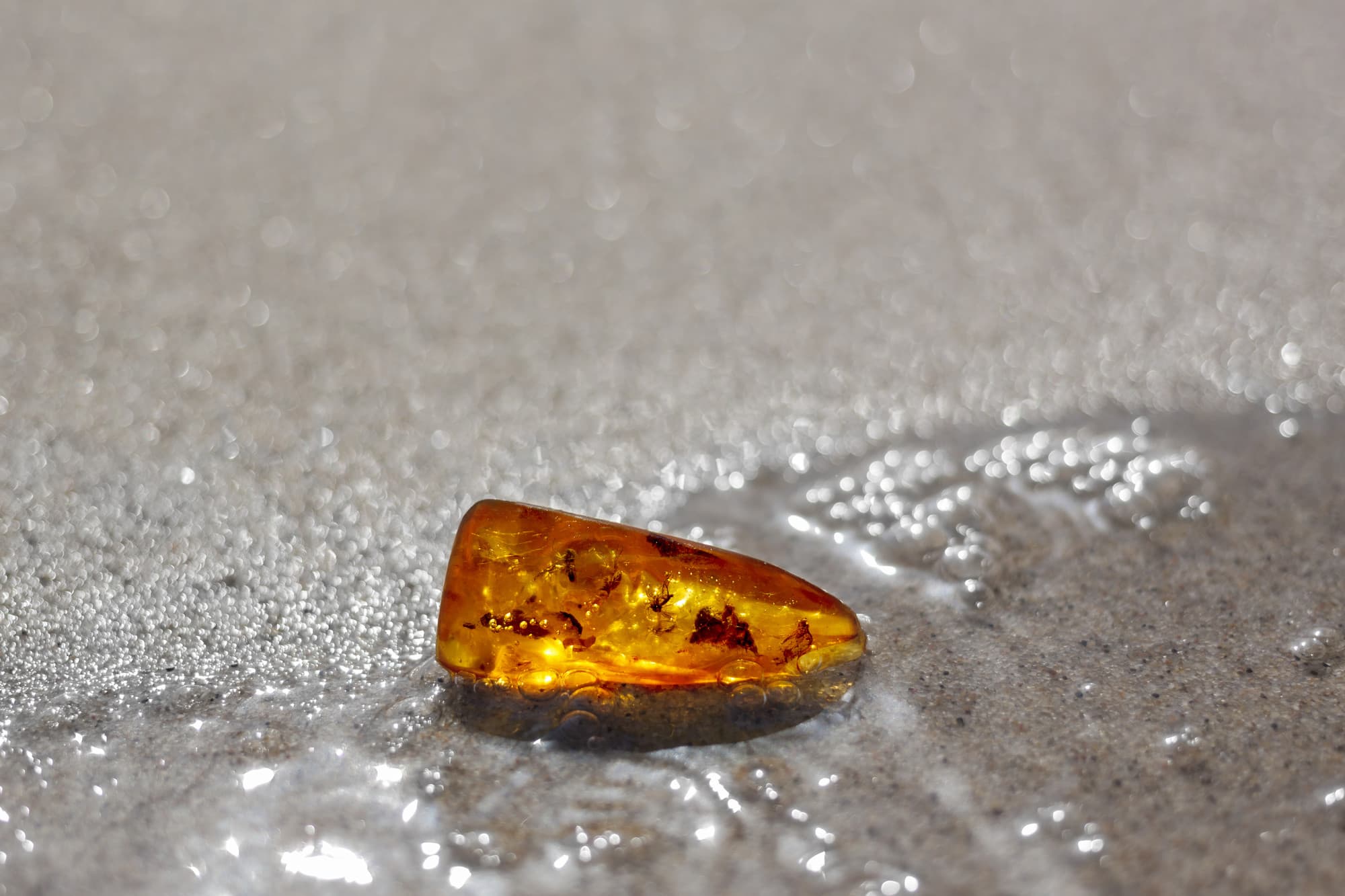
The “Gold of the Sea” on Usedom’s Beaches
All you need is a little luck. Maybe the next wave will wash a little piece of amber right up to your feet.
~ read more