Castles
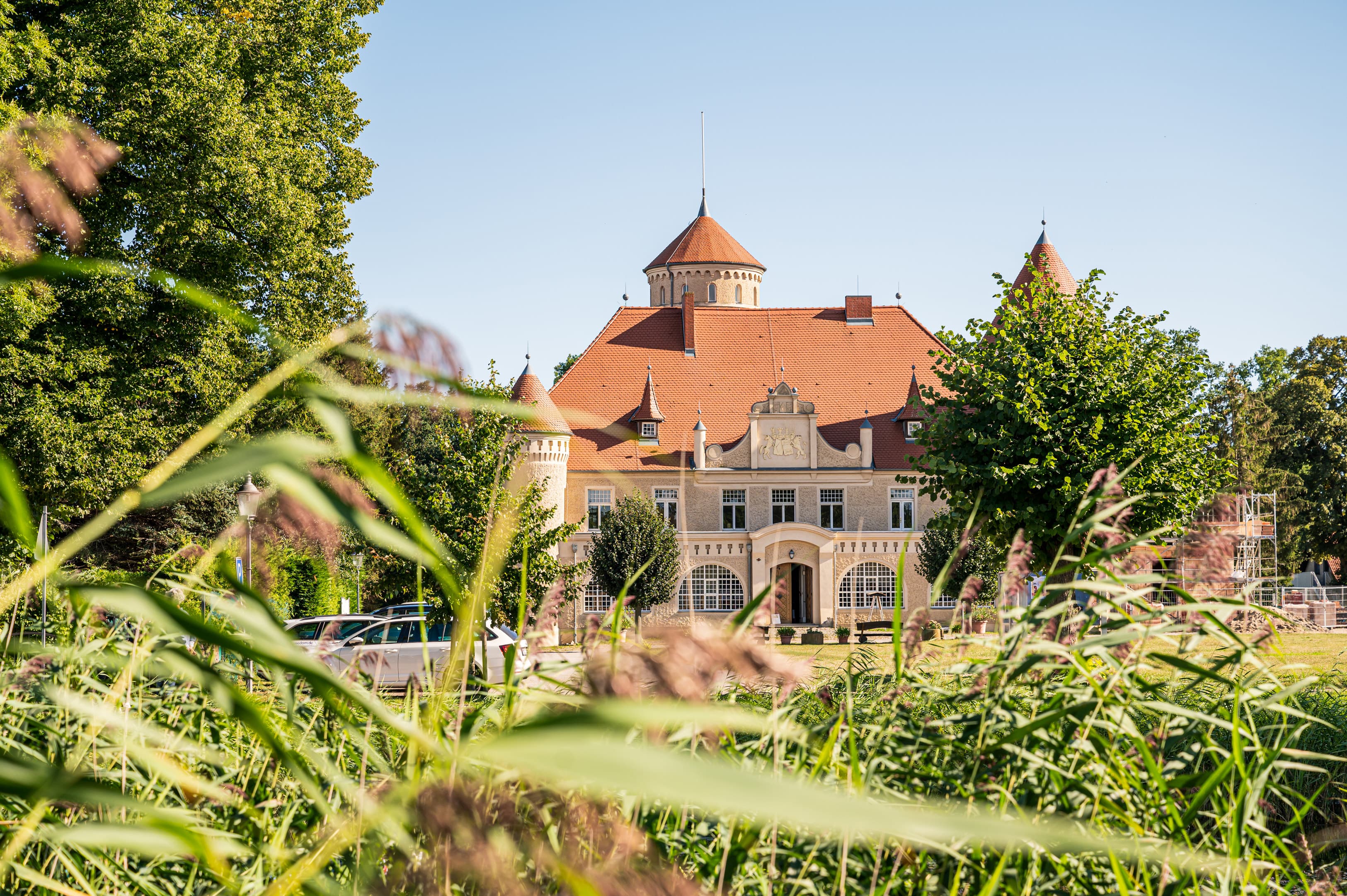
Where knights, counts, and dukes once resided
Visit historic estates and stately castles in the Achterland and immerse yourself in the island’s past. The romantic Mellenthin moated castle and Stolpe Castle on the Szczecin Lagoon—which has been restored in accordance with preservation guidelines—are especially worth seeing.
Residence of a prominent noble family
Mellenthin Moated Castle is considered one of the most significant secular buildings of the Renaissance. Rüdiger von Neuenkirchen had this stately manor house built between 1575 and 1580. Along with the Pudagla Monastery, the von Neuenkirchen noble family owned the largest estates on the island at that time. A richly decorated fireplace from 1613 in the entrance hall gives you a glimpse of the moated castle’s original interior.
The Eventful History of the Moated Castle
After the Neuenkirchen noble line died out in the mid-17th century, the moated castle changed hands frequently. During the GDR era, it was state-owned and was used as a grain warehouse, a restaurant, a municipal office, and a kindergarten. In 2001, a dedicated family from Westphalia purchased the moated castle and brought it back to life. Check in at the hotel in the west wing or dine in the former knights’ hall.
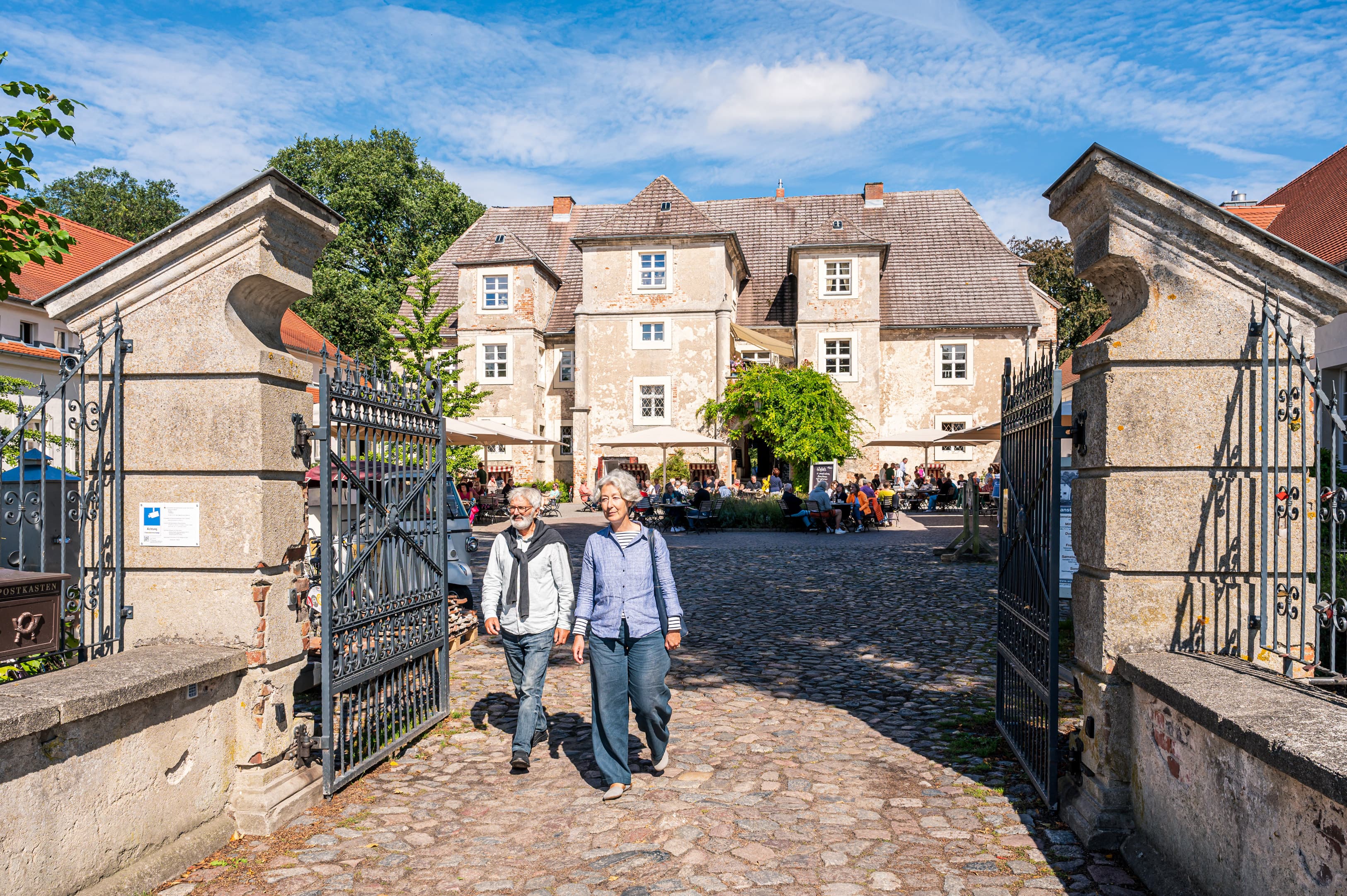
Mellenthin Moated Castle
A tourist destination in the heart of the island
Did you know that the Slavic word “Mellenthin” means “center”? This moated castle is a popular destination right in the heart of Usedom. Try a freshly tapped beer from the on-site brewery or treat yourself to a delicious waffle. The castle also features a coffee roastery and a distillery. If you’re looking for a souvenir from the island, you’ll find just the thing in the shop located in the former castle chapel.
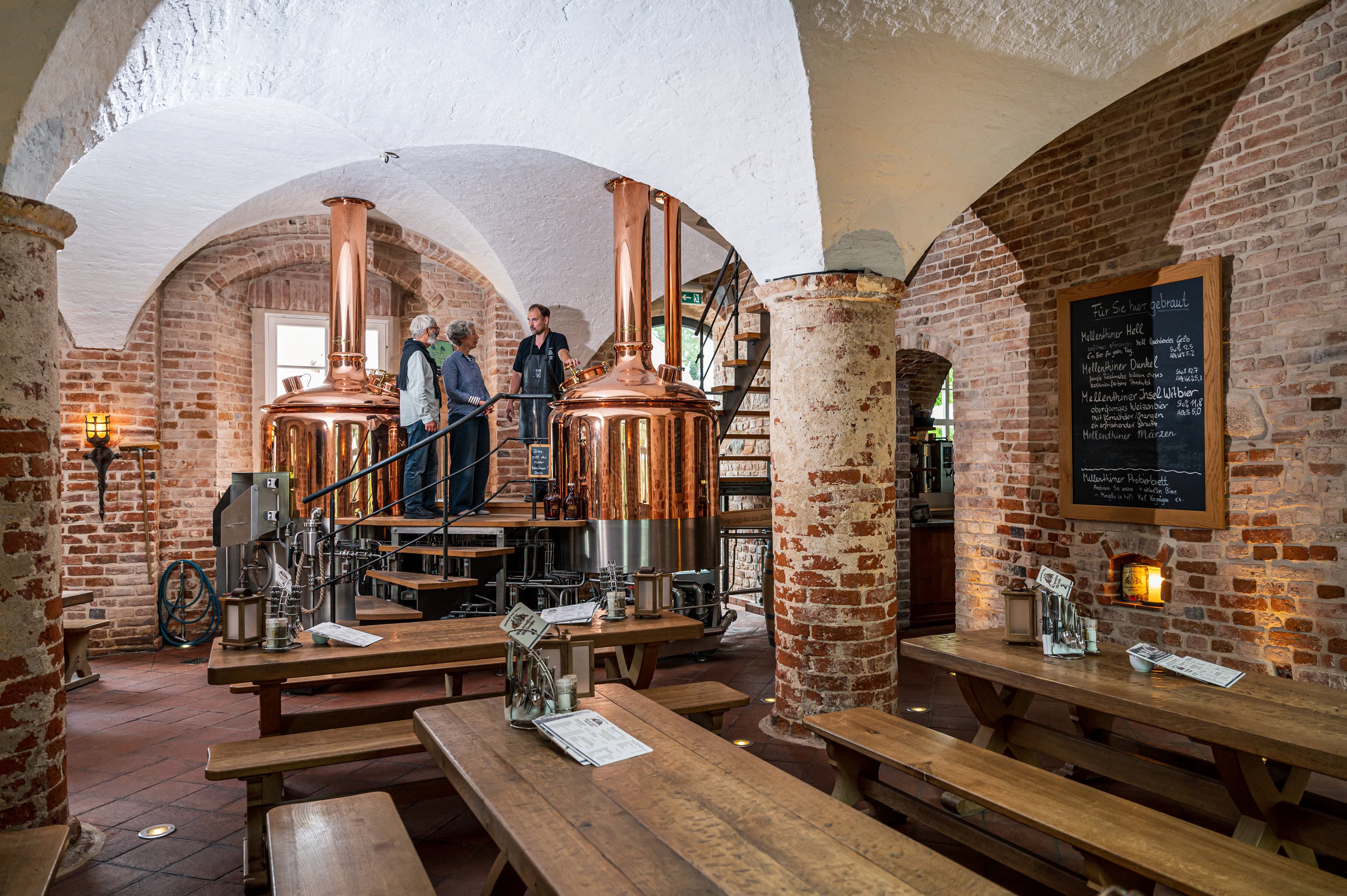
Brewery at Mellenthin Moated Castle
Transformation from a Mansion to a Castle
Stolpe Castle was built at the end of the 16th century as a simple manor house for the Stolpe branch of the Counts of Schwerin and was later modernized in the Baroque style. It was not until the last renovation around 1900—when three towers, the arcaded colonnade, and the family coat of arms were added—that it began to resemble an imposing castle. The last lady of the castle, Countess Freda von Schwerin, was expropriated after the war and had to leave Stolpe in November 1945.
Rising from the Ashes Like a Phoenix
After the German reunification, Stolpe Castle stood empty and was in danger of falling into disrepair. In 1996, the municipality of Stolpe purchased the castle for a symbolic price and founded the Förderverein Schloss Stolpe e.V. (Stolpe Castle Support Association) in 2001. Since then, the castle has been gradually restored with substantial grants and donations from private donors. Today, you can once again tour the count’s chambers, hold your wedding at the castle, or attend concerts and readings.
Stolpe Castle
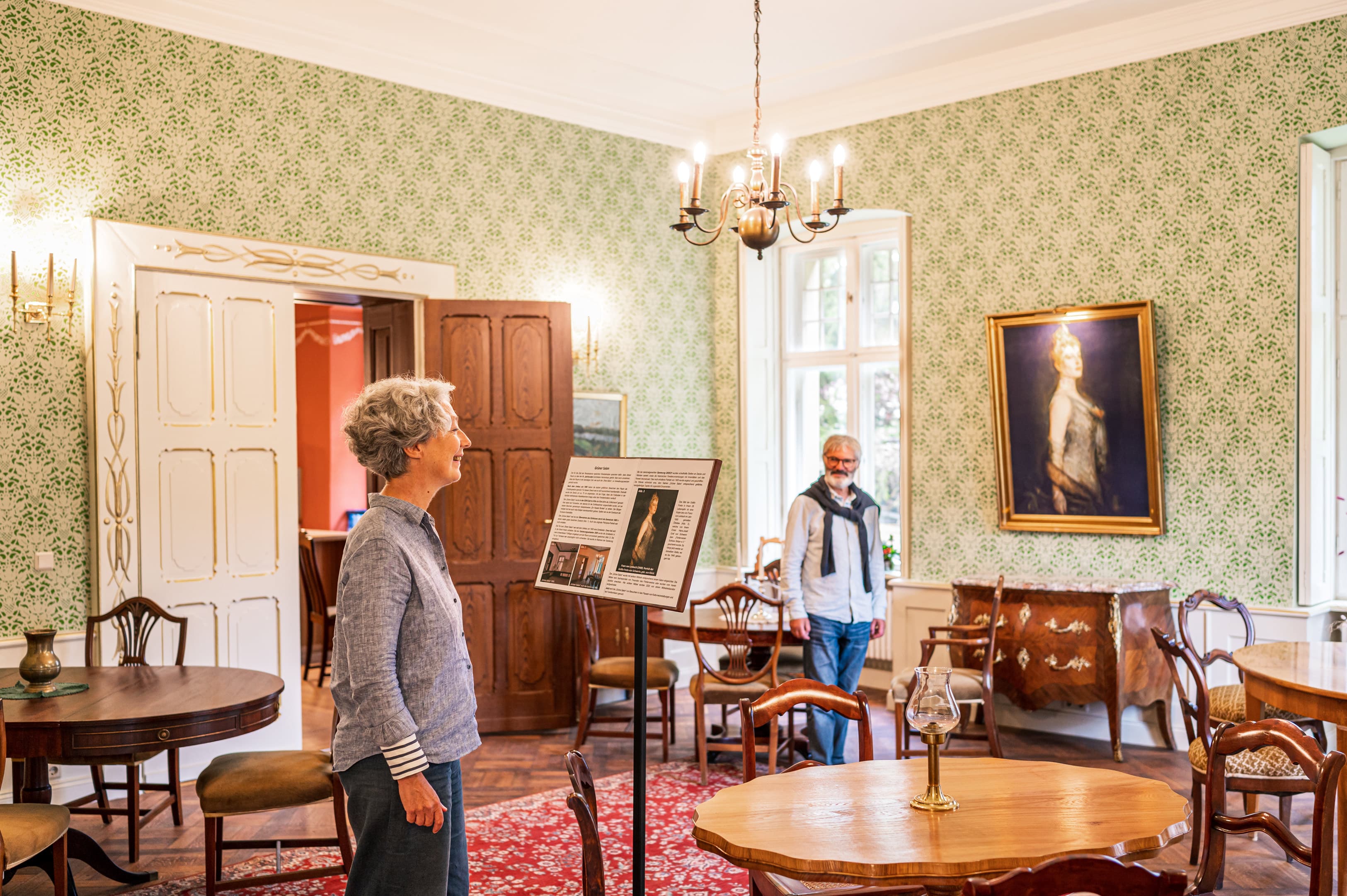
Tour of the interior of Stolpe Castle
A Home for the Widows of the Griffin Dukes
If you’re expecting an opulent castle in Pudagla, you’ll be searching in vain. Pudagla Castle is rather unadorned. Duke Ernst Ludwig of Pomerania-Wolgast had this two-story eave-style house built in 1574 as a residence for his mother, Duchess Maria of Saxony. The castle stands on the foundation walls of the former Pudagla Monastery. Above the main entrance, you can clearly see the griffin coat of arms.
Book Your Vacation Now
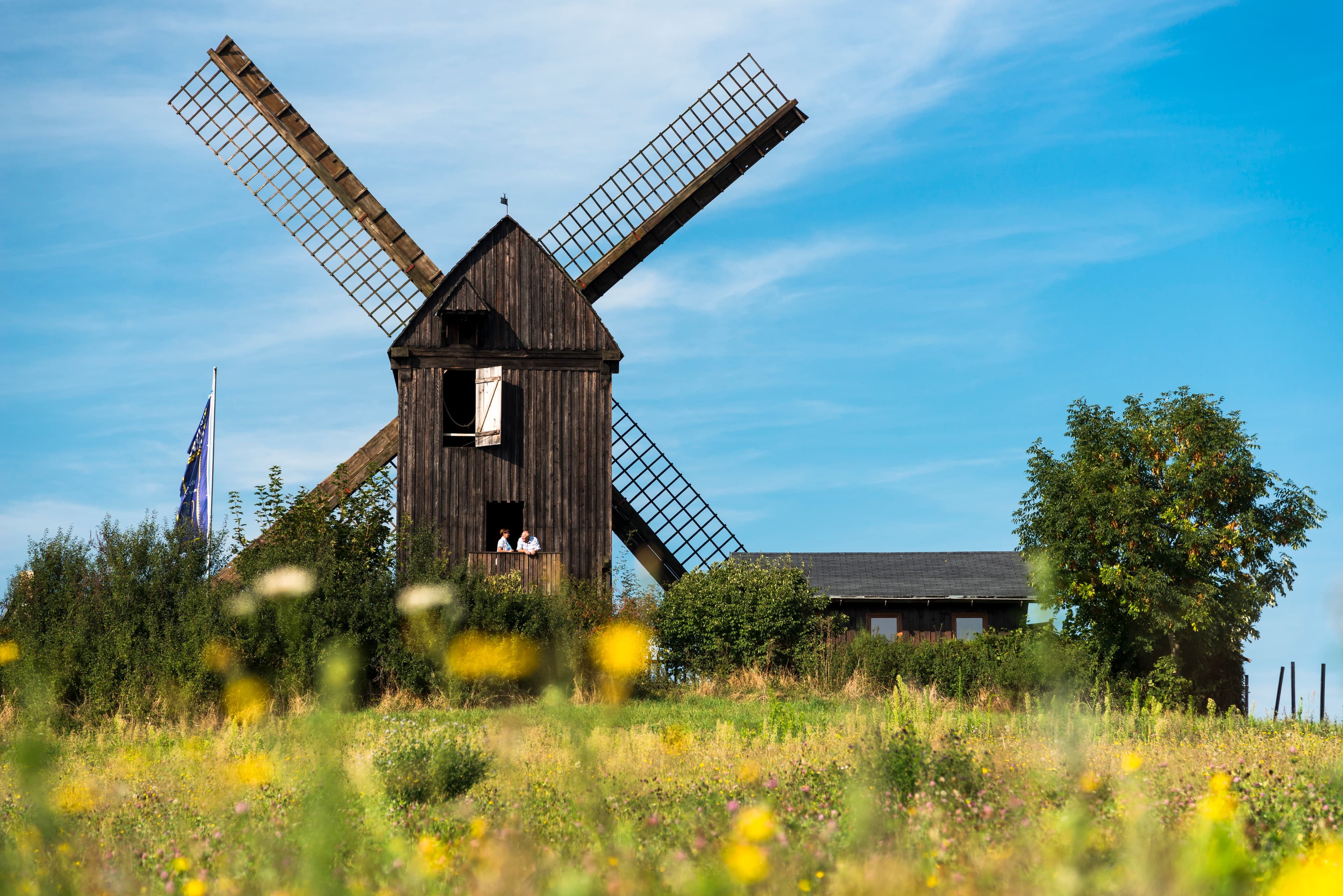
Where grain was once ground
The Dutch windmill in Benz and the post mill in Pudagla will also transport you back to a bygone era.
~ read more
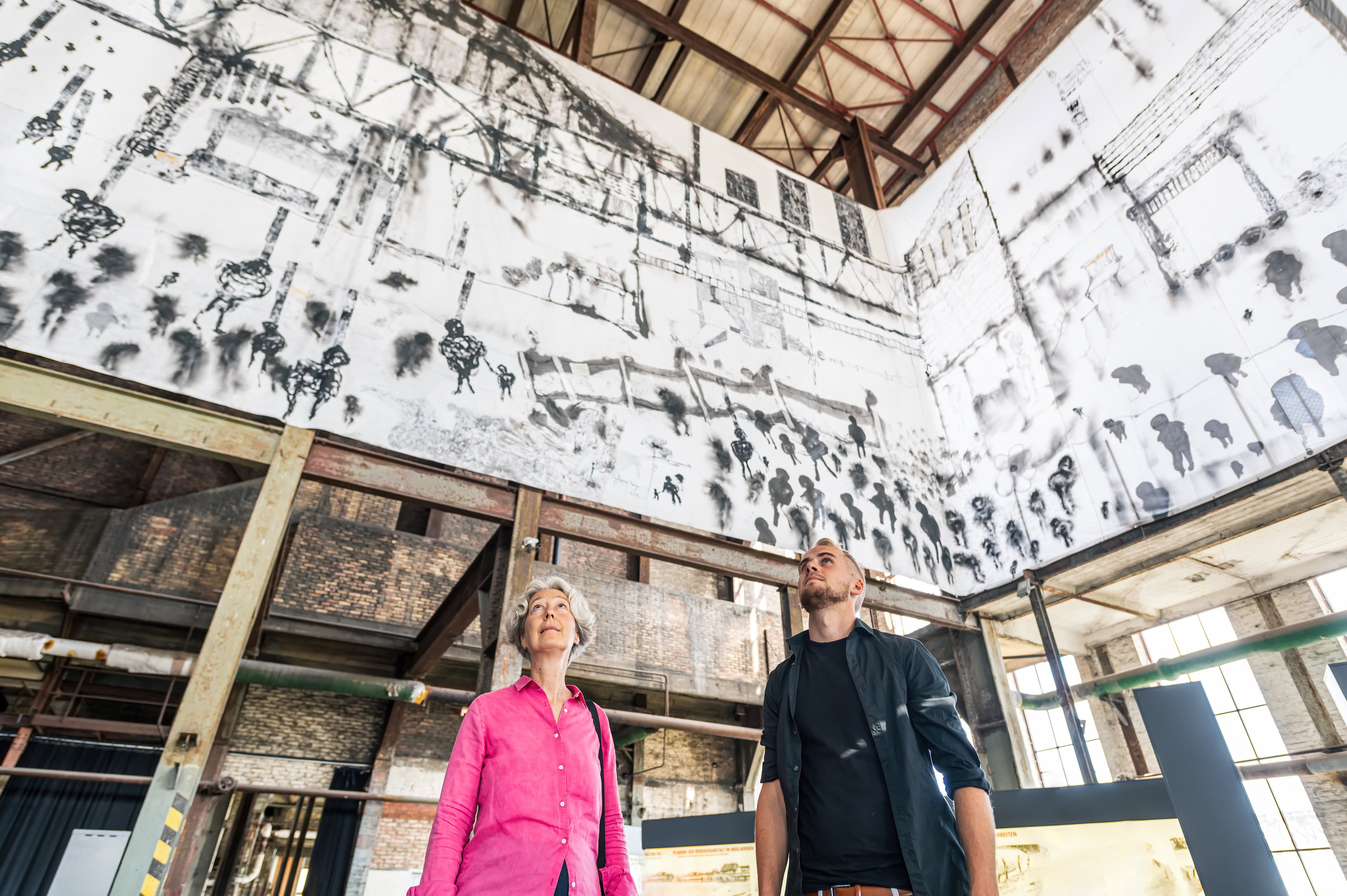
Take some time to visit a museum
Not just for rainy days. Quench your thirst for culture at the island’s museums and galleries.
~ read more